
Master Your Surfing Workflow for Beginners Easily
Published on 19 September 2025 · 15 min read
Learning to surf sounds simple, but over 44-61 percent of all time spent surfing is actually paddling rather than riding waves. Most new surfers obsess over catching their first ride, expecting instant excitement from the moment they hit the water. The real secret is that strong basics like choosing the right board, practicing the pop-up on sand, and picking the right beginner beach set you up for the epic rides everyone dreams about.
Table of Contents
- Prepare Your Equipment And Gear For Surfing
- Choose The Right Surfing Spot For Beginners
- Learn Basic Surfing Techniques On The Beach
- Practice Paddling And Get In The Water
- Ride Your First Waves And Enjoy The Experience
- Assess Your Performance And Plan For Improvement
Quick Summary
| Key Point | Explanation |
|---|---|
| 1. Choose a Soft-Top Surfboard | Soft-top boards are safer and more stable for beginners, offering better buoyancy to catch waves. |
| 2. Invest in Quality Safety Gear | A high-quality leash and well-fitted wetsuit are essential for safety and ensuring your gear functions correctly. |
| 3. Practice Pop-Up Techniques on Land | Master the pop-up motion on solid ground to build muscle memory before attempting it in the water. |
| 4. Start with Gentle Beach Breaks | Select beginner-friendly spots with small, rolling waves and sandy bottoms to reduce injury risk while learning. |
| 5. Video Yourself for Performance Insights | Recording your sessions allows for self-assessment of techniques and identification of areas needing improvement. |
Prepare Your Equipment and Gear for Surfing
Equipping yourself correctly is the foundation of a successful surfing experience. Before you hit the waves, you need to understand that your gear is more than just equipment – it’s your lifeline and primary connection to the ocean. According to expert surfing guidelines from ABC News, selecting the right equipment can dramatically improve your learning curve and overall safety.
For beginners, choosing the right surfboard is crucial. Soft-top boards are recommended as they provide stability, forgiveness, and reduced risk of injury during those initial learning stages. These boards are typically wider and thicker, offering more buoyancy and making it easier to catch waves. When selecting your board, consider your body weight, height, and skill level. A general rule of thumb is to choose a board that is approximately 2-3 feet taller than your height, with enough volume to support your weight and provide stability.
Complement your board selection with essential safety gear. A high-quality leash is non-negotiable – it keeps your board close after a wipeout and prevents it from becoming a hazardous projectile in the water. Matching your leash to your board’s length ensures optimal performance and safety. Additionally, invest in a well-fitted wetsuit appropriate for the water temperature. Neoprene wetsuits not only keep you warm but also provide protection against minor scrapes and sun exposure.
Maintenance is equally important. Before each surfing session, inspect your board for any dings, cracks, or damage that could compromise its integrity. Apply a fresh layer of surf wax to ensure proper grip, checking that it covers the areas where you’ll be positioning your feet. Pack a basic repair kit with waterproof tape, resin, and sandpaper for emergency repairs, and always rinse your equipment with fresh water after use to prevent salt corrosion.
Remember, your gear is an investment in your surfing journey. Take time to understand each piece of equipment, practice proper care, and don’t hesitate to seek advice from experienced surfers or professionals at local surf shops. The right preparation transforms potential frustration into an exciting, smooth introduction to the world of surfing.
Below is a table summarizing essential pieces of beginner surfing gear, their specifications, and their primary purpose for safety and skill development.
| Gear Item | Specification | Purpose |
|---|---|---|
| Soft-Top Surfboard | 2-3 feet taller than user; ample width and thickness | Provides stability, forgiveness, and easy wave catching |
| Leash | Matches board length; high-quality and durable | Secures board to surfer to prevent separation |
| Wetsuit | Well-fitted; suits water temperature; made of neoprene | Maintains warmth, prevents scrapes, offers sun protection |
| Surf Wax | Covers areas where feet are positioned; proper grip type | Increases traction to prevent slipping |
| Repair Kit | Includes waterproof tape, resin, and sandpaper | Enables on-the-spot board repairs during sessions |
| Fresh Water for Rinsing | Bottle or jug; enough to rinse full board and gear | Removes salt to prevent corrosion and equipment damage |
Choose the Right Surfing Spot for Beginners
According to the Australian Sports Commission, selecting the right surfing location is fundamental to a safe and enjoyable learning experience. Beginners must approach spot selection with careful consideration, understanding that not all waves are created equal. The perfect beginner surf spot offers a delicate balance between challenge and safety, providing an environment where new surfers can build confidence without overwhelming risk.
Beach breaks with gentle, rolling waves are ideal for novice surfers. These locations typically feature sandy bottoms that reduce injury risks and provide more forgiving conditions for learning. Look for beaches with consistent, smaller waves measuring 1-3 feet high, which allow you to practice fundamental skills without constant struggle. Avoid rocky or reef-based locations that can introduce complex underwater terrain and increased potential for injury.
Local knowledge becomes your most valuable resource when choosing a surfing spot. Engage with local surf schools, lifeguards, and experienced surfers who can provide insights into current conditions, potential hazards, and recommended beginner areas. Check local surf reports and tide charts before heading out, paying close attention to wave height, wind conditions, and potential rip currents. Many coastal regions have designated beginner zones specifically designed to offer safer, more controlled surfing environments.
Beyond wave characteristics, consider additional environmental factors. Prioritize beaches with lifeguard supervision and clear safety infrastructure. Evaluate water temperature, potential marine life, and surrounding terrain. Some beaches offer natural protection from strong winds and aggressive waves, creating more predictable surfing conditions. Proximity to facilities like changing rooms, equipment rental shops, and first aid stations can also enhance your learning experience and provide additional safety support.
As a beginner, your primary goal is building foundational skills in a supportive environment. Start with locations that offer consistent, gentle waves and gradually progress as your technique and confidence improve. Remember that every surf spot has its unique personality – patience, observation, and willingness to learn will transform potential challenges into exciting opportunities for growth in your surfing journey.
Learn Basic Surfing Techniques on the Beach
Surf Life Saving Australia highlights that mastering fundamental surfing techniques begins long before you touch the water. Preparing yourself on solid ground creates a critical foundation for successful wave riding. Muscle memory and body awareness are your primary tools during this initial learning phase, transforming theoretical knowledge into practical skill.
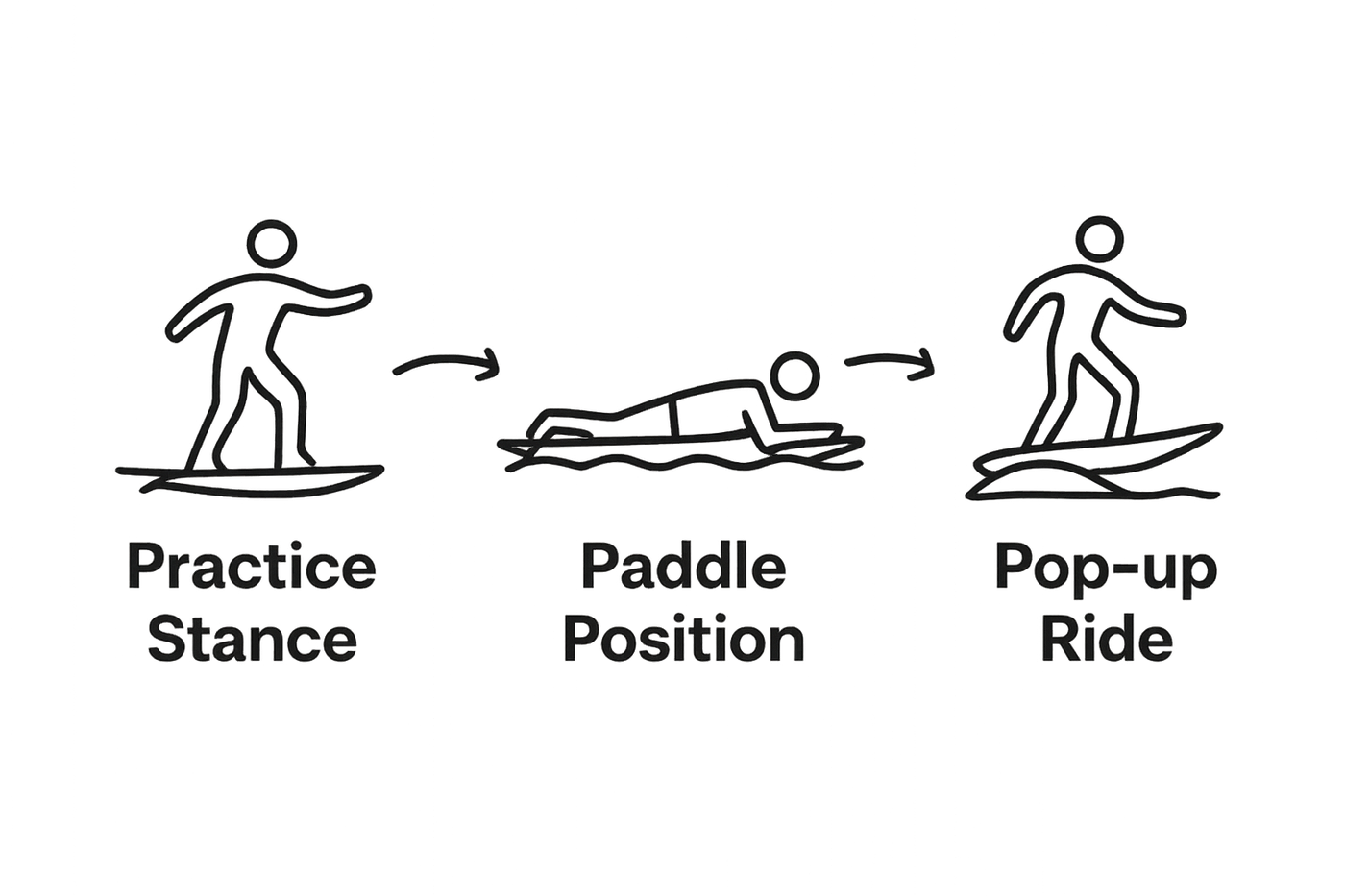
Start by practicing your pop-up technique on solid ground. Lay your surfboard on a flat, soft surface like sand or grass. Position yourself in the prone paddling position, chest down, hands placed near your shoulders. The goal is to develop a smooth, explosive movement that transitions from lying down to standing in one fluid motion. Practice this movement repeatedly, focusing on speed and balance. Your objective is to create a muscle memory that will feel natural when you’re actually catching waves.
Body positioning and stance are crucial elements of surfing technique. Develop your basic surfing stance by practicing what surfers call the “surf stance” on the beach. Stand with feet shoulder-width apart, knees slightly bent, and your body weight centered. Imagine a line running down the center of your surfboard – your front foot should be positioned near the board’s center, while your back foot provides stability and control. Practice shifting your weight, rotating your hips, and maintaining balance. This stance mimics the dynamic positioning you’ll use when riding actual waves.
Physical conditioning plays a significant role in surfing success. Incorporate specific exercises that enhance core strength, flexibility, and balance. Pushups and yoga-inspired movements can dramatically improve your surfing performance. Practice exercises that simulate surfing movements, such as lunges that mimic the pop-up motion, planks to build core stability, and balance board training to improve overall coordination. These beach-based preparation techniques build the physical foundation necessary for confident wave riding.
Remember that learning surfing is a gradual process. Patience and consistent practice are your greatest allies. Each repetitive movement on the beach brings you closer to feeling comfortable and confident in the water. Observe experienced surfers, ask for guidance, and remain open to continuous learning. Your beach training transforms theoretical knowledge into muscle memory, setting the stage for an exciting surfing journey that begins on solid ground but ultimately comes alive on the waves.
Practice Paddling and Get in the Water
Research demonstrates that paddling constitutes an essential 44-61% of total surfing time, making it a critical skill for beginners to master. Entering the water requires a strategic approach that combines physical technique, mental preparation, and understanding of ocean dynamics. Your first water experience is about building confidence and understanding wave movement more than actually catching waves.
Begin by wading into calm, shallow water with your surfboard. Position yourself perpendicular to incoming waves, holding your board firmly on its side. Practice lying on the board in the prone position, ensuring your body is centered with feet slightly raised. Your chest should rest near the board’s center, hands positioned on the rails for stability. Focus on creating a balanced, streamlined position that allows smooth forward movement. Keep your legs together and slightly elevated to reduce drag and improve hydrodynamics.
Paddling technique requires precision and rhythm. Move your arms in alternating, powerful strokes that pull water smoothly toward your hips. Imagine your arms as efficient paddles, entering the water cleanly and pulling with consistent power. Your fingertips should slice into the water first, followed by a strong, deliberate pull that propels you forward. Maintain a steady breathing pattern and keep your head relatively still, using your core muscles to provide additional power and stability.
Understand wave dynamics by observing water movement before paddling. Watch wave patterns, identify incoming sets, and recognize safe zones where you can practice without being overwhelmed. Start in waist-deep water where you can touch the bottom, allowing you to build confidence and recover easily if you fall. Pay attention to your board’s positioning – it should always point toward the beach, providing a quick escape route from approaching waves. Learn to duck dive or turtle roll techniques to navigate through incoming waves, which will become essential skills as you progress.
Every water session is a learning opportunity. Stay relaxed, breathe steadily, and remember that falling is part of the learning process. Your goal is not to master surfing immediately but to become comfortable in the water, understand your board’s behavior, and develop a intuitive connection with the ocean. Patience, consistent practice, and a positive mindset will transform initial awkwardness into smooth, confident movement.
Ride Your First Waves and Enjoy the Experience
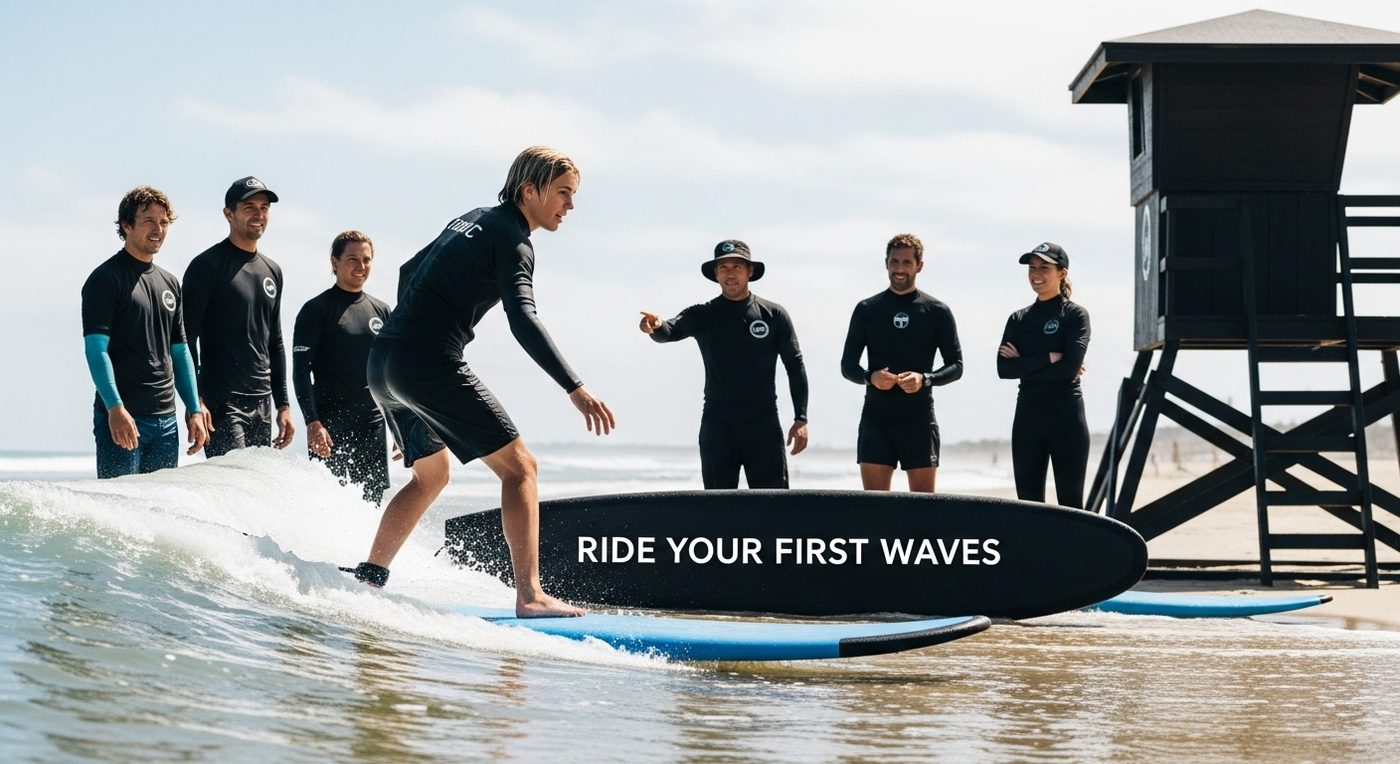
Catching your first wave is a transformative moment that connects you directly with the ocean’s dynamic energy. The key is to approach this milestone with patience, excitement, and a willingness to embrace imperfection. Your initial wave rides will be less about technical perfection and more about understanding the magical interaction between your board, body, and the water’s movement.
Position yourself strategically by choosing smaller, gentler waves that break slowly and consistently. As you paddle and feel a wave approaching, focus on timing and momentum. Begin paddling slightly before the wave reaches you, matching its speed and direction. When you feel the wave’s energy lifting your board, execute the pop-up technique you practiced on the beach. Move quickly but smoothly, transitioning from a prone paddling position to a standing surf stance in one fluid motion. Keep your weight centered, knees slightly bent, and eyes focused forward.
Understand that falling is an integral part of learning. Each wipeout is a valuable lesson, teaching you about wave dynamics, board control, and your own physical limits. When you fall, fall flat and away from your board to avoid potential injuries. Protect your head by covering it with your arms, and always be aware of your surroundings. The ocean demands respect, and learning to fall safely is just as important as learning to ride.
Mental preparation plays a crucial role in your first wave experiences. Approach each attempt with a positive, playful mindset. Celebrate small victories – even a few seconds of balanced riding is an achievement. Listen to experienced surfers around you, observe their techniques, and don’t be afraid to ask for advice. Surfing is a community sport, and most experienced surfers are happy to offer guidance to enthusiastic beginners. Remember that every professional surfer started exactly where you are now – uncertain, slightly scared, but incredibly excited.
Your first wave rides are about building confidence and creating a connection with the ocean. Each attempt brings you closer to understanding the subtle art of surfing. Breathe, stay relaxed, and allow yourself to enjoy the process. The ocean is an incredible teacher, and your journey is just beginning. Embrace the water, trust your training, and most importantly, have fun discovering the incredible world of surfing.
Assess Your Performance and Plan for Improvement
Research from Applied Sciences demonstrates that structured performance assessment is crucial for skill development in surfing. Your learning journey extends far beyond individual wave rides, transforming each session into an opportunity for deliberate growth and self-understanding. Performance assessment requires honest self-reflection, technical analysis, and a strategic approach to skill enhancement.
Begin by documenting your surfing experiences through video recording. Use a waterproof camera or ask a friend to film your sessions from the beach. Watching yourself provides unfiltered insights into your technique, body positioning, and wave interactions. Focus on specific elements like your pop-up speed, balance maintenance, wave selection, and overall board control. Compare your performance against fundamental techniques you’ve learned, identifying specific areas where you can improve.
Physical conditioning plays a significant role in surfing progression. Develop a targeted training regimen that addresses your observed weaknesses. This might include core strengthening exercises, balance training, flexibility work, and cardiovascular conditioning. Incorporate exercises that mimic surfing movements, such as balance board training, yoga for flexibility, and swimming to enhance overall water fitness. Pay special attention to your paddling technique, as efficient paddling significantly impacts your wave-catching ability and overall surfing performance.
Mental assessment is equally important. Reflect on your emotional responses during surfing sessions – moments of confidence, frustration, and excitement. Develop a growth mindset that views challenges as learning opportunities. Set specific, achievable goals for each surfing session. These might include maintaining balance for a longer duration, improving wave selection, or executing a smoother pop-up. Consider working with a surf instructor who can provide professional insights and personalized feedback on your technique and progression.
Remember that improvement is a continuous journey. Every professional surfer started exactly where you are now – making mistakes, learning, and gradually building skills. Embrace patience and maintain a sense of curiosity about your development.
This table provides an overview of the foundational steps in a beginner’s surfing workflow, along with their main focus and key outcomes to help structure your learning journey.
| Step | Main Focus | Key Outcome |
|---|---|---|
| Prepare Equipment and Gear | Proper selection and setup | Safety, comfort, and readiness |
| Choose Beginner-Friendly Surfing Spot | Safe location, ideal wave conditions | Reduced risk and increased confidence |
| Practice Surfing Techniques on Land | Stance, pop-up, balance | Muscle memory and body awareness |
| Practice Paddling and Ocean Entry | Water comfort, paddling, board control | Improved ocean skills, foundational fitness |
| Ride First Waves | Timing, popping up, balance | Wave riding experience, enjoyment |
| Assess Performance and Improve | Self-review, physical/mental reflection | Targeted progression and continual learning |
Ready to Master Surfing With Ease in Tenerife?
You’ve just discovered the secrets to building your surfing workflow as a beginner. But reading about wave selection, perfect pop-ups, and safe gear is only the first step. Most new surfers struggle with uncertainty. Questions about choosing the right board, safety in the ocean, and turning skills into real confidence often hold them back. In the article you learned the importance of the right surf spot, practical beach training, and smart self-assessment—yet it’s easy to feel overwhelmed when you’re starting out alone.
Let Ika Ika Surf School Tenerife turn your knowledge into action. Our experienced instructors give you hands-on guidance as you practice paddling, master the pop-up, and ride your very first waves just 50 meters from the break. We offer all the board rentals and wetsuits you need to safely try new techniques, and you’ll benefit from video feedback and supportive coaching right on the beach. Don’t let hesitation slow your progress. Visit our main website to see course options, or book your surf lesson now so you can start catching waves with confidence and enjoy every session from day one.
Frequently Asked Questions
What type of surfboard is best for beginners?
Soft-top boards are recommended for beginners as they offer stability, forgiveness, and reduced risk of injury. They are wider and thicker, providing better buoyancy for catching waves.
How can I practice my surfing techniques on land before hitting the water?
You can practice your pop-up technique on a soft surface like sand or grass, focusing on transitioning smoothly from lying down to standing. Also, practice your surfing stance to develop balance and body awareness.
What should I look for in a beginner-friendly surfing spot?
Look for beach breaks with gentle, rolling waves that are 1-3 feet high and sandy bottoms. It’s also important to choose locations with lifeguard supervision and to avoid places with rocky bottoms or strong currents.
How can I improve my surfing skills over time?
Document your surf sessions through video to analyze your technique. Develop a targeted training regimen that enhances your core strength and flexibility, and set specific, achievable goals for each session to promote consistent improvement.
Recommended
🏄 See you in the water?
Book your lesson →