
Understanding Beginner Surfing Basics for Tourists in Tenerife
Published on 2 September 2025 · 12 min read
Surfing looks like pure fun and freedom. People of all ages are drawn to the waves for the challenge and thrill, but the real surprise is just how much the body and mind change from one session. Studies show that surfing can improve cardiovascular endurance, reduce stress, and build confidence—even after your first lesson. Most people think you have to be an expert athlete to catch a wave, yet even total beginners find their balance and get hooked faster than they expect.
Table of Contents
- What Is Surfing And Its Appeal For Beginners?
- Why Surfing Matters: Benefits For Mind And Body
- How Waves Work: The Science Behind Surfing
- Essential Surfing Gear: Understanding Equipment Basics
- Key Surfing Concepts: Balance, Position, And Etiquette
Quick Summary
| Takeaway | Explanation |
|---|---|
| Surfing enhances physical fitness | Engages multiple muscle groups, improving balance, strength, and cardiovascular health. |
| Mental health benefits from surfing | Provides stress relief and boosts confidence through ocean interaction and personal achievement. |
| Understanding wave dynamics is crucial | Knowledge of wave behavior enhances surfing skills and safety by predicting conditions. |
| Select appropriate gear for safety | Choose larger boards for beginners and ensure proper maintenance of equipment for optimal performance. |
| Follow surfing etiquette for a positive experience | Respecting local surfers and their norms fosters community and ensures safety in the water. |
What is Surfing and Its Appeal for Beginners?
Surfing represents a dynamic water sport where riders harness the power of ocean waves, gliding across their surface using specialized boards. Beyond being a physical activity, surfing embodies a unique lifestyle and cultural experience that attracts adventurers worldwide. Explore our beginner’s surfing guide to understand this exciting pursuit.
The Essence of Wave Riding
At its core, surfing involves riding a surfboard on the forward face of a moving wave, typically traveling towards the shoreline. Surfers use their body balance, paddle technique, and wave reading skills to navigate ocean surfaces. The sport demands a combination of physical strength, technical skill, and intuitive understanding of water dynamics.
Physical and Mental Benefits
Surfing offers an exceptional full body workout that engages multiple muscle groups simultaneously. According to research from the International Surfing Association, the sport provides comprehensive physical benefits:
- Cardiovascular endurance enhancement
- Core muscle strengthening
- Improved balance and coordination
- Stress reduction through ocean interaction
Beyond physical advantages, surfing delivers profound mental wellness benefits. The meditative experience of connecting with nature, reading wave patterns, and overcoming personal challenges creates a unique psychological reward. Beginners often report increased confidence, reduced anxiety, and a sense of personal accomplishment after mastering basic techniques.
Learning and Progression
For tourists visiting Tenerife, surfing represents more than a sport it is an immersive cultural experience. Beginners can expect a learning curve that transforms from initial challenge to eventual exhilaration. Professional instruction, consistent practice, and a positive mindset are key to successfully entering this vibrant world of wave riding. With patience and dedication, novice surfers can transform from uncertain newcomers to confident ocean enthusiasts, creating memories that extend far beyond typical vacation activities.
Why Surfing Matters: Benefits for Mind and Body
Surfing transcends traditional exercise, offering profound physical and psychological advantages that distinguish it from conventional sports. Learn how surfing transforms wellness through holistic engagement with nature and personal development.
Physical Transformation and Performance
As a comprehensive workout, surfing challenges the body in unique ways that traditional gym exercises cannot replicate. The dynamic environment of ocean waves demands continuous adaptation, engaging multiple muscle groups simultaneously. According to scientific research from the National Center for Biotechnology Information, surfing significantly improves body mechanics by:
- Enhancing dynamic and static balance
- Developing core muscle strength
- Improving overall cardiovascular endurance
- Increasing flexibility and range of motion
The unpredictable nature of waves requires constant micro adjustments, creating a natural interval training environment that burns calories and builds lean muscle more effectively than standard linear exercises.
Mental Wellness and Personal Growth
Beyond physical benefits, surfing offers profound psychological rewards. The practice serves as a moving meditation, connecting practitioners with natural rhythms and demanding complete present moment awareness. Surfers experience stress reduction through immersion in oceanic environments, which triggers neurochemical responses that lower cortisol levels and increase serotonin production.
The sport cultivates essential life skills such as patience, resilience, and emotional regulation. Learning to read wave patterns and navigate challenging conditions develops mental fortitude that translates directly into personal and professional life challenges. Beginners quickly discover that surfing is less about conquering waves and more about understanding and harmonizing with natural forces.
Holistic Health and Lifestyle Integration
Surfing represents more than a sport it is a comprehensive lifestyle approach to wellness. By combining physical challenge, mental engagement, and spiritual connection with nature, surfing offers a unique pathway to holistic health. Practitioners report improved sleep quality, enhanced mood stability, and increased overall life satisfaction. The community aspect of surfing further amplifies these benefits, providing social connections and a sense of belonging that extends far beyond physical activity.
How Waves Work: The Science Behind Surfing
Understanding wave dynamics forms the fundamental foundation of surfing, transforming riders from mere participants to informed ocean navigators. Discover the secrets of wave mechanics and elevate your surfing knowledge.
Wave Formation and Physics
Waves emerge through complex interactions between wind, ocean topography, and gravitational forces. According to oceanographic research, wave generation involves multiple scientific principles. Wind transfers kinetic energy to water surface, creating initial wave motion. As wind continues blowing across water, waves progressively increase in size and power.
Key characteristics of wave formation include:
- Energy transfer from atmospheric movement
- Interaction with ocean floor terrain
- Impact of wind speed and duration
- Gravitational influences on wave propagation
The ocean transforms wind energy into organized wave patterns, with wave height, length, and period determined by wind intensity, duration, and the distance over which wind blows.
Wave Types and Surfing Dynamics
Surfers encounter different wave classifications, each presenting unique riding challenges. Ocean waves can be categorized into swell waves (generated by distant wind systems) and local wind waves. Swell waves travel considerable distances, maintaining consistent energy and shape, making them ideal for surfing.
Wave breaks occur when underwater topography interrupts wave motion, creating distinct surfing zones
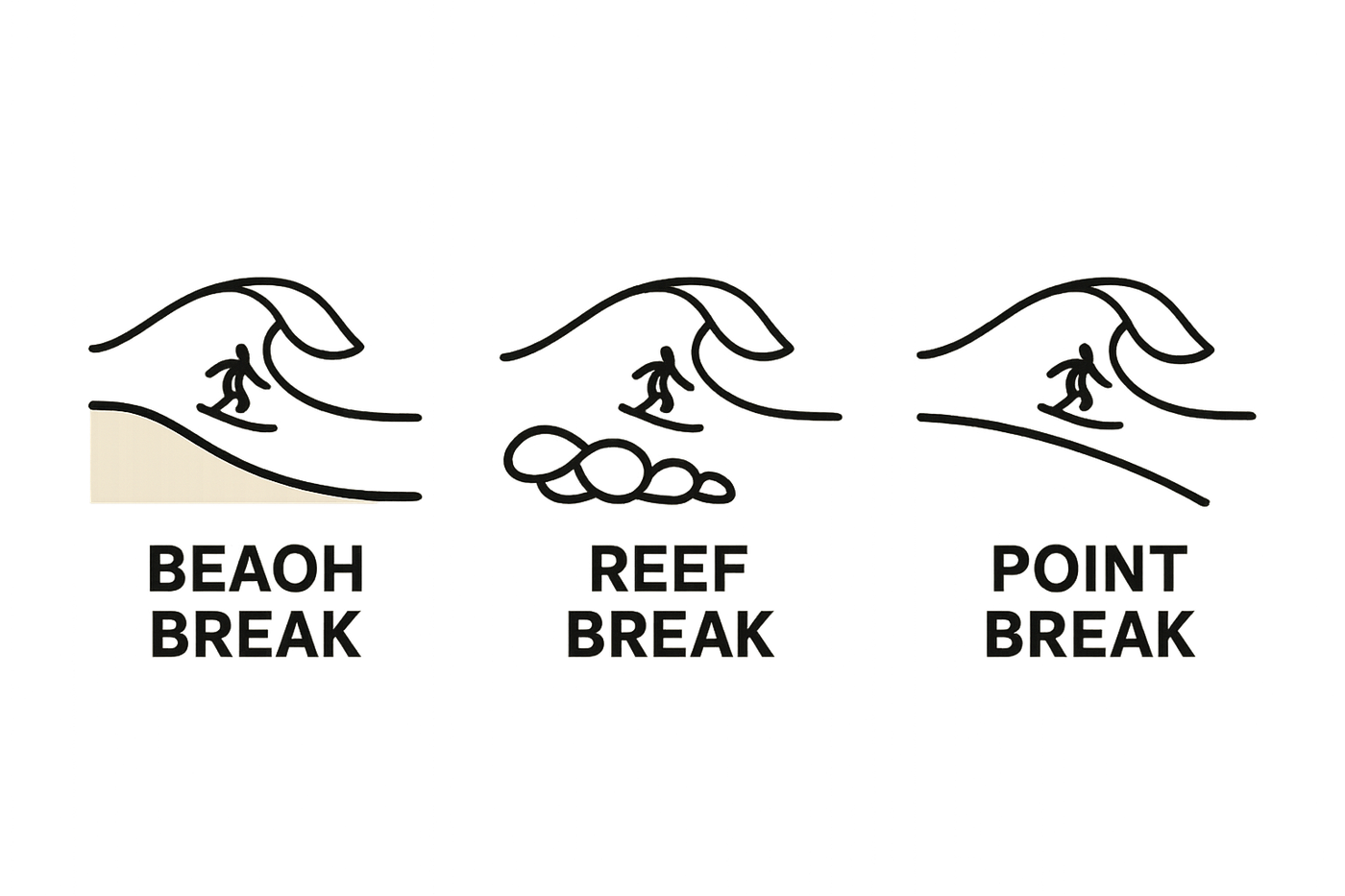 :
:
- Beach breaks (waves breaking over sandy bottoms)
- Reef breaks (waves breaking over coral or rock formations)
- Point breaks (waves wrapping around coastal land formations)
Wave Prediction and Rider Interaction
Successful surfing requires understanding wave behavior and developing intuitive reading skills. Experienced surfers learn to anticipate wave characteristics by observing wind direction, ocean floor contours, and atmospheric conditions. This knowledge transforms seemingly unpredictable water movements into readable, rideable surfaces.
In Tenerife, unique coastal geography creates diverse wave environments, offering opportunities for surfers of all skill levels to experience dynamic ocean interactions. The interplay between wind, water, and underwater terrain creates a continuous, ever changing canvas for wave riding.
To help you understand the main types of wave breaks and their characteristics, here is a table comparing beach breaks, reef breaks, and point breaks as discussed in the article.
| Wave Break Type | Ocean Floor Type | Typical Features | Difficulty Level |
|---|---|---|---|
| Beach Break | Sandy Bottom | Softer landings, shifting peaks, beginner-friendly | Easy to Moderate |
| Reef Break | Coral or Rock Formation | Powerful, consistent shape, sharp hazards | Moderate to Hard |
| Point Break | Land Formation (Points) | Long rides, predictable direction, can crowd | Moderate to Hard |
Essential Surfing Gear: Understanding Equipment Basics
Navigating the world of surfing requires understanding essential equipment that transforms ocean interactions from challenging to enjoyable. Discover our comprehensive gear guide to ensure your surfing experience is safe and successful.
Surfboard Selection and Fundamentals
The surfboard represents the most critical piece of equipment for any surfer. According to Surfing England, board selection depends on multiple factors including rider skill, wave conditions, and physical characteristics. Beginner surfers typically benefit from larger, more stable boards that provide increased buoyancy and easier paddle dynamics.
Key considerations for surfboard selection include:
- Board length and volume
- Rider height and weight
- Skill level and experience
- Intended wave type and surfing style
Surfboards are constructed from various materials, with modern designs utilizing fiberglass, foam, and epoxy compositions that balance weight, durability, and performance. Beginners should prioritize stability and ease of use over advanced technical specifications.
Essential Safety and Performance Gear
Beyond the surfboard, several additional equipment pieces are crucial for a safe and comfortable surfing experience. Wetsuits protect against water temperature variations, providing thermal insulation and preventing hypothermia. Leashes connect surfers to their boards, preventing equipment loss and enhancing safety during wipeouts.
Critical supplementary surfing equipment includes:
- Wetsuit appropriate for water temperature
- Surfboard leash matching board size
- Surf wax for board traction
- Protective sunscreen and rash guard
- Appropriate fins for board maneuverability
Maintenance and Equipment Care
Proper equipment maintenance extends the lifespan of surfing gear and ensures optimal performance. Surfboards require regular cleaning, waxing, and inspection for potential damage. Wetsuits need careful rinsing with fresh water after each use and should be dried away from direct sunlight.
Tenerife’s unique marine environment presents specific challenges for equipment preservation. Saltwater, sun exposure, and frequent use demand rigorous maintenance practices. Surfers should invest time in understanding their equipment, recognizing wear indicators, and implementing preventative care strategies to maximize gear longevity and performance.
Key Surfing Concepts: Balance, Position, and Etiquette
Surfing demands more than physical skill it requires understanding nuanced techniques and unwritten rules that govern ocean interactions. Explore advanced surfing techniques to elevate your surfing experience.
Fundamental Balance and Body Positioning
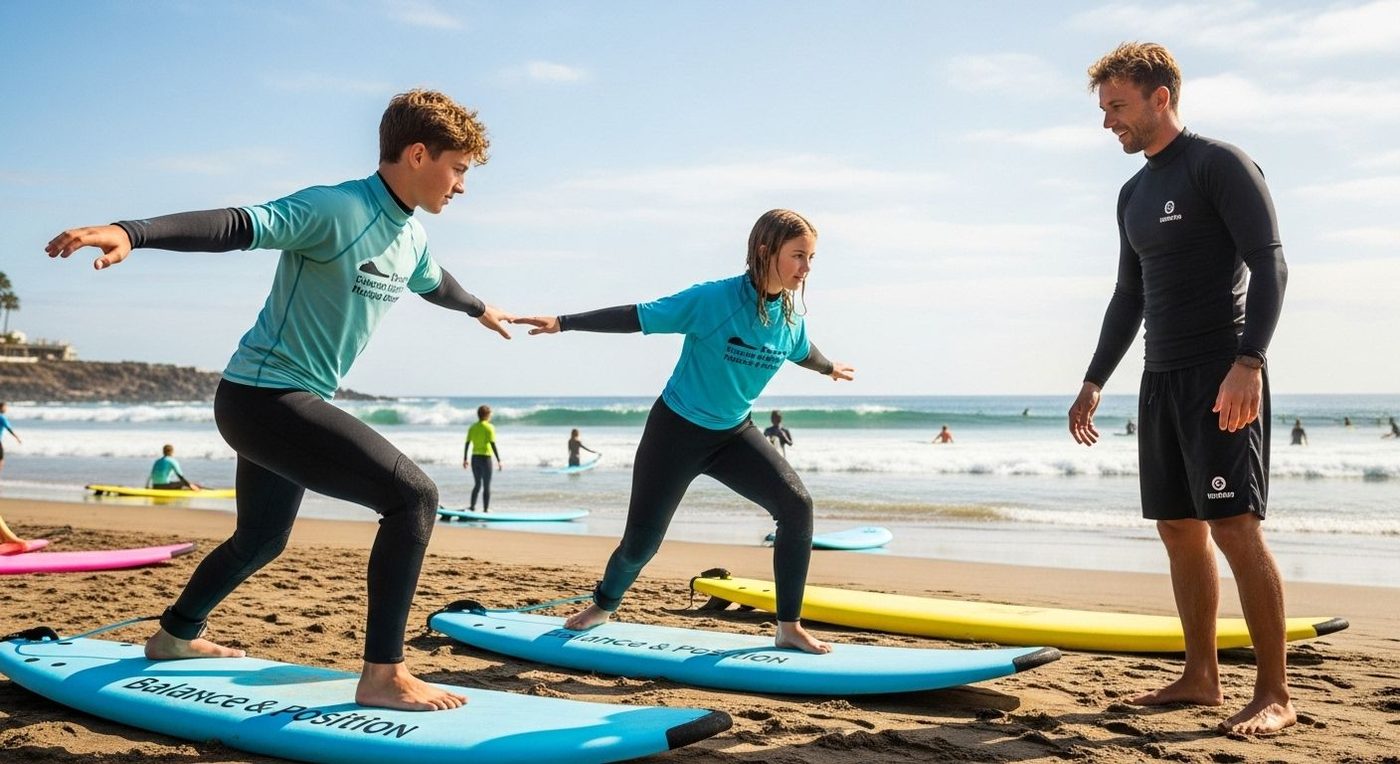
Mastering surfing begins with developing precise body mechanics and understanding weight distribution. Balance represents the cornerstone of successful wave riding, involving continuous micro adjustments that transform potential wipeouts into smooth rides. Surfers must cultivate a low center of gravity, maintaining flexibility and responsiveness to wave dynamics.
Critical balance elements include:
- Foot placement on the surfboard
- Weight distribution between front and back foot
- Knee and hip flexibility
- Core muscle engagement
- Shoulder and arm positioning
The ideal surfing stance resembles a dynamic athletic position similar to martial arts or skiing, where the body remains ready to adapt instantaneously to changing wave conditions.
Below is a table summarizing the key elements of fundamental surfing balance and body positioning highlighted in the article.
| Body Part / Position | Role in Surfing | Tips for Beginners |
|---|---|---|
| Foot Placement | Controls board direction and stability | Stand shoulder-width apart |
| Weight Distribution | Maintains balance front-to-back | Shift slightly forward to paddle |
| Knees and Hips | Absorbs wave motion, increases flexibility | Keep knees bent and loose |
| Core Muscles | Stabilizes movement and supports transitions | Engage abs, avoid stiff posture |
| Shoulders and Arms | Helps balance and paddling | Relax arms, keep shoulders level |
Wave Interaction and Positioning Techniques
Successful surfing involves strategic positioning relative to incoming waves. Surfers must develop an intuitive understanding of wave mechanics, learning to read ocean signals and anticipate wave behavior. Positioning determines not just wave catchability but also overall safety and potential ride quality.
Key positioning considerations include:
- Paddle angle and approach
- Wave peak identification
- Understanding wave break patterns
- Timing of board rotation
- Reading wave energy and momentum
Surf Etiquette and Community Standards
Surfing operates under an unwritten code of conduct that ensures safety and mutual respect among ocean users. These social protocols transcend formal rules, representing a cultural understanding developed through generations of wave riders. Newcomers must learn and respect these guidelines to integrate smoothly into the surfing community.
Fundamental surf etiquette principles involve:
- Right of way rules for wave catching
- Respecting local surfers and their preferred spots
- Avoiding interference with other riders
- Maintaining safe distances during wave riding
- Helping fellow surfers in potential danger
In Tenerife, these principles are particularly important, as the local surfing community values mutual understanding and oceanic harmony. Beginners who demonstrate respect and willingness to learn will find themselves welcomed into this vibrant, passionate community.
Ready to Experience Surfing for Real? Start Your Journey in Tenerife
You have just learned about the core challenges that every beginner surfer faces. Finding balance on the board, understanding wave dynamics, and making sense of new equipment can feel intimidating when you are starting out. The thrill of catching your first wave often comes with doubts about safety, gear, and which surf school really supports first-timers. If you want a safe, encouraging environment and expert guidance tailored for beginners and tourists, Ika Ika Surf School Tenerife is here for you. Learn more about our surf lessons crafted specifically for visitors who want to make the most of their time in Playa de las Américas.
Take the step from theory to practice with skilled instructors, locker access, and top-quality equipment rentals just 50 meters from the waves. Do not let uncertainty hold you back. Join a group or book a private lesson today and enjoy the convenience, amenities, and confidence you have been searching for. Visit our homepage now to book your spot or discover more about surf gear rentals and facilities. Your surfing adventure in Tenerife starts with one simple action—reach out before the best times fill up.
Frequently Asked Questions
What are the basic skills required for beginner surfers?
Beginner surfers should focus on developing balance, paddling technique, and wave reading skills. Mastering these will enhance their surfing experience and safety.
How do I choose the right surfboard as a beginner?
Beginners should opt for larger surfboards that offer more stability and buoyancy. Key considerations include board length, volume, and individual weight.
What safety gear do I need for surfing in Tenerife?
Essential safety gear includes a wetsuit for thermal protection, a surfboard leash to keep your board connected, and sunscreen to protect against UV rays while on the beach and water.
How can I improve my surfing skills quickly?
To improve quickly, consider taking professional surf lessons, practicing consistently, and learning to read wave patterns. Patience and a positive mindset are crucial for progress.
Recommended
🏄 See you in the water?
Book your lesson →