
Understanding Your Essential Surf Equipment Checklist
Published on 23 September 2025 · 11 min read
Surfing draws millions of people to the ocean every year and your gear makes all the difference when it comes to riding the waves. Most surprising of all is that something as small as the leash can literally be a life saver, keeping you connected to your board in strong surf. Most people focus on the board or the wetsuit but the real secret is how each piece of equipment works together as a total safety network. That twist changes everything about how you get ready for your next session.
Table of Contents
- What You Need To Know About Surfing Equipment
- Why Each Item On The Surf Equipment Checklist Matters
- How Surf Gear Works Together For Safe Surfing
- Key Concepts Behind Essential Surfing Accessories
- Real-World Applications Of Your Surf Equipment Checklist
Quick Summary
| Takeaway | Explanation |
|---|---|
| Choose the Right Surfboard | Select a surfboard based on your skill level, body type, and wave conditions for optimal performance. |
| Invest in Durable Wetsuits | A quality wetsuit maintains body temperature and protects against the elements, enhancing your comfort and safety. |
| Prioritize Safety Features | Ensure each piece of equipment, like leashes, enhances safety by preventing separation and enabling quick recovery in challenging conditions. |
| Understand Equipment Interactions | Your surfing gear works together; each component affects performance and safety, requiring selection according to your style and environment. |
| Adapt Equipment to Conditions | Be ready with versatile gear to address varying wave and water conditions efficiently, ensuring a successful surfing experience. |
What You Need to Know About Surfing Equipment
Surfing equipment represents more than just gear; it’s your gateway to experiencing the ocean’s dynamic environment safely and effectively. Understanding the fundamental components of your surf equipment checklist allows you to prepare confidently for water adventures, whether you are a beginner or an experienced wave rider.
Essential Surfing Gear Fundamentals
Every surfer needs a core set of equipment that ensures safety, performance, and comfort. According to Surf Life Saving Australia, the primary surfing equipment categories include:
- Surfboard (the most critical piece of equipment)
- Wetsuit
- Leg rope (leash)
- Surf wax
- Rash guard
- Sunscreen
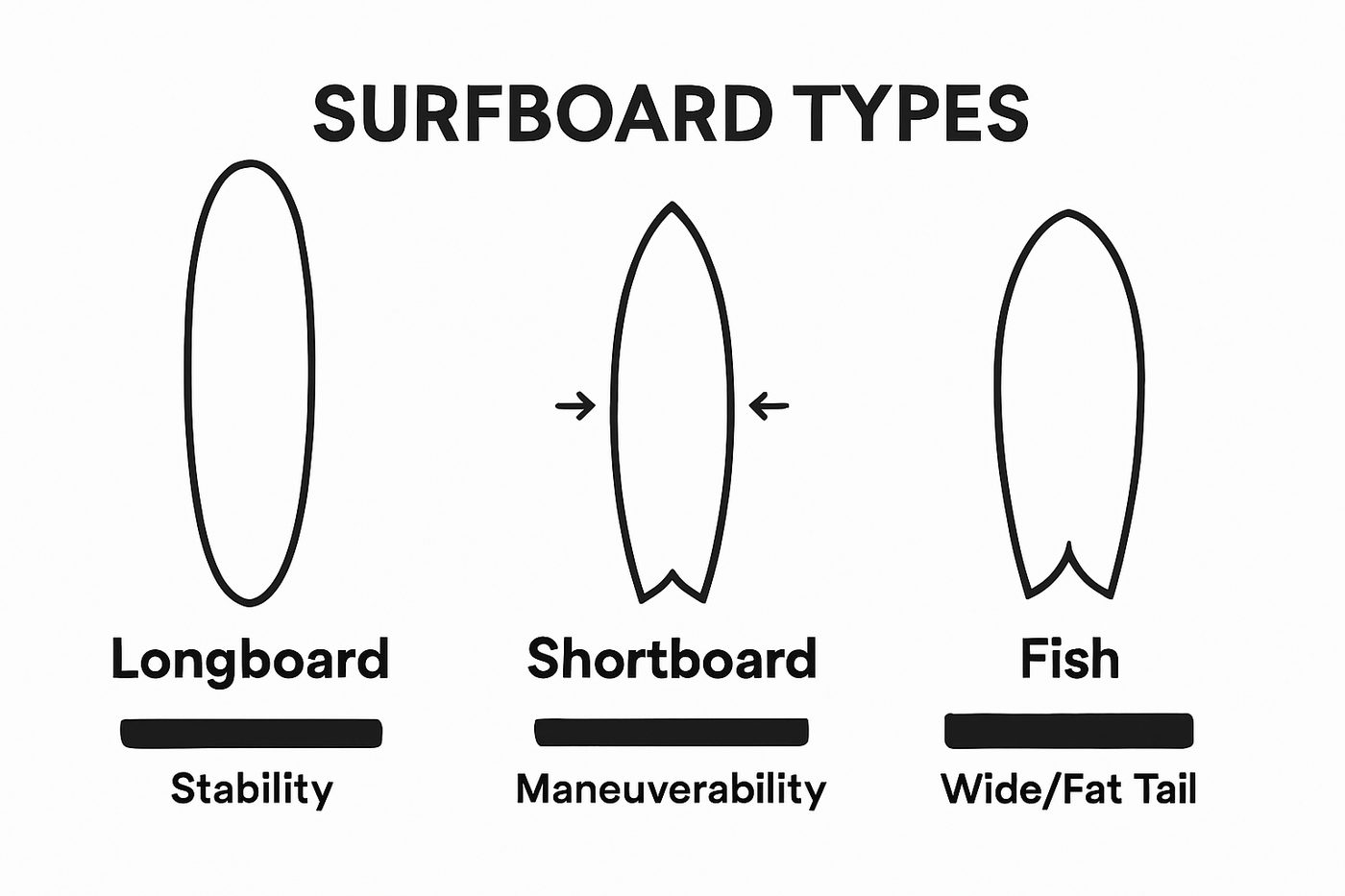
Your surfboard selection depends on multiple factors including your skill level, body type, wave conditions, and personal surfing style. Beginners typically start with longer, wider boards that provide more stability, while advanced surfers might prefer shorter, more maneuverable boards designed for aggressive wave riding.
Understanding Equipment Quality and Performance
Quality surf equipment directly impacts your experience on the water. A well-constructed surfboard made from durable materials like polyurethane or epoxy can withstand repeated use and challenging ocean conditions. Wetsuits protect against cold temperatures and provide additional buoyancy, with thickness varying based on water temperature and personal comfort.
The leg rope, or leash, is a critical safety component connecting you to your surfboard. It prevents your board from drifting away after a fall and helps you quickly recover, reducing the risk of losing your board in rough waters. Choose a leg rope length matching your surfboard size and appropriate for the wave conditions you typically encounter.
Additional protective gear like rash guards prevent skin irritation from board friction and provide sun protection, while high-quality surf wax ensures proper grip on your board’s surface. By investing in reliable equipment and understanding its specific functions, you create a foundation for safer, more enjoyable surfing experiences.
To help you grasp how each essential item on your surf equipment checklist contributes to your safety and performance, the table below summarizes key functions and considerations for every core component.
| Equipment | Primary Function | Key Consideration |
|---|---|---|
| Surfboard | Foundation for wave riding | Match size and shape to skill level and wave type |
| Wetsuit | Maintains body temperature, adds protection | Choose thickness for water temperature and flexibility |
| Leash (Leg Rope) | Connects surfer to board, prevents separation | Select length to match board and surf conditions |
| Surf Wax | Provides grip and stability on board | Use type suited to water temperature |
| Rash Guard | Protects skin from irritation and sun | Look for UV protection and comfortable fit |
| Sunscreen | Shields skin from harmful UV rays | Pick water-resistant, broad-spectrum SPF |
Why Each Item on the Surf Equipment Checklist Matters
Effective surfing requires more than enthusiasm and skill. Each piece of equipment serves a specific purpose, contributing to your safety, performance, and overall ocean experience. Understanding the nuanced roles of your surf gear transforms your approach from merely owning equipment to strategically selecting tools that enhance your surfing journey.
Safety Through Strategic Equipment Selection
According to Royal National Lifeboat Institution, surf equipment is not just about convenience but critical safety. Key safety considerations include:
- Preventing board separation during falls
- Maintaining body temperature in varying water conditions
- Protecting against potential ocean-related injuries
- Ensuring visibility and personal protection
Your leash, for instance, is more than an accessory. It acts as a critical lifeline connecting you to your board, preventing dangerous situations where you might become separated from your primary flotation device in challenging wave conditions. A properly selected leash matched to your board length can mean the difference between a controlled fall and a potentially hazardous swimming scenario.
Performance and Technical Considerations
Surfing equipment directly influences your performance and technical capabilities. The surfboard itself is a sophisticated piece of engineering, with design nuances dramatically affecting water interaction. University of Southern California’s Engineering School highlights how board dimensions impact wave riding dynamics.
Board shape, length, and width determine your stability, maneuverability, and wave-catching potential.
This table compares key surfboard characteristics with the associated impact on performance and suitability across different user types, to help you make a more informed board selection.
| Surfboard Feature | Impact on Performance | Best Suited For |
|---|---|---|
| Length | Longer = more stability, easier paddling | Beginners |
| Shorter = increased maneuverability | Advanced surfers | |
| Width | Wider = extra stability, easier balancing | New surfers, small waves |
| Narrower = greater control, faster turns | Skilled surfers, big waves | |
| Thickness | Thicker = additional buoyancy, easier paddling | Heavier surfers, small waves |
| Thinner = improved responsiveness | Light/intermediate surfers |
Wax selection might seem minor, but it plays a crucial role in maintaining grip and control. The right surf wax prevents slipping, enables precise foot placement, and helps you maintain balance during wave riding. Each component of your surf equipment checklist works synergistically to create a safe, enjoyable, and high-performance surfing experience.
How Surf Gear Works Together for Safe Surfing
Surfing is a complex interaction between human skill, equipment design, and environmental conditions. Your surf gear functions as an integrated system, with each component playing a critical role in creating a safe and responsive ocean experience. Understanding how these elements collaborate can significantly enhance your performance and personal safety.
Integrated Safety Mechanisms
According to International Surfing Association, surf equipment operates as a unified protective system. Key integrated safety features include:
- Complementary protection layers
- Dynamic movement adaptation
- Environmental stress management
- Personal performance optimization
Your wetsuit, for instance, does more than keep you warm. It provides thermal insulation, reduces muscle fatigue, and offers a protective barrier against potential marine hazards. When combined with a well-designed leash and surfboard, it creates a comprehensive safety network that supports your surfing experience.
Equipment Synergy and Performance Dynamics
Each piece of surf equipment interacts with others to create a responsive system. Your surfboard’s shape determines wave interaction, while your leash ensures continuous connection during challenging conditions. Surf wax provides critical grip, allowing precise foot placement and movement control.
The relationship between your board’s design and your personal technique is particularly nuanced. A board’s length, width, and fin configuration must complement your skill level and surfing style. Beginners benefit from wider, more stable boards with increased buoyancy, while advanced surfers require more responsive, narrower designs that allow quick directional changes.
When properly selected and maintained, your surf gear becomes an extension of your physical capabilities. The right combination of equipment transforms ocean navigation from a potential risk into a controlled, enjoyable experience, where safety and performance work seamlessly together.
Key Concepts Behind Essential Surfing Accessories
Surfing accessories represent more than simple equipment they are sophisticated tools designed to enhance performance, ensure safety, and optimize ocean interaction. Understanding the fundamental principles behind these accessories transforms your approach from passive gear ownership to strategic equipment selection.
Functional Design Principles
According to Surfing Handbook, surfing accessories are engineered with specific performance and protection objectives. Critical design considerations include:
- Material durability and flexibility
- Environmental adaptability
- Human biomechanical compatibility
- Performance enhancement capabilities
A surfboard’s design, for example, is not random but a carefully calculated combination of shape, volume, and materials. Variations in length, width, and thickness directly influence wave-catching ability, stability, and maneuverability. Advanced materials like epoxy and carbon fiber have revolutionized board construction, offering lighter weight and increased strength compared to traditional designs.
Technical Performance Optimization
Each surfing accessory serves a precise technical function beyond basic utility. Wetsuits are engineered with strategic neoprene panels that provide thermal insulation while maintaining flexibility. Surf wax is formulated with specific chemical compositions to maximize grip under varying water temperatures and conditions.
Leashes represent another critical technological innovation. Modern leashes are constructed with advanced polymer materials that provide strength, elasticity, and minimal water resistance. They are designed to withstand significant tension while preventing board separation during challenging wave conditions. The connection between your board and body is not just a safety feature but a sophisticated performance mechanism that allows controlled movement and quick recovery after falls.
By comprehending these underlying design principles, surfers can make informed equipment choices that align with their skill level, physical characteristics, and surfing environment. Your accessories become precision instruments that extend your natural capabilities and transform ocean interaction into a seamless, dynamic experience.

Real-World Applications of Your Surf Equipment Checklist
Surfing transcends theoretical knowledge. Your equipment checklist becomes a lifeline when confronting unpredictable ocean environments, transforming technical specifications into practical survival and performance tools. Understanding how each item functions in real-world scenarios prepares you for diverse and challenging surfing conditions.
Safety-Driven Equipment Deployment
According to the Royal National Lifeboat Institution, practical surf equipment usage goes beyond theoretical preparation. Critical real-world safety considerations include:
- Immediate response capabilities
- Adaptability to changing environmental conditions
- Personal risk mitigation strategies
- Emergency preparedness protocols
Your leash, for instance, is not merely an accessory but a critical survival tool. In turbulent wave conditions, it prevents board separation, allows quick recovery after unexpected falls, and serves as a critical connection between you and your primary flotation device. The psychological security provided by a reliable leash can mean the difference between calm, controlled movements and potential panic.
Performance Optimization in Variable Conditions
Real-world surfing demands equipment that performs across diverse scenarios. A wetsuit must provide thermal regulation while allowing unrestricted movement. Surf wax must maintain grip under varying water temperatures and wave intensities. Your surfboard’s design must accommodate split-second decisions and rapid environmental shifts.
Consider how different wave environments require nuanced equipment responses. A narrow, performance-oriented board might excel in steep, powerful waves but become challenging in gentler conditions. Professional surfers often carry multiple boards, understanding that equipment versatility directly correlates with surfing success. The ability to quickly assess and select appropriate gear becomes a critical skill that separates experienced surfers from novices.
Your surf equipment checklist transforms from a theoretical guideline into a dynamic, adaptive system that responds to ocean’s ever-changing demands. By understanding each item’s practical application, you convert potential challenges into opportunities for exceptional ocean experiences.
Transform Your Surf Experience with the Right Equipment and Expert Guidance
Knowing what belongs on your essential surf equipment checklist is only half the journey. The real challenge comes when you have to match theory with practice—choosing the right surfboard, wetsuit, or even the perfect wax brings countless questions, especially if you are new to Playa de las Américas or setting out to surf for the first time. Maybe you feel overwhelmed by all the options or worry about your safety and performance out on the water. Our article outlined how proper equipment selection can keep you safe, improve your skills, and let you get the most from every wave.

Let Ika Ika Surf School Tenerife take the guesswork out of your next surf session. Not only do we offer expert-led surf lessons for all skill levels, but we also provide high-quality gear rentals including surfboards, wetsuits, and more—right on the shores just 50 meters from the best waves. Our team helps you personalize your gear selection before you even step in the water, so you can focus on catching waves with confidence. Start your journey today with Ika Ika Surf School Tenerife and discover why tailored equipment and local expertise matter. Book a lesson or gear rental now to turn insight from your surf equipment checklist into real progress on the waves.
Frequently Asked Questions
What should be included in a basic surfing equipment checklist?
A basic surfing equipment checklist should include a surfboard, wetsuit, leg rope (leash), surf wax, rash guard, and sunscreen. Each item plays a vital role in ensuring safety and enhancing performance while surfing.
How does the choice of surfboard affect my surfing experience?
The choice of surfboard affects stability, maneuverability, and wave-catching ability. Beginners typically benefit from longer, wider boards that offer more stability, while advanced surfers may prefer shorter, narrower boards designed for more technical maneuvers.
Why is a leash important for surfing?
A leash is essential as it connects you to your surfboard, preventing it from drifting away after a fall. This connection enhances safety by allowing quick recovery and reducing the risk of losing your board in rough waters.
How does wetsuit thickness impact my surfing?
Wetsuit thickness greatly influences thermal insulation and flexibility. Thicker wetsuits are suitable for colder water, providing warmth, while thinner ones offer more flexibility for better movement in warmer conditions.
🏄 See you in the water?
Book your lesson →