
Understanding Surf Skills for Beginners: A Complete Guide
Published on 26 September 2025 · 10 min read
Surfing looks like pure freedom, with riders gliding effortlessly over rolling waves. It all seems so instinctive. But most people miss a surprising truth. More than 70 percent of beginner surfing injuries are caused by poor basic skills and lack of safety awareness. You might think it’s all about bravely paddling out and catching your first wave. The real difference starts with mastering a few core surf skills most newcomers never practice.
Table of Contents
- What Are Basic Surf Skills And Why Are They Important?
- The Fundamental Components Of Surfing Techniques
- Understanding Ocean Conditions And Their Impact On Surfing
- How Surfboard Types Influence Beginner Learning
- The Role Of Safety And Awareness In Surfing
Quick Summary
| Takeaway | Explanation |
|---|---|
| Master core surf skills early | Focus on balance, paddling, and wave reading to ensure safety and enjoyment. |
| Understand ocean dynamics | Knowledge of wave patterns and currents enhances performance and reduces risks. |
| Choose the right surfboard | Select a board that suits your skill level for effective learning and stability. |
| Prioritize safety awareness | Recognize potential hazards and develop strategies to manage risks while surfing. |
| Develop consistent practice routines | Regular practice leads to improved skills and a solid foundation for future surfing success. |
What Are Basic Surf Skills and Why Are They Important?
Surfing represents more than just riding waves. It is a complex athletic skill that combines physical technique, ocean understanding, and personal connection with marine environments. For beginners, mastering fundamental surf skills is crucial not only for enjoyment but for personal safety and progression in the sport.
Understanding Core Surf Movement Skills
Surf skills encompass a holistic set of abilities that go beyond simply standing on a board. These fundamental skills include balance, paddling technique, wave reading, positioning, and understanding ocean dynamics. Proper technique allows surfers to navigate waves efficiently and safely, transforming a potentially intimidating experience into an exhilarating adventure.
The most critical surf skills for beginners include:
- Paddle strength and endurance
- Board control and balance
- Wave selection and timing
- Understanding ocean currents and wave patterns
- Proper stance and weight distribution
According to World Surf League Training Guidelines, developing these foundational skills requires consistent practice and a systematic approach to learning wave dynamics.
Safety and Progression Through Skill Development
Beyond the thrill of catching waves, surf skills directly impact a surfer’s safety. Learning proper techniques helps prevent common accidents and builds confidence in challenging marine environments. Beginners who invest time in mastering basic skills reduce their risk of injury and accelerate their learning curve.
Progressional skill development allows surfers to transition from basic wave catching to more advanced maneuvers. Each skill learned builds upon previous knowledge, creating a robust foundation for future surfing achievements. By understanding wave mechanics, body positioning, and board control, new surfers transform from tentative novices to competent wave riders.
The Fundamental Components of Surfing Techniques
Surfing techniques represent a sophisticated blend of physical skills, ocean awareness, and precise body mechanics. While many perceive surfing as simply standing on a board, the reality involves complex interactions between human movement and natural marine environments.
Physical and Biomechanical Core Skills
At the heart of surfing techniques are fundamental physical skills that require integrated muscle coordination and spatial awareness. Surfers must develop a unique set of biomechanical abilities that enable smooth, responsive movements across unpredictable wave surfaces. These core skills involve multiple body systems working simultaneously to maintain balance, generate momentum, and adapt to changing wave conditions.
Key biomechanical components include:
- Rotational core strength
- Dynamic balance mechanisms
- Proprioceptive awareness
- Quick muscle response times
- Flexible joint mobility
According to University of Limerick’s Sports Biomechanics Research, motor skill acquisition in surfing demands precise neuromuscular training that goes beyond traditional athletic preparation.
Technical Execution and Wave Interaction
Successful surfing techniques are not merely about individual movements but how those movements synchronize with ocean dynamics. Wave interaction requires anticipatory skills and split second decision making. Surfers must read wave patterns, understand their board’s response, and execute techniques that harmonize with water movement.
Technical execution involves understanding how body positioning, weight distribution, and angular momentum combine to create fluid motion across water surfaces. This requires developing an intuitive sense of oceanic rhythm and personal physical capabilities.
The interplay between human skill and environmental conditions makes surfing a uniquely dynamic sport where technique is constantly evolving based on individual experience and ocean variability.
Understanding Ocean Conditions and Their Impact on Surfing
Ocean conditions represent a complex and dynamic environment that fundamentally shapes the surfing experience. Surfers must develop a nuanced understanding of marine dynamics to navigate waves safely and effectively, transforming environmental challenges into opportunities for skill expression.
Wave Formation and Characteristics
Wave dynamics are intricate systems influenced by multiple environmental factors. Wind patterns, underwater topography, tidal movements, and geological features interact to create unique wave conditions. These elements determine wave height, shape, speed, and predictability, which directly impact surfing performance and safety.
Key wave characteristics include:
- Wave height and period
- Wave direction and angle
- Break type (reef, point, beach)
- Wind conditions
- Tidal influences
According to National Oceanic and Atmospheric Administration (NOAA) Marine Research, understanding these complex interactions requires scientific knowledge and practical experience.
Surf Spot Analysis and Risk Assessment
Effective surf spot analysis goes beyond visual observation. Surfers must interpret multiple environmental signals to assess potential risks and opportunities. This involves reading water surface textures, understanding local coastal geography, and recognizing subtle indicators of wave behavior.
Surf spot evaluation involves comprehensive environmental assessment that considers:
- Wind direction and speed
- Swell size and origin
- Underwater terrain
- Local current patterns
- Potential hazards
Successful surfers develop an intuitive understanding of ocean conditions through continuous observation and experience, transforming scientific knowledge into practical skill. The ability to read and respond to changing marine environments separates novice participants from skilled practitioners.
How Surfboard Types Influence Beginner Learning
Surfboards are not merely equipment but sophisticated tools that significantly shape a surfer’s learning trajectory. Different board designs interact uniquely with water dynamics, directly impacting skill acquisition, balance, and overall surfing performance for beginners.
Surfboard Geometry and Learning Progression
Surfboard design represents a complex interaction between material science and hydrodynamic principles. Board dimensions such as length, width, thickness, and volume critically determine stability, maneuverability, and wave-catching potential. For beginners, these geometric characteristics play a pivotal role in developing foundational surfing skills.
Key surfboard design factors influencing learning include:
- Board volume and buoyancy
- Length relative to rider height
- Rail shape and edge configuration
- Rocker profile
- Material composition
According to University of Southern California’s Engineering Analysis, longer surfboards provide enhanced stability and easier wave entry, making them optimal for novice surfers developing fundamental techniques.
Board Types and Skill Development
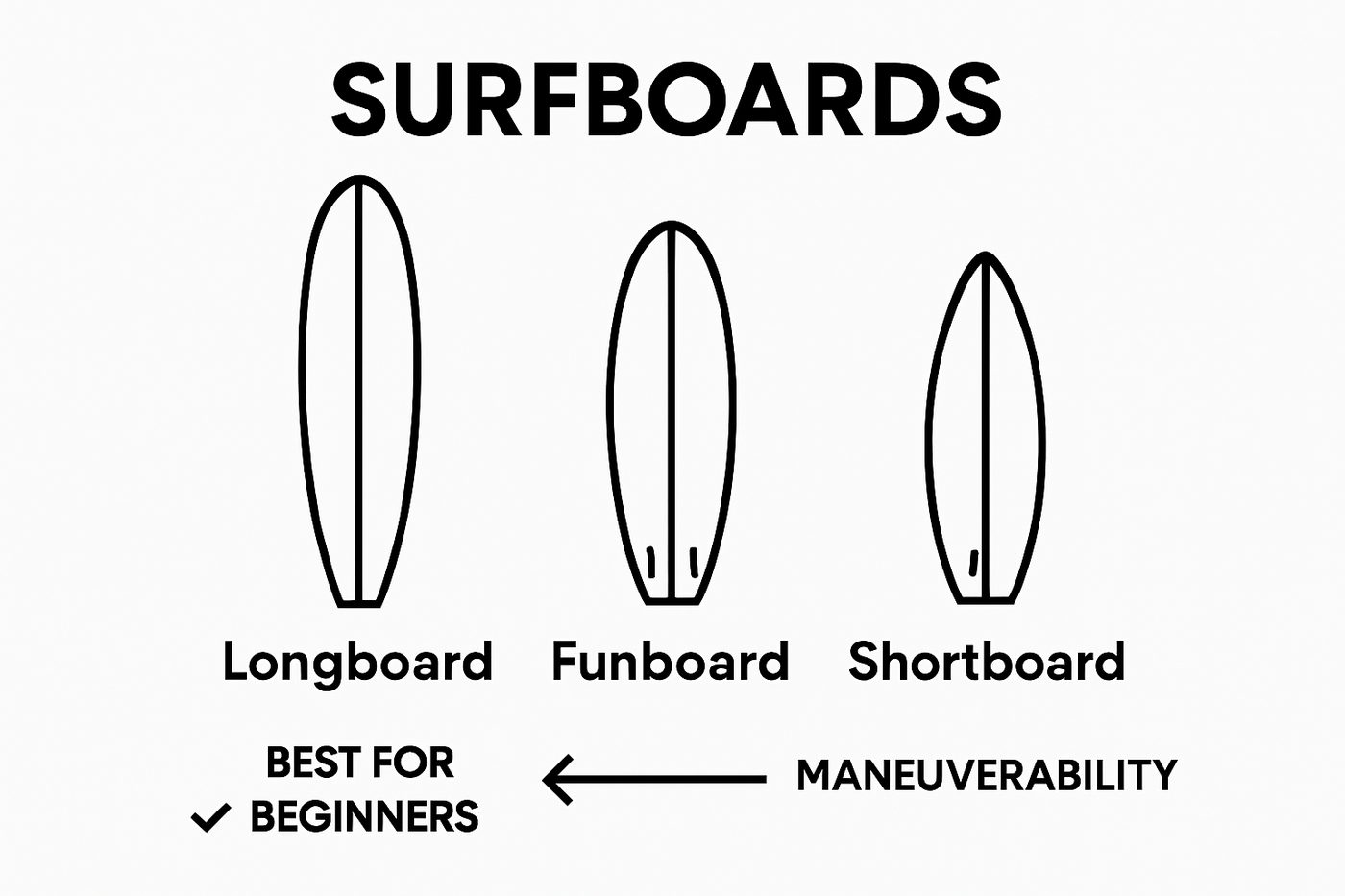
Different surfboard categories offer unique learning experiences and challenges. Longboards, with their extended length and increased volume, provide exceptional stability and forgiveness for beginners. Conversely, shortboards demand more advanced techniques and offer increased maneuverability for experienced surfers.
Surfboard categories and their learning implications include:
- Longboards: Stability and easy wave catching
- Funboards: Balanced performance for intermediate learners
- Shortboards: Advanced maneuverability
- Soft-top boards: Safe learning platforms
- Hybrid designs: Versatile learning options
Successful surfing skill development requires understanding how board characteristics interact with individual physical capabilities and ocean conditions. Choosing the right surfboard becomes a strategic decision that can accelerate or impede learning progress.
The following table organizes the main types of surfboards mentioned in the article alongside their characteristics and suitability for beginner surfers.
| Surfboard Type | Key Characteristics | Suitability for Beginners |
|---|---|---|
| Longboard | Long length, high volume, rounded nose | Excellent (stable, easy to learn) |
| Funboard | Medium length, moderate volume, versatile | Good (balanced for intermediates) |
| Shortboard | Short length, low volume, pointed nose | Not recommended (advanced only) |
| Soft-top Board | Foam construction, safe, forgiving surface | Excellent (safe and easy to use) |
| Hybrid | Combination features from various boards | Good (versatile learning option) |
The Role of Safety and Awareness in Surfing
Surfing demands more than physical skill. It requires comprehensive safety awareness and strategic understanding of marine environments. Safety is not an optional consideration but a fundamental requirement for participating in this dynamic water sport, where environmental conditions can change rapidly and unpredictably.
Understanding Ocean Hazards and Risk Management
Ocean environments present complex and continuously evolving challenges that demand constant vigilance. Surfers must develop a sophisticated awareness of potential risks, including rip currents, underwater terrain, marine life interactions, and sudden weather changes. Recognizing and responding to these variables requires a combination of technical knowledge, physical preparedness, and mental resilience.
Critical safety awareness components include:
- Identifying potential underwater hazards
- Understanding local marine ecosystem characteristics
- Recognizing personal physical limitations
- Monitoring weather and ocean condition changes
- Developing emergency response strategies
According to the International Journal of Athletic Therapy and Training, comprehensive ocean safety education significantly reduces injury risks for novice surfers.
Personal Equipment and Protective Strategies
Effective safety in surfing extends beyond theoretical knowledge to practical protective measures. This involves selecting appropriate personal equipment, understanding its proper usage, and maintaining constant situational awareness. Protective gear such as wetsuits, leashes, and impact vests play crucial roles in mitigating potential risks.
Key safety equipment and strategies include:
- Wearing appropriately sized flotation devices
- Using surfboard leashes
- Maintaining physical fitness and swimming capabilities
- Practicing self-rescue techniques
- Surfing with experienced partners
Successful surfers recognize that safety is an integrated approach combining technical skills, environmental understanding, and personal preparedness. By prioritizing safety awareness, surfers transform potential risks into manageable challenges.
This table summarizes the most important ocean hazards and related safety strategies for beginner surfers, helping to visually reinforce the importance of safety and risk management in surfing.
| Ocean Hazard | Description | Safety Strategy |
|---|---|---|
| Rip Currents | Strong, narrow currents moving away from shore | Learn to identify and avoid; swim parallel |
| Underwater Terrain | Rocks, reefs, or sudden drop-offs under the water | Survey entry points; avoid unfamiliar spots |
| Marine Life | Potential encounters with creatures (e.g., jellyfish, sea urchins) | Be cautious; check local conditions |
| Sudden Weather Changes | Unexpected storms or shifting winds | Monitor weather; exit water if needed |
| Fatigue and Physical Limits | Overexertion, muscle cramps, exhaustion | Know your limits; rest when necessary |
Ready to Build Your Surf Skills Safely and Confidently?
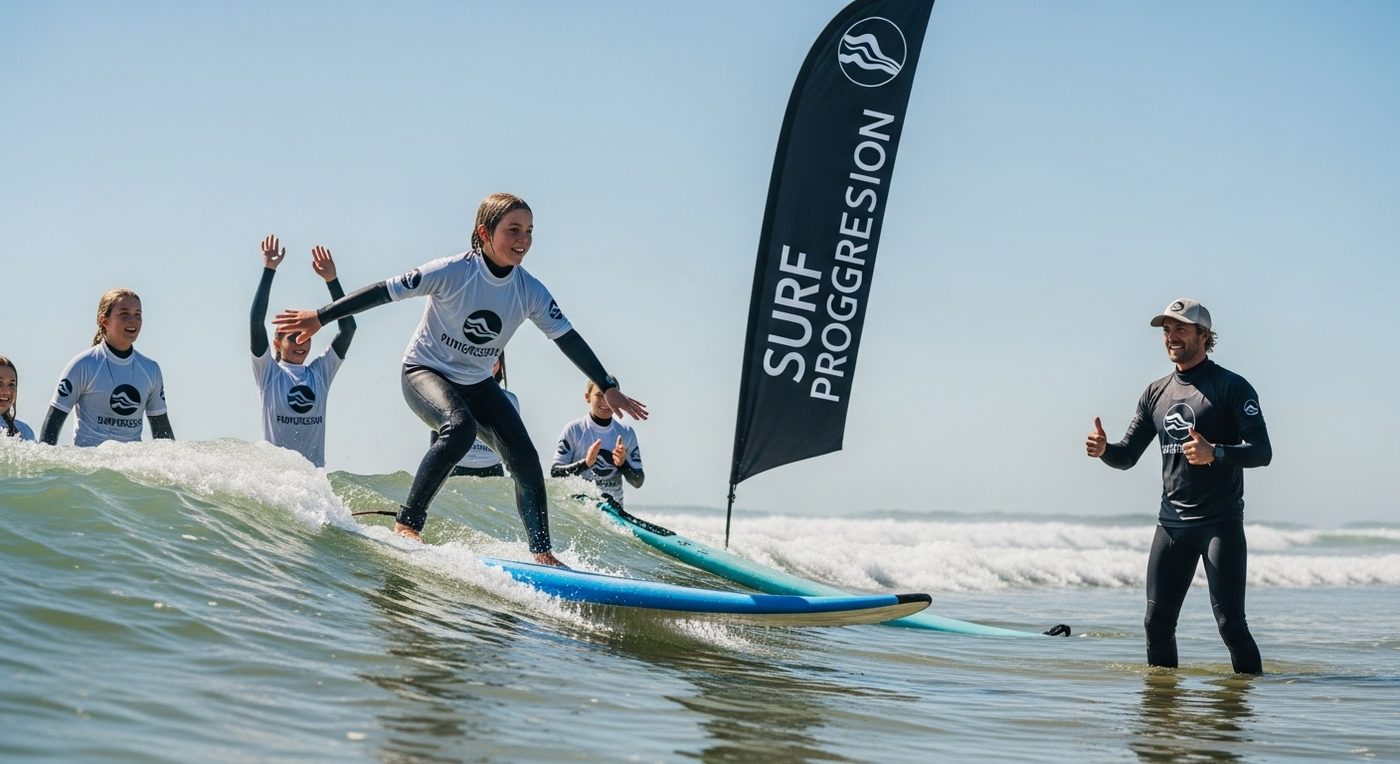
Understanding the fundamentals of surfing—like balance, paddling, and wave reading—is essential for every beginner. You may be feeling overwhelmed by ocean conditions, uncertain about which surfboard suits you, or simply want to avoid common injuries while gaining the right technique. At Ika Ika Surf School Tenerife, we know that learning these skills is not just about knowledge but about real-world practice with expert guidance only 50 meters from the best waves.
Take the first step toward safe and enjoyable surfing. Our team offers structured lessons, personal coaching, and quality rental equipment matched to your needs. Whether you wish to master fundamental skills or simply get comfortable in the water, our instructors are here to guide you every step of the way. Explore our main website for details on courses, rental gear options and easy booking contact. Secure your spot today and turn your surf goals into reality before the next swell arrives.
Frequently Asked Questions
What are the basic surf skills I need to learn as a beginner?
To start surfing, beginners should focus on essential skills such as paddle strength and endurance, board control and balance, wave selection and timing, understanding ocean dynamics, proper stance, and weight distribution.
Why is understanding ocean conditions important for surfers?
Understanding ocean conditions is crucial for surfers as it helps them navigate waves safely and effectively. Knowledge of factors like wave height, swell direction, and tidal influences allows surfers to make better decisions while surfing.
How does surfboard type influence my learning as a beginner?
The type of surfboard you choose can greatly impact your learning experience. Longboards, for example, offer more stability and are easier for beginners to catch waves, while shortboards require more advanced skills and provide enhanced maneuverability for experienced surfers.
What safety measures should I take while surfing?
Safety measures in surfing include being aware of ocean hazards, understanding local marine conditions, using appropriate protective gear like leashes and wetsuits, and practicing self-rescue techniques. It’s also important to recognize your physical limitations and surf with experienced partners.
🏄 See you in the water?
Book your lesson →