
Understanding Beginner Surfing Tips for Tenerife
Published on 14 September 2025 · 9 min read
Surfing has captured the imagination of people all over the world, drawing beginners to the edge of the ocean for a firsthand taste of riding waves. Some think catching your first wave is almost impossible, but studies find surfing can actually boost mental health for newcomers and seasoned riders alike. What surprises most beginners is that surfing works every muscle group and gives a stronger cardio workout than jogging for the same time. The true magic is not just about balance and sails but the sense of connection to nature and community that follows every surf session.
Table of Contents
- What Is Surfing And Its Appeal To Beginners?
- Why Learning To Surf In Tenerife Matters?
- How Surfing Works: Waves, Boards, And Technique
- Key Concepts Of Surfing: Safety, Etiquette, And Environment
Quick Summary
| Takeaway | Explanation |
|---|---|
| Surfing is a full-body workout. | Engaging in surfing improves strength, balance, and cardiovascular fitness. It offers a comprehensive fitness experience. |
| Tenerife is ideal for beginners. | The island’s warm waters and consistent waves provide perfect learning conditions and supportive environments for novice surfers. |
| Understanding wave mechanics is crucial. | Beginners must learn to read wave patterns and ocean dynamics to improve their surfing skills effectively. |
| Safety and etiquette are essential. | Responsible surfing involves awareness of safety protocols and respecting surfing etiquette to protect all surfers and marine environments. |
| Surfing fosters personal growth. | Learning to surf in a vibrant community encourages resilience, environmental respect, and personal development in a fun, challenging environment. |
What is Surfing and Its Appeal to Beginners?
Surfing represents a thrilling water sport that connects humans with oceanic energy through balance, skill, and an intimate relationship with waves. At its core, surfing involves riding waves using a surfboard, transforming natural water dynamics into an exhilarating personal experience. Riders harness wave momentum, gliding across water surfaces with grace and precision.
The Physical and Mental Dynamics of Surfing
Surfing transcends mere physical activity. Research shows that surfing provides significant psychological benefits, improving mental health and overall well-being. Beginners quickly discover that surfing is more than a sport—it is a holistic experience engaging body, mind, and environment.
The appeal for newcomers stems from multiple interconnected factors:
Here is a table summarizing the physical, mental, and social benefits of surfing for beginners as discussed in this section:
| Benefit Type | Description |
|---|---|
| Physical Fitness | Improves strength, balance, and cardiovascular fitness with a full-body workout |
| Mental Well-being | Provides meditative connection with nature and boosts psychological health |
| Personal Growth | Encourages resilience, helps challenge personal limits, and promotes developmental skills |
| Social Connection | Fosters opportunities to connect within inclusive and vibrant surfing communities |
| Environmental Awareness | Deepens respect for marine environments and promotes responsible interaction |
- Full body workout that improves strength, balance, and cardiovascular fitness
- Meditative connection with natural environments
- Opportunity to challenge personal limits and develop resilience
- Potential for social connection within surfing communities
Understanding Wave Interaction
Successful surfing requires understanding wave mechanics and ocean dynamics. Beginners learn to read wave patterns, anticipate water movements, and develop intuitive responses. This skill development transforms surfing from a challenging activity into an art form where human movement synchronizes with natural rhythms.
The learning journey involves progressive skill acquisition. Initial stages focus on fundamental techniques like paddling, balance, and wave selection. As practitioners advance, they develop nuanced understanding of surf conditions, board control, and personal style. Each wave becomes a unique canvas for individual expression, making surfing an endlessly engaging pursuit that combines physical prowess with creative interpretation.
Why Learning to Surf in Tenerife Matters?
Tenerife emerges as an exceptional destination for beginner surfers, offering unique geographical and environmental advantages that transform learning surfing into an extraordinary experience. The island’s strategic location in the Canary Islands provides consistent wave conditions, making it an ideal training ground for novice wave riders seeking to develop their skills in a supportive and dynamic environment.
Optimal Surfing Conditions
Research in environmental health studies highlights how locations like Tenerife offer remarkable surfing conditions that support skill development and personal growth. The island’s diverse coastline presents multiple surf spots catering to different skill levels, ensuring beginners can find appropriate waves for their learning journey.
Key advantages of learning surfing in Tenerife include:
The following table highlights and compares the key features of learning to surf in Tenerife, focusing on environment, culture, and instructional aspects:
| Feature | Description |
|---|---|
| Year-round Warm Water | Enables comfortable surf sessions in all seasons |
| Consistent Wave Patterns | Offers reliable surf conditions ideal for regular practice |
| Diverse Surf Spots | Provides beaches with waves suitable for different skill levels |
| Experienced Surf Instructors | Access to professional instruction tailored for beginners |
| Supportive Surf Culture | Encourages community, cultural exchange, and environmental respect |
| Safe Learning Environments | Reduces risks for beginners through accessible beaches and knowledgeable guidance |
- Year-round warm water temperatures
- Consistent wave patterns
- Multiple beaches with varying wave characteristics
- Professional surf schools with experienced instructors
- Safe and supportive learning environments
Cultural and Personal Transformation
Beyond technical skill acquisition, learning to surf in Tenerife represents a holistic personal development experience. The island’s surf culture encourages environmental awareness, physical fitness, and mental resilience. Beginners not only learn wave riding techniques but also immerse themselves in a lifestyle that promotes personal growth, connection with nature, and intercultural understanding.
The surfing experience in Tenerife goes beyond mere sport. It becomes a transformative journey where individuals challenge themselves, connect with local communities, and develop a profound respect for oceanic environments. Each wave becomes an opportunity for learning, each beach a classroom for personal discovery, and each surfing session a step towards understanding oneself and the broader world.
How Surfing Works: Waves, Boards, and Technique
Surfing represents a complex interaction between natural oceanic forces, specialized equipment, and human skill. Understanding the fundamental mechanics transforms surfing from a mysterious art into an accessible and learnable activity for beginners eager to master wave riding techniques.
Wave Dynamics and Ocean Science
According to NOAA, ocean waves emerge from intricate interactions between wind, water depth, and geographical coastal configurations. Surfers must comprehend these underlying scientific principles to effectively predict and navigate wave behavior.
Key wave characteristics critical for surfers include:
- Wave height and potential energy
- Wave period and frequency
- Breaking wave patterns
- Wind direction and ocean floor topography
- Local coastal geographical features
Surfboard Design and Function
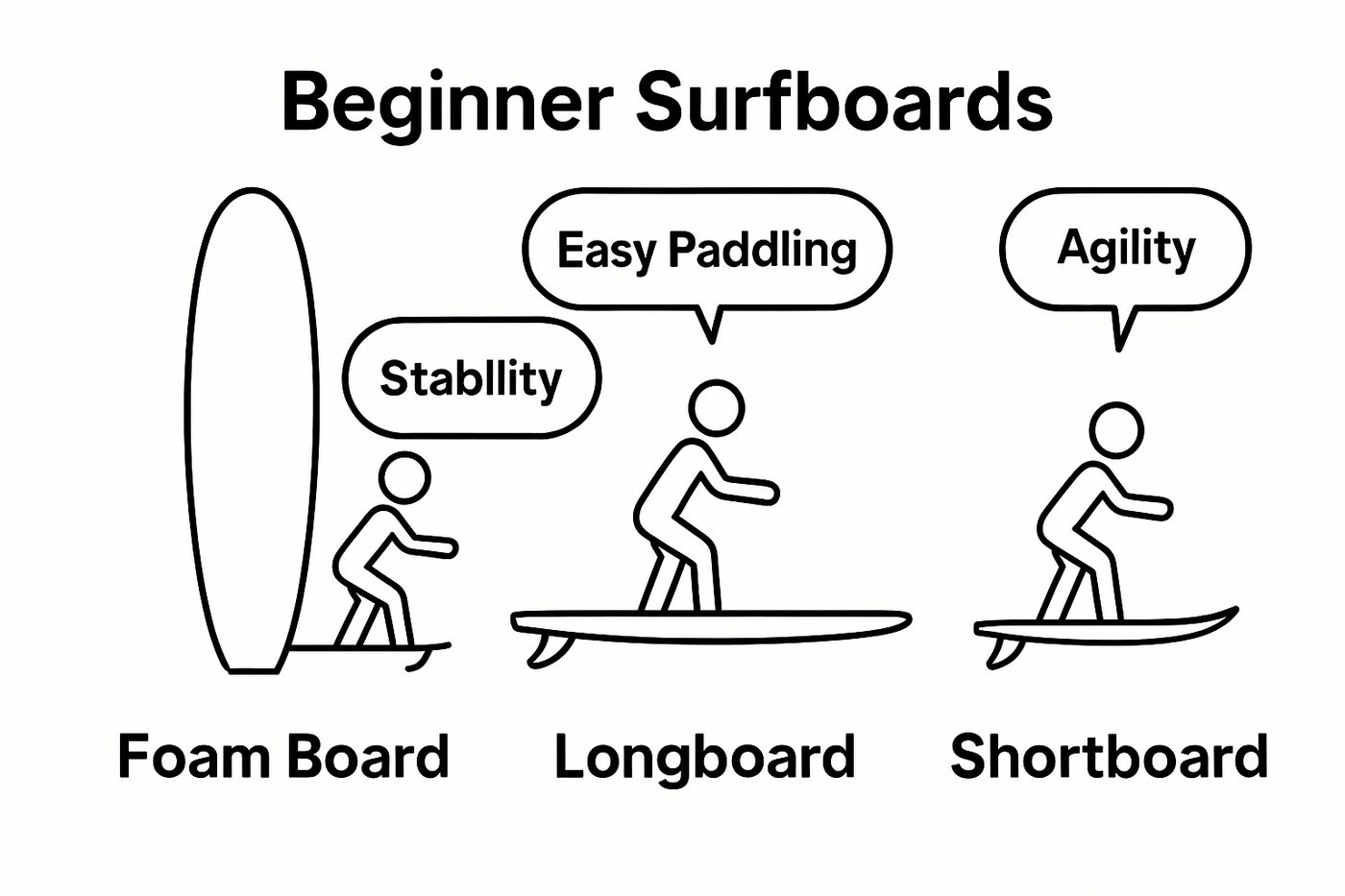
Surfboards are precision-engineered instruments designed to interact seamlessly with wave dynamics. Different board shapes and materials influence performance, stability, and maneuverability. Beginners typically start with larger, more stable boards that provide greater buoyancy and easier wave catching, gradually transitioning to more specialized designs as their skills advance.
The surfboard functions as an extension of the rider, translating human movement and balance into fluid motion across water surfaces. Understanding board design helps surfers select equipment matching their skill level, physical characteristics, and intended surfing style. Factors like board length, width, thickness, and fin configuration dramatically impact wave riding performance and learning progression.
Key Concepts of Surfing: Safety, Etiquette, and Environment
Surfing extends far beyond physical technique, encompassing a holistic approach that integrates personal safety, community respect, and environmental consciousness. Successful surfers understand that their practice involves more than riding waves—it requires a comprehensive understanding of marine ecosystems, social interactions, and personal responsibility.
Surfing Safety Fundamentals
Guidelines from the Royal National Lifeboat Institution emphasize the critical importance of understanding ocean dynamics and personal preparedness. Safety in surfing involves comprehensive awareness of environmental conditions, personal skill limitations, and proactive risk management strategies.
Key safety considerations for beginner surfers include:
- Understanding local wave and current conditions
- Wearing appropriate protective gear
- Developing strong swimming capabilities
- Learning basic ocean rescue techniques
- Surfing within personal skill boundaries
Surf Community Etiquette and Environmental Respect
Surfing culture operates on unwritten yet deeply respected rules that govern interactions between surfers and their natural environment.
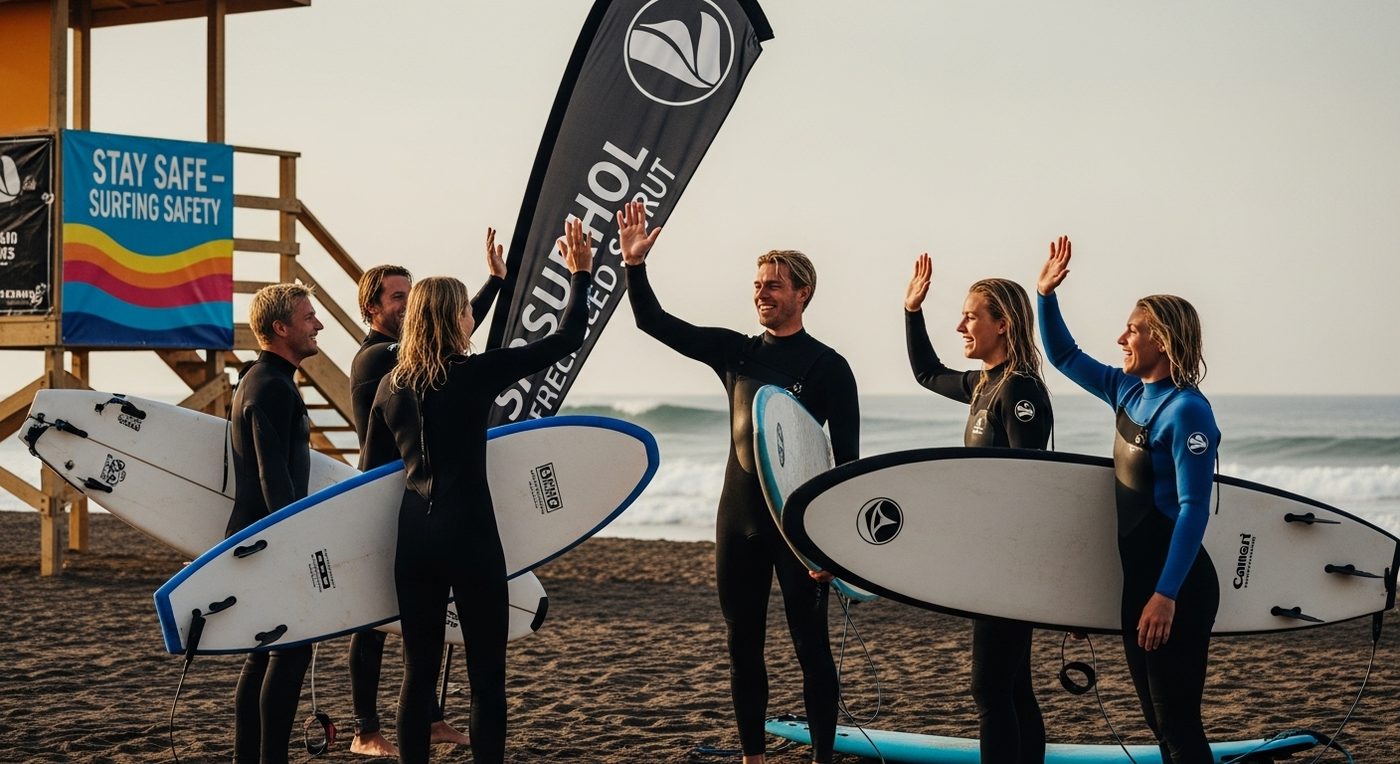 These principles ensure collective safety, mutual respect, and preservation of marine ecosystems. Responsible surfing means recognizing oneself as a temporary visitor in a complex, delicate marine environment.
Core principles of surf etiquette transcend simple rules—they represent a philosophy of harmonious coexistence.
This table outlines the core principles of surf etiquette and environmental respect highlighted in the article:
| Principle | Explanation |
|---|---|
| Share Wave Spaces | Take turns and respect the right-of-way to avoid collisions |
| Prioritize Safety | Ensure the well-being of self and others by following safety protocols in the water |
| Respect Nature | Treat the ocean and beaches with care, leaving no trace and minimizing environmental impact |
| Aid Fellow Surfers | Help less experienced surfers and cooperate in case of emergencies |
| Foster Community | Build a positive and inclusive atmosphere among local and visiting surfers |
The Fastest Way to Build Your Surf Confidence in Tenerife
If you are eager to turn beginner tips into real surfing skills, it is time to bridge the gap between theory and action. The journey from reading about wave dynamics and safety to actually standing on a surfboard can be challenging, especially if you struggle with balance, understanding wave selection, or finding a supportive learning environment. That is where Ika Ika Surf School Tenerife can change your experience for the better. You get expert instructors, a welcoming community, and access to premium gear only steps away from the heart of Playa de las Américas.
Transform your surfing journey by booking a lesson or equipment rental today. Let trained professionals guide you through correct technique, ocean safety, and surf etiquette, as described in the article. Spots fill quickly, especially during peak surf season. Visit Ika Ika Surf School Tenerife to see why so many beginners trust us to kickstart their adventure in Tenerife. Your perfect wave is waiting—experience it now.
Frequently Asked Questions
What are the essential tips for beginner surfers?
To start surfing successfully, focus on mastering balance, paddling techniques, and wave selection. Practicing in smaller, manageable waves helps beginners gain confidence and skill.
How can I ensure my safety while surfing?
Prioritize safety by understanding local wave conditions, wearing appropriate gear, and knowing your swimming limits. It’s also important to stay aware of your surroundings and practice basic ocean rescue techniques.
What should I know about surfboard types for beginners?
Beginners typically start with larger, stable surfboards that offer greater buoyancy, making it easier to catch waves. As skills improve, transitioning to shorter, more specialized boards becomes an option for enhanced maneuverability and performance.
How can I effectively learn surfing etiquette?
Learning surfing etiquette involves understanding unwritten rules of respectful coexistence in the water. This includes sharing waves, prioritizing safety for everyone, and showing appreciation for the ocean environment.
🏄 See you in the water?
Book your lesson →