
How to Choose a Surfboard: Find Your Perfect Match
Published on 5 September 2025 · 13 min read
Picking your first surfboard can feel overwhelming with so many shapes, sizes, and options on display. You might think going smaller looks cooler or that advanced boards are only for experts, but the real trick is not what looks best under your arm. A beginner surfer can improve up to 50 percent faster just by choosing a bigger, more buoyant board according to experts. Most new surfers make the mistake of grabbing the wrong size and end up struggling in the water—a simple switch makes all the difference.
Table of Contents
- Step 1: Evaluate Your Skill Level And Goals
- Step 2: Determine The Right Surfboard Type For You
- Step 3: Match Your Body Size And Weight To Board Dimensions
- Step 4: Explore Surfboard Materials And Designs
- Step 5: Test Potential Boards For Performance And Comfort
- Step 6: Finalize Your Choice And Make The Purchase
Quick Summary
| Key Point | Explanation |
|---|---|
| 1. Assess Your Skill Level and Goals | Understand your surfing abilities and aspirations for selecting the right board type. |
| 2. Choose the Right Surfboard Type | Select a board category that aligns with your skill level and the typical wave conditions you encounter. |
| 3. Match Body Size to Board Dimensions | Ensure board volume and dimensions correspond with your body weight and height for optimal performance. |
| 4. Test Boards for Performance and Comfort | Engage in hands-on testing to find a board that feels right and meets your personal surfing needs. |
| 5. Finalize Purchase with Informed Decisions | Make your final choice balancing technical specifications and personal comfort, while considering budget and maintenance. |
Step 1: Evaluate Your Skill Level and Goals
Choosing the right surfboard starts with honest self-assessment. Your skill level and surfing goals are the foundation of selecting a board that will enhance your performance and enjoyment. Surfers range from absolute beginners to advanced wave riders, and each category requires a different board design.
Beginners need stability and forgiveness in their first surfboards. Larger, more buoyant boards with greater volume provide the best learning platform. A longboard or funboard offers more paddling stability, easier wave catching, and increased balance support. These boards typically measure between 8 and 9 feet, with wider, rounder shapes that help new surfers build confidence and fundamental skills.
Intermediate and advanced surfers can explore more specialized board designs that match their specific performance objectives. According to Surfing England, board selection becomes more nuanced as your skills progress. Advanced riders might prefer shorter, more responsive shortboards that allow for aggressive turning and radical maneuvers. Consider these key evaluation factors:
- Wave types you typically ride
- Your physical fitness and strength
- Surfing style and performance goals
- Frequency of surfing
Realistic self-evaluation prevents purchasing a board that will frustrate your learning process. If you struggle to paddle, catch waves, or maintain balance, you have likely selected a board beyond your current skill level. Professional surf instructors can provide personalized recommendations based on a thorough assessment of your abilities and potential.
Remember that progression takes time. Your first surfboard should feel comfortable and supportive, not intimidating. As your skills improve, you can gradually transition to more specialized boards that match your evolving surfing style and ambitions.
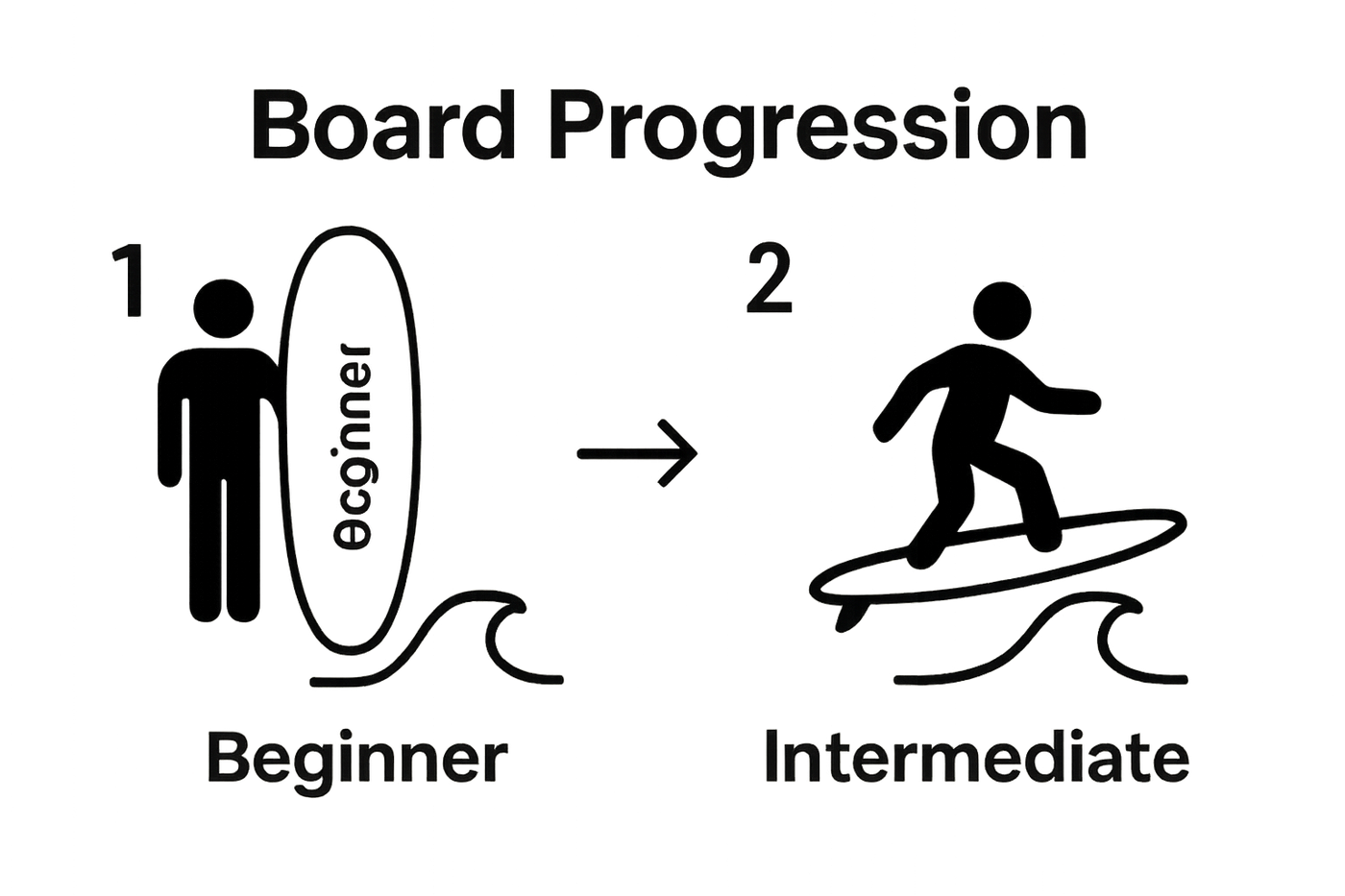
Step 2: Determine the Right Surfboard Type for You
Surfboards are not one-size-fits-all equipment. Each type serves different skill levels, wave conditions, and surfing styles. Understanding the primary surfboard categories will help you make an informed selection that matches your personal surfing journey.
Longboards represent the classic surfing experience, offering maximum stability and ease of use. Typically measuring 9 to 12 feet, these boards provide exceptional paddling power and wave-catching ability. They excel in smaller, gentler waves and are perfect for beginners learning fundamental techniques. The generous volume and width create a forgiving platform that builds confidence and enables smoother learning progression.
Shortboards stand in stark contrast, designed for experienced surfers seeking high performance and radical maneuverability. Ranging from 5.5 to 6.5 feet, these boards demand advanced skills and physical strength. They shine in steeper, more powerful waves, allowing quick turns, sharp cuts, and aerial tricks. According to University of Canterbury research, shortboards require significant technique and are typically suited for surfers with at least two years of consistent experience.
For riders transitioning between beginner and intermediate levels, funboards offer an excellent compromise. These boards combine elements of longboards and shortboards, typically measuring 7 to 8.5 feet. They provide more maneuverability than longboards while maintaining sufficient stability for developing surfers. Funboards help bridge the skill gap, allowing smoother progression without overwhelming technical challenges.
Consider these critical factors when selecting your board type:
- Your current skill level
- Typical wave conditions in your surfing location
- Physical fitness and strength
- Long-term surfing goals
Remember that surfboard selection is a personal journey. While guidelines help, ultimately your comfort, confidence, and enjoyment matter most. Trying different board types through rentals or lessons can provide invaluable insights into your ideal surfboard match.
Below is a comparison table summarizing the main surfboard types, their recommended skill levels, typical lengths, and ideal wave conditions to help you choose the best option for your needs.
| Surfboard Type | Recommended Skill Level | Typical Length | Ideal Wave Conditions |
|---|---|---|---|
| Longboard | Beginner | 9–12 ft | Small, gentle waves |
| Funboard | Beginner-Intermediate | 7–8.5 ft | Versatile, moderate |
| Shortboard | Advanced | 5.5–6.5 ft | Steep, powerful |
Step 3: Match Your Body Size and Weight to Board Dimensions
Selecting a surfboard is more than aesthetic preference—it requires precise body measurements and understanding how your physical characteristics interact with board design. Your body weight, height, and fitness level directly influence board performance and your ability to effectively ride waves.
Board volume becomes the critical metric connecting your physical attributes to surfboard selection. Heavier and taller surfers require boards with greater volume to provide adequate buoyancy and stability. Conversely, lighter or more petite surfers need boards with less volume to maintain maneuverability. According to Surfing England, matching board dimensions ensures optimal wave-catching ability and control.
Generally, surfboard volume recommendations follow these approximate guidelines:
- Beginner surfers: Board volume around 50-100% of body weight in liters
- Intermediate surfers: Board volume around 35-50% of body weight in liters
- Advanced surfers: Board volume around 25-35% of body weight in liters
Fitness and muscle composition also play significant roles in board selection. Muscular, athletic individuals might require slightly different volume calculations compared to less physically developed surfers. Muscle density affects paddling power, balance, and overall board responsiveness.
Height influences board length recommendations. Taller surfers typically need longer boards to accommodate their frame, while shorter surfers benefit from more compact designs. A simple measurement technique involves standing next to a potential surfboard—an ideal board should reach somewhere between your chin and nose when vertically positioned.
Practical tip: Don’t obsess over exact measurements. Comfort and intuitive feel matter most. Many surf shops offer board-fitting consultations where experienced professionals can help you find the perfect match. Trying multiple board sizes during lessons or rentals provides invaluable hands-on experience in understanding how different dimensions affect your surfing performance.
Here is a reference table aligning recommended surfboard volume (in liters) with your surfing level and body weight for optimal board selection.
| Surfing Level | Volume Guideline (% of Body Weight in Liters) | Purpose |
|---|---|---|
| Beginner | 50%–100% | Maximum stability & learning |
| Intermediate | 35%–50% | Balance of control & support |
| Advanced | 25%–35% | Enhanced maneuverability |
Step 4: Explore Surfboard Materials and Designs
Surfboard materials and design represent the technological heart of wave riding. Modern surfboards blend advanced engineering with artistic craftsmanship, offering surfers unprecedented performance and durability. Understanding these materials helps you make an informed selection that matches your surfing style and environmental considerations.
Traditional surfboards primarily use polyurethane foam cores covered with fiberglass and resin. These classic constructions provide reliable performance but carry environmental concerns. Innovative materials are transforming surfboard manufacturing, introducing more sustainable and technologically advanced options. According to U.S. Department of Energy research, emerging materials like algae-based polyurethane represent exciting developments in surfboard technology.
Fiberglass remains the primary reinforcement material, with different weave patterns affecting board flexibility and strength. Carbon fiber offers enhanced performance for advanced surfers, providing increased rigidity and responsiveness. Lightweight epoxy resins have gained popularity, delivering superior strength-to-weight ratios compared to traditional polyester resins.
Key material considerations include:
- Environmental sustainability
- Performance characteristics
- Durability and maintenance requirements
- Weight and flex properties
Board design goes beyond material selection. Subtle variations in rocker (board curvature), rail shape, and fin configuration dramatically influence surfing performance. Nose and tail shapes determine how a board interacts with waves, with rounded pins offering smoother turns while squarer tails provide more aggressive edge control.
For budget-conscious surfers, used boards can offer excellent value. Inspect potential purchases carefully, checking for structural integrity, examining potential repair areas, and understanding how previous usage might impact performance. Professional surf shops often provide expert assessments and can help you evaluate a board’s condition and suitability for your skill level.
The table below organizes key surfboard material options and design features, summarizing their primary characteristics and special considerations for your selection.
| Material/Design Element | Characteristics | Considerations |
|---|---|---|
| Polyurethane/Fiberglass | Classic, reliable, proven | Heavier, less eco-friendly |
| Epoxy Resin | Lightweight, durable | Costlier, advanced performance |
| Carbon Fiber | Very stiff, responsive | Suited for experts, expensive |
| Algae-Based Polyurethane | Sustainable, innovative | Limited availability |
| Rocker, Rails, Fins | Dictate board feel & control | Impacts turning & wave response |
Step 5: Test Potential Boards for Performance and Comfort
Selecting the perfect surfboard requires more than theoretical knowledge—it demands hands-on experience. No amount of research can replace actually feeling a board’s performance in real wave conditions. Professional surf shops and rental facilities provide invaluable opportunities to test multiple boards before making a significant investment.
Rental programs and demo days offer structured environments to experiment with different board designs. Many surf schools provide board testing as part of their lesson packages, allowing you to experience how various board types respond to your personal surfing style. This practical approach helps bridge the gap between theoretical selection and actual performance.
According to Sports Medicine research, empirical testing reveals nuanced insights into individual surfing mechanics. During board trials, pay close attention to critical performance factors:
- Paddling efficiency
- Wave catching ability
- Stability while standing
- Turning responsiveness
- Overall comfort and intuitive feel
Comfort trumps technical specifications. A board that feels awkward or unresponsive will hinder your surfing progression, regardless of its theoretical perfect measurements. Trust your physical intuition during test rides. Some surfers immediately connect with a board, while others require multiple attempts to find their ideal match.
Consider requesting guidance from experienced surf instructors during board testing. Their professional eyes can provide objective feedback about how a specific board complements your current skill level and surfing technique. Many instructors can quickly identify whether a board suits your physical capabilities and learning trajectory.
Remember that board testing is an exploratory process. Don’t feel pressured to make an immediate purchase. Multiple trial sessions across different wave conditions will provide a comprehensive understanding of how a potential surfboard performs.
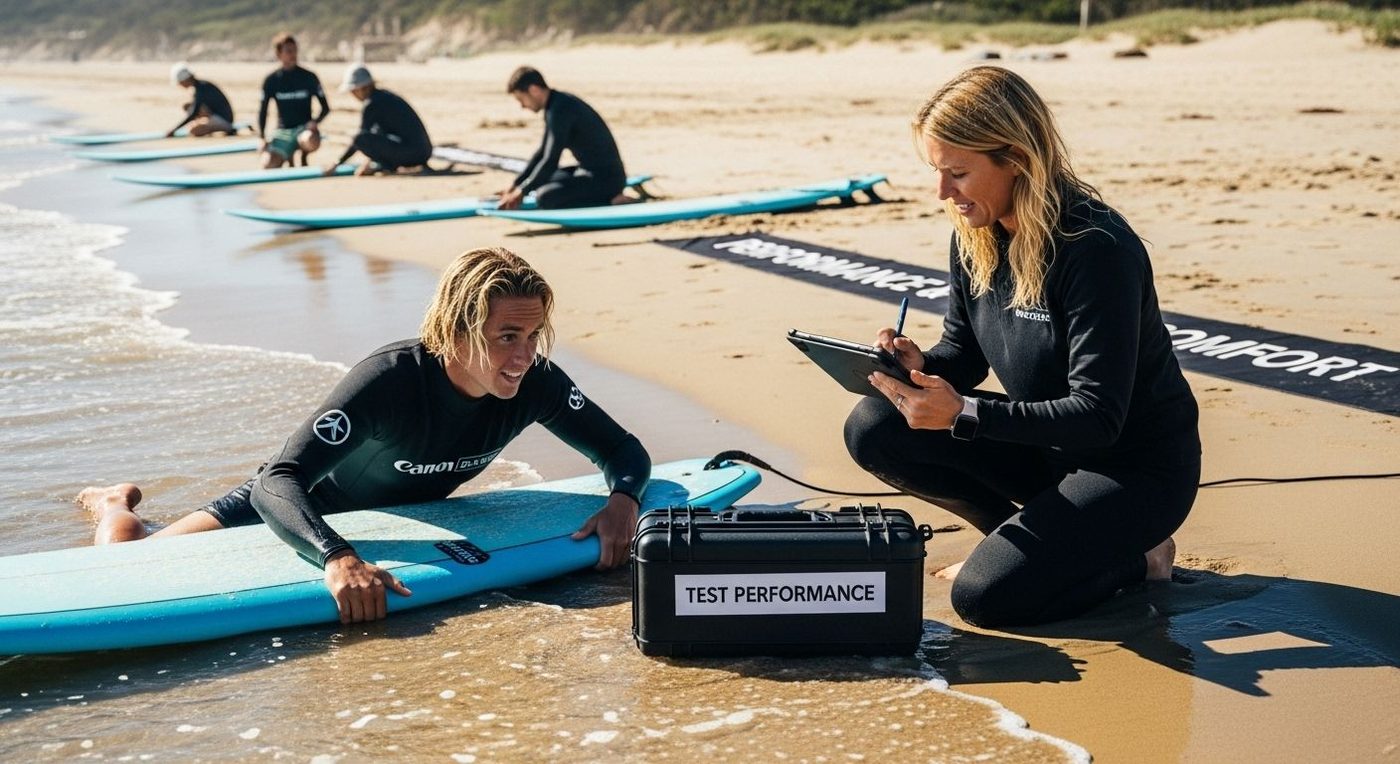 Patience and thorough testing ensure you invest in a board that will support your surfing journey.
Step 6: Finalize Your Choice and Make the Purchase
Finalizing your surfboard purchase represents the culmination of careful research, personal assessment, and hands-on testing. This moment transforms your surfing aspirations from theoretical planning into tangible reality. Making an informed decision requires balancing technical specifications with your intuitive connection to the board.
Budget considerations play a significant role in your selection process. High-quality surfboards represent substantial investments, ranging from $500 to $1500 depending on materials, design, and brand reputation. Consider purchasing from reputable surf shops that offer comprehensive warranties, expert advice, and potential future trade-in opportunities. According to Wikipedia’s surfing research, board selection should integrate multiple factors beyond mere price point.
Prioritize purchasing from specialized surf retailers who provide personalized guidance. These professionals can offer critical insights about board maintenance, potential modifications, and compatibility with your local wave conditions. Negotiate potential package deals that might include accessories like board bags, wax, or initial maintenance services.
Critical purchase considerations include:
- Comprehensive warranty coverage
- Return and exchange policies
- Potential customization options
- Manufacturer reputation
- Long-term durability
Protect your investment through proper maintenance. Request detailed care instructions from your retailer. Understanding how to clean, store, and protect your surfboard will extend its lifespan and maintain peak performance. Consider investing in a quality board bag to prevent dings, UV damage, and transportation-related wear.
Remember that your first surfboard is more than a piece of equipment—it’s a companion in your surfing journey. Choose a board that not only meets technical requirements but also inspires your confidence and excitement. Trust your instincts, leverage expert advice, and approach the purchase as an investment in your personal growth and aquatic adventures.
This checklist table will help ensure you cover all your grounds before finalizing your surfboard purchase, maximizing both performance and value.
| Purchase Checklist | Description |
|---|---|
| Warranty Coverage | Check for comprehensive protection |
| Return & Exchange Policy | Ensure flexibility for adjustments |
| Customization Options | Look for available modifications |
| Retailer Reputation | Buy from established, knowledgeable shops |
| Durability & Maintenance | Assess long-term care instructions and durability |
| Accessory Packages | Consider bundled deals on bags, wax, or basic maintenance |
Find Your Perfect Surfboard With Real Hands-On Guidance in Tenerife
Sorting through advice on skill levels, board types, and shape dimensions can leave you uncertain about what actually feels right in the water. Reading about board volume or rocker is helpful, but nothing compares to testing different boards with support from real instructors. If you feel overwhelmed by options or worried about picking the wrong surfboard for your skill level, you are not alone. Many surfers want stability and fast progression, but run into frustration when their board is too advanced or not suited to local conditions.
Take the guesswork out of your surfboard search by trying boards directly at Ika Ika Surf School Tenerife. Our team is ready to help you bridge the gap between theory and practice. Whether you need guidance after a lesson, want to rent gear to match your progress, or would like a one-on-one session tailored to your goals, you will find everything just steps from the waves. Book your spot now at Ika Ika Surf School Tenerife and experience the difference that expert support and hands-on testing can make. Start your surfing journey with the right board and confidence today.
Frequently Asked Questions
What type of surfboard is best for beginners?
Beginning surfers should look for larger and more buoyant boards, such as longboards or funboards, which offer maximum stability and ease of wave catching.
How do I match my body size and weight to a surfboard?
Your body weight and size influence the surfboard’s volume needed for optimal performance. Generally, beginners should choose a board volume that is 50-100% of their body weight in liters, while intermediate and advanced surfers require lower volume percentages.
What are the key differences between longboards and shortboards?
Longboards are typically 9 to 12 feet long, providing stability and are ideal for beginners. Shortboards measure 5.5 to 6.5 feet and are designed for experienced surfers looking for high performance and maneuverability in steeper waves.
How can I test a surfboard before purchasing?
Testing a surfboard can be done through rentals or demo days offered by surf schools and shops. During these sessions, pay attention to factors like paddling efficiency, stability, and overall comfort to ensure the board matches your surfing style.
Recommended
🏄 See you in the water?
Book your lesson →