
Understanding the Group Surf Lesson Guide for Beginners
Published on 18 September 2025 · 11 min read
Group surf lessons have exploded in popularity, drawing both travelers and locals to the water. One reason? Studies show group outdoor activities like surf lessons can dramatically improve psychological well-being for beginners. Most people expect to fumble alone or get stuck on basics, especially when learning something as intimidating as surfing. Instead, in a group setting, the collective energy and shared progress turn every wipeout into motivation. Something surprising happens when you paddle out with others—you learn faster and have way more fun than you ever thought possible.
Table of Contents
- What Is A Group Surf Lesson And Who Is It For?
- Why Group Surf Lessons Matter For Beginners And Tourists
- How Group Surf Lessons Operate: Key Components And Dynamics
- What You Can Expect During A Group Surf Lesson
- Understanding The Benefits Of Group Surf Lessons For Skill Development
Quick Summary
| Takeaway | Explanation |
|---|---|
| Group lessons are ideal for beginners | Beginners benefit most from structured, supportive group settings, reducing individual anxiety and aiding skill development. |
| Cost-effective learning option | Group surf lessons provide a more affordable alternative to private instruction, making it budget-friendly for learners. |
| Social interaction enhances learning | The communal environment fosters peer support, motivation, and shared experiences, accelerating confidence and skill acquisition. |
| Structured curriculum promotes progression | A systematic approach breaks down techniques, allowing participants to learn surfing fundamentals in manageable stages. |
| Psychological benefits improve well-being | Collaborative learning experiences reduce performance anxiety and enhance emotional resilience, contributing to improved psychological health. |
What is a Group Surf Lesson and Who is it For?
A group surf lesson represents a structured, social learning experience where multiple participants simultaneously receive professional surfing instruction from a qualified instructor. Unlike private lessons, these sessions create a collaborative environment where beginners can learn fundamental surfing skills together, sharing experiences and building confidence in a supportive setting.
Understanding the Group Surf Lesson Format
Group surf lessons typically involve 4-8 participants learning basic surfing techniques simultaneously. Research from Smart Wave Lessons highlights that these lessons offer significant advantages for new surfers. Participants receive collective instruction while having opportunities to observe and learn from both the instructor and fellow students.
Key characteristics of group surf lessons include:
- Shared learning environment
- Lower per-person cost compared to private instruction
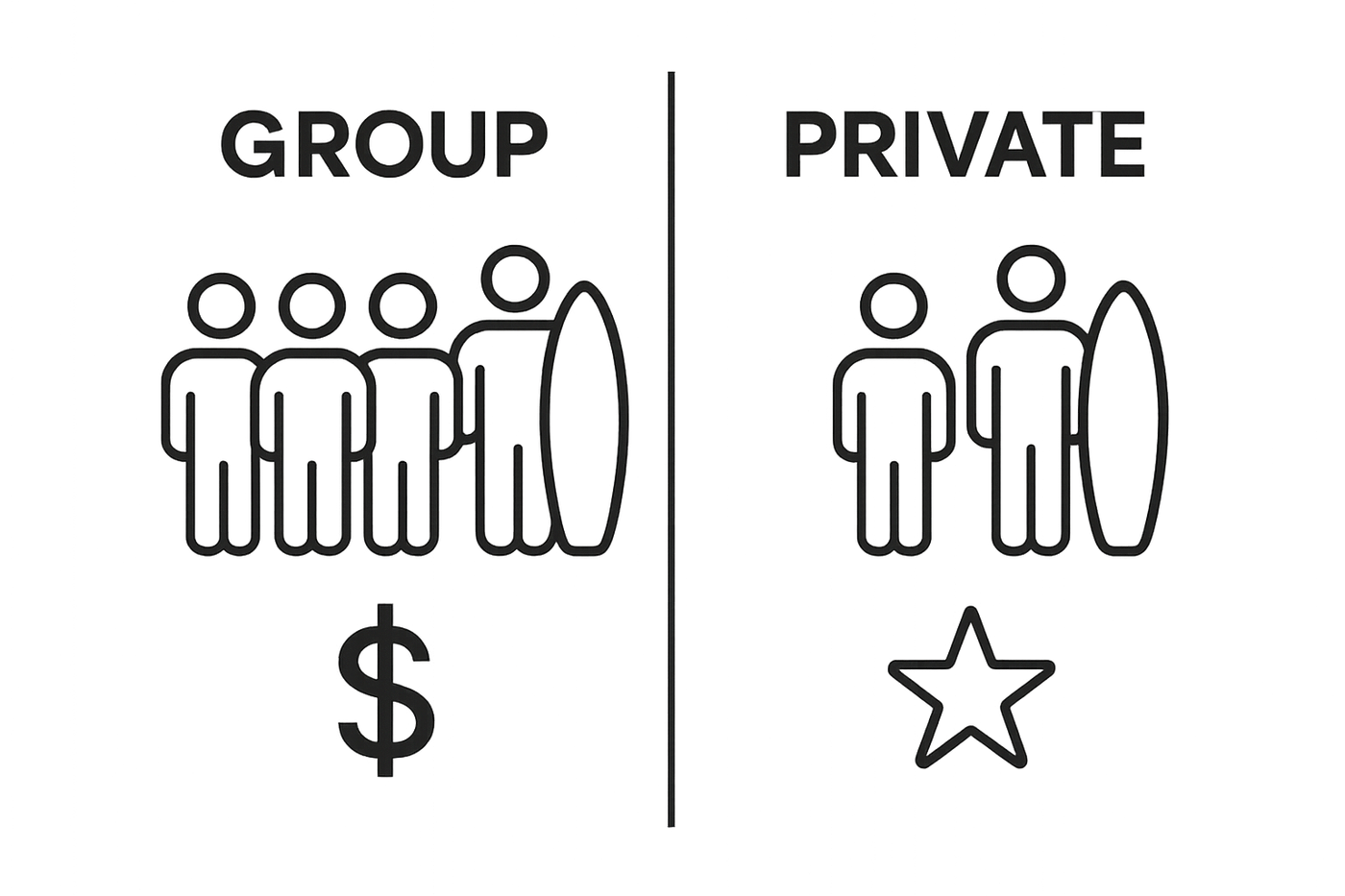
- Opportunities for social interaction and mutual support
- Professional guidance from experienced surf instructors
- Structured curriculum covering basic surfing techniques
Ideal Participants for Group Surf Lessons
Group surf lessons are perfectly suited for specific types of learners. Beginners with little to no surfing experience will find these sessions most beneficial. They are particularly recommended for:
- Tourists seeking a fun group activity
- Friends or families wanting to learn surfing together
- Budget-conscious learners looking for affordable instruction
- Individuals who enjoy social learning environments
- People aged 10-50 with moderate fitness levels
The communal nature of group lessons helps reduce individual performance anxiety. Participants can learn at their own pace while benefiting from collective energy and encouragement. Instructors design these lessons to accommodate varying skill levels, ensuring everyone receives appropriate guidance and support throughout the learning process.
The following table compares the main differences and similarities between group and private surf lessons, helping beginners decide which format best suits their needs.
| Feature | Group Surf Lessons | Private Surf Lessons |
|---|---|---|
| Instruction Format | Multiple participants with collective instruction | One-on-one, individualized guidance |
| Cost Per Person | More affordable | Higher |
| Social Interaction | High; peer support and shared experiences | Low; primarily instructor-student |
| Learning Pace | Adjustable; collective progress | Fully tailored to individual needs |
| Psychological Support | Strong; group motivation and anxiety reduction | Depends on instructor chemistry |
| Skill Level Suitability | Best for beginners and social learners | Suited for all levels |
| Scheduling Flexibility | Set class times, may be less flexible | Flexible scheduling based on client |
Why Group Surf Lessons Matter for Beginners and Tourists
Group surf lessons provide more than just basic instruction. They transform the learning experience for beginners and tourists by creating a supportive, engaging environment that reduces anxiety, builds confidence, and accelerates skill development. These sessions go beyond traditional learning methods by integrating social interaction, professional guidance, and structured skill progression.
Psychological Benefits of Collaborative Learning
Research from BMC Public Health demonstrates that group-based outdoor activities like surf lessons significantly improve participants’ psychological well-being. For beginners and tourists, this means overcoming initial fears and building confidence through shared experiences. The collective environment allows individuals to observe others, learn from their mistakes, and receive encouragement from both instructors and fellow participants.
Key psychological advantages include:
- Reduced performance anxiety
- Enhanced motivation through peer support
- Increased confidence in challenging environments
- Shared emotional experience of learning
- Lower perceived risk of failure
Practical Advantages for Tourists and Beginners
Group surf lessons offer unique practical benefits that make them particularly attractive for tourists and first-time surfers. These sessions provide a cost-effective, low-pressure introduction to surfing that combines professional instruction with social interaction. Tourists can quickly gain basic skills, understand ocean safety, and create memorable experiences without significant individual investment.
Practical benefits for participants include:
- Affordable learning option compared to private lessons
- Structured introduction to surfing techniques
- Safe and supervised learning environment
- Opportunity to meet other travelers and surf enthusiasts
- Quick skill acquisition through professional guidance
The group format allows beginners to progress at a comfortable pace, receiving personalized attention within a collective setting. Instructors can adapt their teaching methods to accommodate different skill levels, ensuring each participant receives appropriate support and challenges. For tourists, these lessons represent more than just a sporting activity they are a gateway to understanding local culture, building confidence, and creating lasting memories of their travel experience.
How Group Surf Lessons Operate: Key Components and Dynamics
Group surf lessons represent a carefully structured learning experience designed to introduce participants to surfing through systematic, progressive instruction. These sessions blend theoretical knowledge, physical training, and practical ocean skills into a comprehensive learning approach that ensures participants develop foundational surfing competencies.
Lesson Structure and Preparation
According to Laguna Beach Surf School, group surf lessons typically follow a structured format that prioritizes safety and skill development. Before entering the water, participants engage in crucial preparatory activities that set the foundation for their surfing experience.
Key preparatory components include:
- Equipment familiarization and safety briefing
- Land-based technique demonstration
- Physical warm-up and stretching exercises
- Basic ocean and wave understanding
- Introduction to surfing terminology and etiquette
Practical Instruction and Skill Progression
During the practical session, instructors implement a graduated learning approach that allows participants to develop skills incrementally. The lesson typically begins in shallow, waist-deep water where students can practice fundamental techniques with minimal risk. Instructors maintain a low student-to-instructor ratio to provide personalized guidance and immediate feedback.
Key practical instruction elements include:
- Paddling techniques
- Balance and board control
- Wave selection and timing
- Safe take-off and standing procedures
- Basic turning and maneuvering skills
The group dynamics create a supportive learning environment where participants can observe each other, share experiences, and build collective confidence. Instructors carefully manage the group, ensuring that each participant receives appropriate challenges and support based on their individual skill level and learning pace. By combining structured instruction, professional guidance, and a collaborative atmosphere, group surf lessons transform the complex skill of surfing into an accessible and enjoyable learning experience for beginners and tourists.
What You Can Expect During a Group Surf Lesson
A group surf lesson is a dynamic, interactive experience that combines professional instruction, skill development, and social interaction. Participants embark on a structured journey designed to transform novice learners into confident, basic surfers through a carefully orchestrated learning process that balances safety, technique, and enjoyment.
Initial Orientation and Safety Briefing
According to the National Park Service, group activities require clear communication and established expectations. At the beginning of a group surf lesson, participants receive a comprehensive orientation that sets the stage for a safe and productive learning experience. This initial phase is crucial for establishing group dynamics, understanding safety protocols, and preparing mentally and physically for the surfing instruction.
Key orientation components include:
- Introduction to instructors and fellow participants
- Overview of lesson objectives and structure
- Safety guidelines and emergency procedures
- Equipment explanation and proper usage
- Basic ocean awareness and environmental considerations
Progressive Learning and Skill Development
The lesson progresses through carefully designed stages that gradually introduce surfing skills. Instructors break down complex techniques into manageable steps, allowing participants to build confidence and competence incrementally. The learning environment is supportive and adaptable, with instructors providing personalized feedback and modifications based on individual progress.
Key skill development stages include:
- Land-based technique and body positioning practice
- Shallow water board handling and balance training
- Paddling and wave catching techniques
- Standing up and basic surfing maneuvers
- Individual and group feedback sessions
Participants can expect a mix of structured instruction, hands-on practice, and moments of spontaneous learning. The group format allows for peer observation, mutual encouragement, and shared experiences that enhance the overall learning process. Instructors carefully manage group dynamics, ensuring that each participant feels supported, challenged, and engaged throughout the lesson.
This table summarizes the key sequential components of a typical group surf lesson, clarifying what beginners can expect during the experience.
| Lesson Stage | Description |
|---|---|
| Orientation & Safety Briefing | Introduction to group, safety protocols, objectives, and equipment |
| Land-Based Technique Practice | Dry-run of stance, paddling, and pop-up techniques on the beach |
| Physical Warm-Up | Stretching and mobility exercises to prevent injury |
| Entry to Water | Guided entry to waist-deep water; board handling and initial practice |
| Practical Skill Application | Paddling, wave catching, standing up, and basic maneuvers in water |
| Feedback & Cool Down | Review, group discussion, individualized feedback, and closing routine |
Understanding the Benefits of Group Surf Lessons for Skill Development
Group surf lessons offer a sophisticated approach to skill acquisition that goes beyond traditional individual instruction. These collaborative learning environments leverage social dynamics, professional guidance, and structured methodologies to accelerate surfing skill development in ways that individual lessons cannot replicate.
Psychological and Cognitive Learning Mechanisms
Research from the Journal of Sports Sciences reveals that group-based instruction facilitates unique learning mechanisms that enhance skill progression. Participants benefit from observational learning, where they can simultaneously watch instructors and peers demonstrate techniques, allowing for rapid cognitive processing and motor skill integration.
Key psychological learning advantages include:
- Enhanced motivation through collective energy
- Reduced performance anxiety
- Increased confidence through shared experiences
- Accelerated skill acquisition via peer modeling
- Improved emotional resilience in challenging learning environments
Structured Skill Progression and Technical Development
Group surf lessons implement a systematic approach to skill development that breaks complex surfing techniques into manageable, progressive stages. Instructors design curriculum that allows participants to build foundational skills incrementally, ensuring a comprehensive understanding of surfing mechanics, ocean dynamics, and personal technique refinement.
Key technical skill development components include:
- Fundamental body positioning and balance training
- Wave reading and selection strategies
- Paddling efficiency and technique
- Board control and maneuvering skills
- Safety awareness and ocean environment understanding
The group learning format creates a unique ecosystem where participants learn not just from instructors but from each other’s experiences, challenges, and successes.
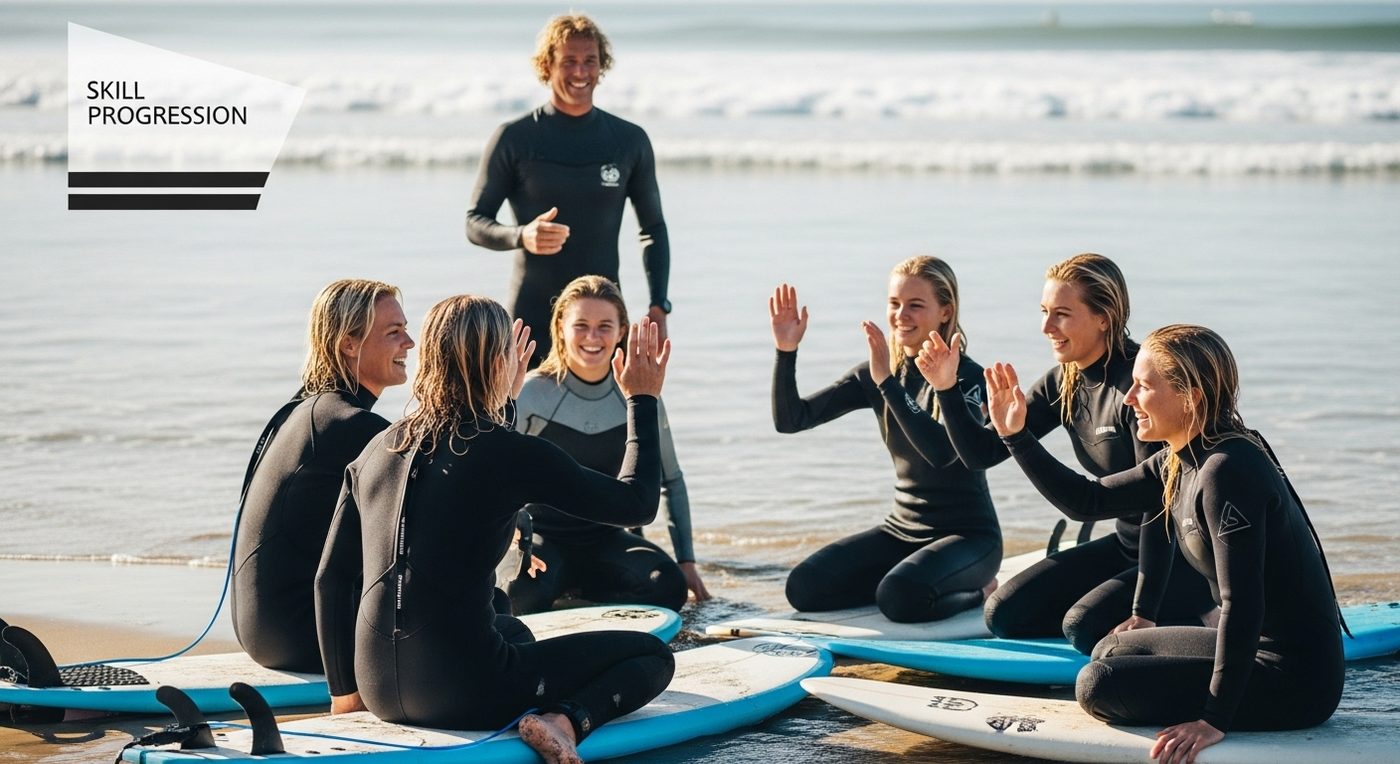 This collaborative approach transforms skill development from a linear process into a dynamic, interactive journey that accelerates learning, builds confidence, and creates a supportive community of emerging surfers.
Ready to Transform Your Beginner Surfing Experience in Tenerife?
If stepping into the waves for the first time leaves you nervous about learning alongside others, you are not alone. The article highlighted that new surfers often worry about feeling left behind or overwhelmed in a group setting, yet crave support and real progress. At Ika Ika Surf School Tenerife, our group surf lessons are specially designed to remove that anxiety and boost your confidence through collaborative learning, expert instructors, and a comfortable environment just steps from the water.
Stop wondering if you will fit in or learn fast enough. See for yourself how our group lessons blend the best proven techniques and a vibrant community with easy access to surfboards, wetsuits, and amenities that make your day both fun and hassle-free. Visit Ika Ika Surf School Tenerife now to book your spot, view course details, or contact us directly. Let today be the start of your surfing journey. Spots fill quickly on the island so secure your place now and enjoy feeling confident from your first lesson.
Frequently Asked Questions
What is a group surf lesson?
A group surf lesson is a structured session where multiple participants learn surfing simultaneously under the guidance of a professional instructor, providing a collaborative environment to promote learning.
Who should take group surf lessons?
Group surf lessons are ideal for beginners with little to no experience, tourists looking for an enjoyable group activity, families wanting to learn together, and individuals who thrive in social learning settings.
What are the benefits of taking group surf lessons?
Group surf lessons offer several benefits, including reduced costs compared to private lessons, collective motivation, opportunities for social interaction, and professional guidance tailored to varying skill levels.
How are group surf lessons structured?
Group surf lessons typically start with safety briefings and equipment familiarization, followed by land-based demonstrations and a gradual introduction to water techniques, enabling participants to progressively develop their skills in a supportive environment.
Recommended
🏄 See you in the water?
Book your lesson →