
How to Find Best Surf Spots in Tenerife for Every Skill Level
Published on 16 September 2025 · 13 min read
Planning a surf trip to Tenerife sounds like a dream for wave lovers and adventure seekers. Yet the island’s coastline is more unpredictable than you might think. Seasonal shifts can change wave size by over 50 percent in just a few days, which means your usual tricks might not work here. Most surfers rely only on weather apps, but locals know that the best spots are found by mixing real time research with some old school word of mouth. The real secret of unlocking perfect waves in Tenerife is hiding in the details that most guides completely miss.
Table of Contents
- Step 1: Research Surf Conditions In Tenerife
- Step 2: Identify Surf Spot Locations Online
- Step 3: Assess Your Skill Level And Preferences
- Step 4: Visit Local Surf Shops For Recommendations
- Step 5: Explore Surf Spots In Person For Verification
Quick Summary
| Key Point | Explanation |
|---|---|
| 1. Research local surf conditions | Use surf forecasting websites to understand wave heights, wind directions, and swell patterns for better session planning. |
| 2. Identify surf spots online | Leverage specialized mapping platforms and local forums to locate surf spots matching your skill level accurately. |
| 3. Assess your skill level honestly | Create a skills inventory that outlines your capabilities to select appropriate surf spots for your experience level. |
| 4. Engage with local surf shops | Visit surf shops for personalized recommendations based on local knowledge, including current conditions and hazards. |
| 5. Verify spots through personal exploration | Conduct in-person assessments of surf spots to understand wave behavior and site specifics that online resources may not cover. |
Step 1: Research Surf Conditions in Tenerife
Successful surfing in Tenerife starts with comprehensive research about local wave conditions, wind patterns, and seasonal variations. Understanding these factors transforms an average surf session into an extraordinary experience tailored to your skill level.
Begin your research by exploring specialized surf forecasting websites that provide detailed marine weather reports specific to Tenerife’s coastline. Platforms like Windy and Magicseaweed offer precise wave height predictions, wind directions, and swell periods that are crucial for planning your surf adventure.
Tenerife’s unique geography creates diverse surfing environments across different regions. The north and south coasts present dramatically different wave characteristics, which means your research must be location specific. Southern beaches like Los Cristianos and Playa de las Americas typically offer more consistent conditions for beginners, with gentler waves and more predictable swells. Northern spots like Playa de Almaciga and El Socorro present more challenging waves better suited for intermediate and advanced surfers.
Below is a comparison of Tenerife surf spot regions, summarizing their typical wave characteristics and suitability based on the skill level described in the article.
| Region | Typical Wave Characteristics | Best For |
|---|---|---|
| Southern Beaches | Gentle, consistent, predictable swells | Beginners |
| Northern Spots | Challenging, powerful, less predictable | Intermediate/Advanced |
| Los Cristianos | Softer, mellow waves | Beginners |
| Playa de las Americas | Consistent, friendly for learners | Beginners |
| Playa de Almaciga | Steeper, more technical breaks | Intermediate/Advanced |
| El Socorro | Stronger, advanced-suited waves | Advanced |
When analyzing surf conditions, pay attention to several key metrics:
- Wave Height: Determines difficulty level and appropriate skill matching
- Wind Direction: Impacts wave quality and surfing potential
- Swell Period: Indicates wave power and consistency
- Tide Levels: Influences wave breaking patterns
Local surf communities and forums can provide invaluable real time insights that digital forecasts might miss. Engaging with Tenerife surf groups on social media platforms or participating in online discussion boards can help you gather nuanced information about current conditions, hidden spots, and recent surf experiences.
For precise local knowledge, consider connecting with surf schools or experienced local instructors who understand Tenerife’s microclimates and can offer personalized guidance. According to European marine research, advanced remote sensing techniques now provide increasingly accurate coastal condition assessments, making pre surf research more reliable than ever.
Remember that surf conditions can change rapidly, so continuous monitoring is key. Check forecasts multiple times in the days leading up to your planned surf session, and remain flexible with your location and timing to maximize your surfing potential in Tenerife’s dynamic marine environment.
Step 2: Identify Surf Spot Locations Online
Finding the perfect surf spot in Tenerife requires strategic online research that goes beyond basic internet searches. Your digital exploration will transform scattered information into a comprehensive map of potential surfing destinations tailored to your skill level.
Start by leveraging specialized surf mapping platforms that provide detailed geographical and wave condition insights. Websites like Surfline and Magic Seaweed offer interactive maps specifically designed for surfers, allowing you to zoom into Tenerife’s coastline and analyze specific beach characteristics. These platforms provide color coded indicators showing wave difficulty, swell direction, and real time surf conditions that help you match locations with your surfing expertise.
Local surf forums and community websites become invaluable resources during your online research. Platforms like Canary Surf Community forums and Reddit surfing groups dedicated to Tenerife offer first hand accounts from experienced local surfers. These digital communities share insider knowledge about hidden surf spots, current wave conditions, and location specific challenges that might not appear on standard mapping tools.
Key online resources to explore for identifying surf spots include:
- Surf forecasting websites with detailed geographical breakdowns
- Local surfing community forums and discussion boards
- Social media groups focused on Tenerife surfing
- YouTube channels featuring local surf spot reviews
- Travel blogs specializing in Canary Islands surfing destinations
According to marine science research, integrating multiple online data sources provides the most comprehensive understanding of surf locations. Cross reference information from different platforms to verify wave conditions, beach accessibility, and potential skill level requirements.
Pay special attention to user generated content that provides context beyond technical wave measurements. Photographs, video reviews, and personal experiences shared by surfers can reveal nuanced details about each location’s unique characteristics. Look for visual content that shows wave breaks, beach terrain, and potential entry and exit points for different skill levels.
Verify your research by creating a digital spreadsheet or note document that catalogues potential surf spots. Include columns for location name, difficulty rating, wave type, accessibility, and any additional notes from your research. This systematic approach ensures you have a clear, organized reference when planning your Tenerife surfing adventure.
Remember that online research is just the first step. Always complement your digital findings with local advice and current condition checks before entering the water.
Step 3: Assess Your Skill Level and Preferences
Identifying your true surfing skill level is a critical step in selecting the right Tenerife surf spots that will challenge and inspire you without compromising safety. Honest self assessment becomes the foundation of an incredible surfing experience, allowing you to match your abilities with the appropriate wave conditions.
Begin by critically evaluating your surfing history and current capabilities. Beginners typically struggle with wave catching, balance maintenance, and directional control. If you fall into this category, you will want to focus on gentle, consistent waves with minimal current and predictable breaking patterns. Intermediate surfers can confidently paddle out, catch waves independently, and execute basic turns, while advanced surfers demonstrate complex maneuvers and comfort in more challenging wave environments.
Consider creating a personal surfing skills inventory that objectively documents your current abilities. Rate yourself across key performance areas like paddle strength, wave reading skills, board control, and comfort in different water conditions. This self evaluation helps remove emotional bias and provides a clear snapshot of your technical proficiency.
Important skill level indicators include:
- Ability to consistently catch and ride waves
- Comfort level in different wave heights
- Paddling endurance and strength
- Understanding of wave dynamics and ocean safety
- Confidence in executing turns and basic maneuvers
- Experience with varied surf conditions
Physical fitness and personal comfort play significant roles in determining appropriate surf spots. Some surfers might have technical skills but limited stamina, while others possess strong swimming abilities but minimal surfing experience. According to international surfing standards, skill progression is a nuanced journey that extends beyond simple categorization.
Realistic goal setting becomes crucial in this assessment.
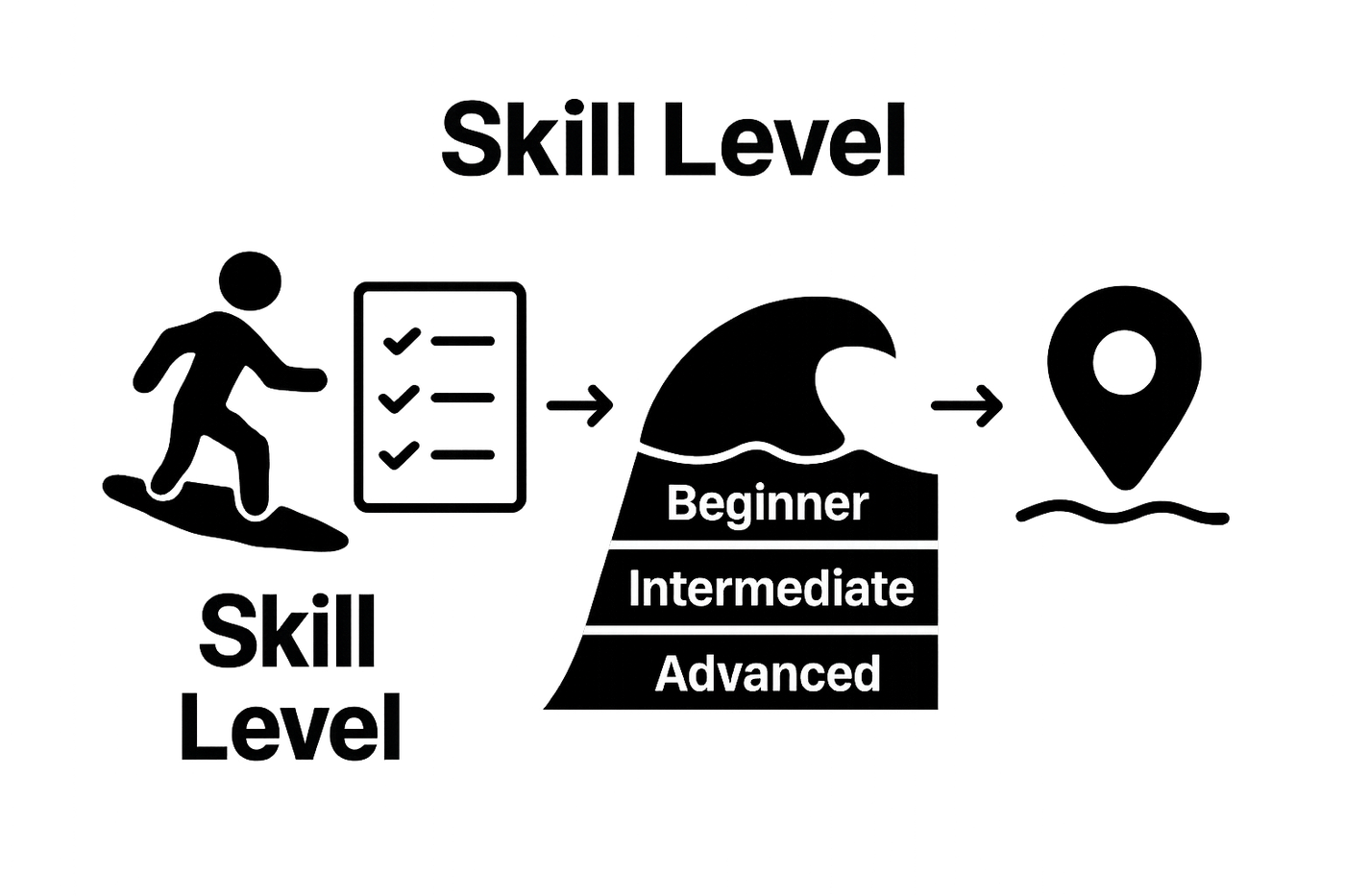 If you are a beginner, prioritize locations with minimal risk and maximum learning potential. Intermediate surfers should seek spots offering gradual complexity, allowing skill expansion without overwhelming challenges. Advanced surfers can explore more technical wave environments that demand precise technique and ocean understanding.
To verify your skill assessment, consider booking a session with a local surf instructor who can provide an objective evaluation of your current abilities. Professional guidance offers insights that self assessment might miss, helping you refine your understanding of your true skill level and potential.
Remember that surf skill is dynamic. Your assessment today might differ from your capabilities next season, so remain open to continuous learning and adaptation. Tenerife’s diverse coastline offers surf spots for every skill level, ensuring an exciting journey of personal growth and ocean exploration.
Step 4: Visit Local Surf Shops for Recommendations
Local surf shops represent a goldmine of insider knowledge about Tenerife’s surfing landscape, offering personalized guidance that online research cannot match. These community hubs connect visitors with authentic, up to date information about surf spots, current conditions, and location specific nuances that transform a good surfing experience into an extraordinary adventure.
When entering a local surf shop, approach the conversation with genuine curiosity and humility. Professional staff and experienced local surfers can provide insights that go far beyond technical wave measurements. They understand the subtle characteristics of each beach, the daily variations in wave patterns, and the hidden challenges that might not be apparent from digital research.
Prepare a set of specific questions that demonstrate your commitment to understanding the local surfing environment. Share details about your skill level, previous surfing experience, and the type of waves you are comfortable navigating. The more transparent you are about your abilities, the more targeted and valuable the recommendations will be.
Key information to request from local surf shop experts includes:
- Recommended surf spots matching your skill level
- Current water and weather conditions
- Potential hazards or challenging aspects of specific locations
- Local surfing etiquette and unwritten rules
- Equipment recommendations for Tenerife’s specific conditions
- Insights about tide and swell variations
Beyond verbal recommendations, many local surf shops offer additional resources. Look for surf condition maps, printed guides, or digital resources they might share. Some shops maintain daily updated surf reports or have connections with local instructors who can provide more personalized guidance.
According to research on surf tourism communities, local surf shops are more than retail spaces they are knowledge exchange centers that preserve and share critical location specific information. Engage with shop staff not just as a potential customer, but as a fellow ocean enthusiast eager to learn and respect the local surfing culture.
Consider scheduling a brief consultation or lesson with a recommended instructor from the surf shop. This additional step can provide a hands on assessment of your skills and offer personalized spot recommendations that align perfectly with your surfing goals.
To verify the effectiveness of your surf shop visit, document the recommendations you receive. Take notes, capture contact information for recommended instructors, and cross reference the advice with your previous online research. A successful visit will leave you feeling more confident and informed about your upcoming Tenerife surfing experience.
Step 5: Explore Surf Spots in Person for Verification
Personal exploration transforms theoretical surf research into tangible understanding, allowing you to verify the nuanced characteristics of Tenerife’s surf spots that no online guide can fully capture. This critical step bridges the gap between digital information and real world wave conditions, ensuring your surfing experience matches your skill and expectations.
Begin your in person investigation by arriving at potential surf locations during different times of day. Wave dynamics shift dramatically with changing tides, wind patterns, and sunlight angles. Observe how waves break, analyze their consistency, and assess the ocean floor’s terrain. Pay close attention to entry and exit points, potential hazards, and the overall complexity of the wave environment.
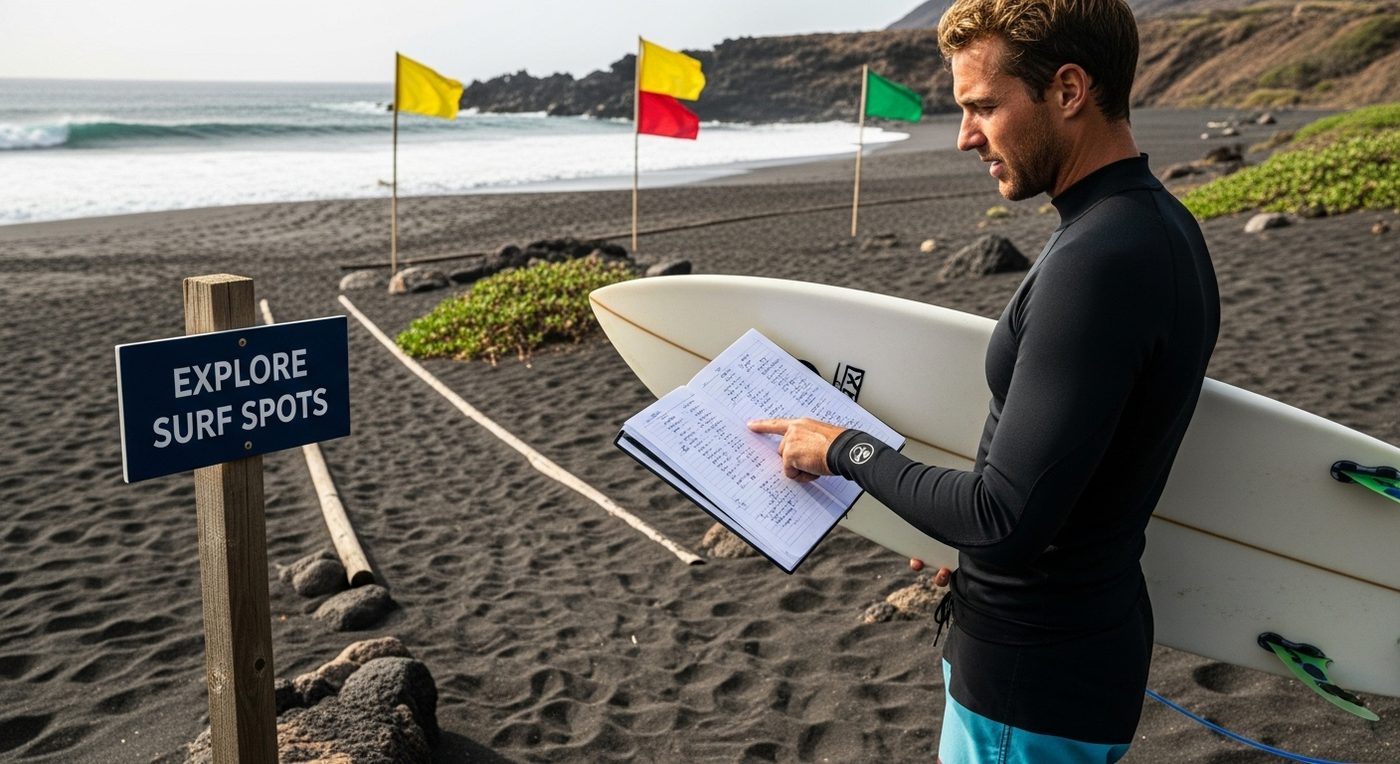
Dress appropriately for your reconnaissance mission, wearing comfortable clothing that allows mobility and brings essential observation tools. Consider carrying binoculars, a waterproof notebook, and a smartphone with a camera to document your findings. These tools will help you capture detailed observations about wave patterns, potential challenges, and specific spot characteristics that inform your surfing strategy.
Key elements to assess during your in person exploration include:
- Wave consistency and predictability
- Beach terrain and potential underwater obstacles
- Safe entry and exit points
- Crowd density and local surfer skill levels
- Potential environmental hazards
- Accessibility and parking options
Engage with local surfers present at the beach, but approach respectfully. Experienced local surfers can provide invaluable insights about spot nuances that might not be immediately apparent. Ask specific questions about wave behavior, seasonal variations, and any unique challenges specific to that location. Their firsthand knowledge often reveals details that no digital resource can match.
According to marine science research, experiential knowledge plays a crucial role in understanding surf environments. Your personal exploration allows you to develop an intuitive sense of the spot’s characteristics, moving beyond theoretical research into practical understanding.
Document your observations systematically. Create a simple rating system that evaluates the spot across multiple dimensions: wave quality, difficulty level, safety, and overall suitability for your skill set. Take photographs and brief notes that capture the essence of each location, creating a personal reference guide for future surfing decisions.
Verify your exploration by comparing your firsthand observations with previous research from online sources and local surf shop recommendations. Look for consistencies and discrepancies that might influence your surfing strategy.
Use this checklist to guide your in-person verification of Tenerife surf spots by focusing on safety, skill match, and logistical details before entering the water.
| Verification Task | Details/What to Look For | Complete? |
|---|---|---|
| Observe wave consistency | Are waves breaking regularly and predictably? | [ ] |
| Check beach and underwater terrain | Look for hazards like rocks or sudden drop-offs | [ ] |
| Identify safe entry/exit points | Accessible areas for entering/exiting the water | [ ] |
| Evaluate crowd density | Note if area is crowded or spacious | [ ] |
| Assess environmental hazards | Check for rip currents, debris, or sharp reefs | [ ] |
| Review accessibility/parking | Is parking convenient and access straightforward? | [ ] |
Ready to Find and Surf Your Perfect Wave in Tenerife?
After researching wave conditions, evaluating surf spots, and honestly assessing your skill level, it can still feel overwhelming to transform knowledge into real surfing confidence. Many visitors arrive excited but end up guessing where and how to start, risking missed opportunities or unnecessary frustration. Imagine if you could skip the uncertainty and step right onto the best waves, fully prepared, safe, and supported by expert local guidance.
At Ika Ika Surf School Tenerife, just 50 meters from the ocean at Playa de las Américas, we turn surf dreams into reality for every skill level. Our team knows every nuance of Tenerife’s surf and takes the guesswork out of finding your ideal spot. Book a surf lesson with us to match your ability, rent pro-level gear, and get tailored advice based on live conditions. Secure your spot NOW and experience the confidence and joy of surfing the right wave at the right time. Visit our website to get started today.
Frequently Asked Questions
How can I research the surf conditions in Tenerife before I go?
Successful research involves checking specialized surf forecasting websites like Windy and Magicseaweed for wave heights, wind directions, and swell periods specific to Tenerife’s coastline.
What factors should I consider when choosing a surf spot?
Key factors include wave height, wind direction, swell period, and tide levels, as these metrics influence wave quality and suitability for your skill level.
How can I assess my surfing skill level accurately?
You can assess your skill level by evaluating your ability to catch waves, comfort in different wave heights, paddling endurance, and understanding of ocean dynamics. Creating a skills inventory can help clarify your proficiency.
Why should I visit local surf shops for recommendations?
Local surf shops offer insider knowledge about current conditions and hidden surf spots, along with information on potential hazards and local etiquette that enhance your surfing experience.
🏄 See you in the water?
Book your lesson →