
Understanding Surfboard Rental Tips for Every Level
Published on 4 September 2025 · 10 min read
Surfboard rental is changing how people approach surfing. Did you know that travelers save up to 75 percent on costs by renting boards instead of shipping their own across the globe. Most assume only beginners need rentals, but advanced surfers and locals rely on them just as much to match ever changing wave conditions and experiment with pro gear without the upfront commitment.
Table of Contents
- What Is Surfboard Rental And Why It’s Important?
- Understanding Different Types Of Surfboards For Rent
- Factors To Consider When Choosing A Surfboard Rental
- The Role Of Local Surf Shops In The Rental Process
- How Surfboard Rentals Enhance Your Surfing Experience
Quick Summary
| Takeaway | Explanation |
|---|---|
| Surfboard rentals provide access to quality equipment. | Rentals allow surfers to temporarily use high-quality boards without the costs of purchasing. |
| Choose boards based on your skill level. | Different types of boards are better suited for beginners or advanced surfers, impacting performance and enjoyment. |
| Local surf shops offer personalized guidance. | Knowledgeable staff help match surfers with the right equipment and share important local wave insights. |
| Consider physical traits when selecting a board. | Height, weight, and fitness level influence the ideal board choice for optimal balance and performance. |
| Renting reduces travel complexities for surfers. | Rentals allow travelers to access suitable boards on-site, eliminating the hassle of transporting personal equipment. |
What is Surfboard Rental and Why It’s Important?
Surfboard rental is a service that allows individuals to temporarily use high-quality surfing equipment without the significant financial investment of purchasing their own board. This flexible option enables surfers of all skill levels to access professional-grade surfboards tailored to their specific needs and experience.
Understanding the Basics of Surfboard Rental
At its core, surfboard rental provides an accessible pathway into surfing for newcomers and travelers. Surf enthusiasts can explore equipment options without committing to expensive purchases. Key advantages of surfboard rentals include:
- Flexibility to try different board styles and sizes
- Cost-effective alternative to purchasing multiple boards
- Opportunity to test equipment before making a long-term investment
Benefits for Different Skill Levels
Surfboard rentals serve multiple purposes across various surfing experience levels. Beginners benefit from trying starter boards without financial risk, while advanced surfers can experiment with specialized boards for specific wave conditions. Travelers, in particular, find rentals crucial since transporting personal surfboards can be logistically challenging and expensive.
Professional surf schools and rental services typically offer a comprehensive range of boards including shortboards, longboards, fish boards, and performance boards. These options allow surfers to match their equipment precisely to local wave conditions and personal skill development. Check out our beginner’s guide for more insights into selecting the right surfboard for your experience level.
By providing accessible, high-quality equipment, surfboard rentals democratize the surfing experience, making this exciting sport more approachable for everyone from curious tourists to dedicated wave enthusiasts.
Understanding Different Types of Surfboards for Rent
Surfboards are not a one-size-fits-all piece of equipment. Different board types cater to specific wave conditions, surfing styles, and skill levels, making the selection process critical for an optimal surfing experience. Understanding these variations helps surfers choose the most suitable board for their needs.
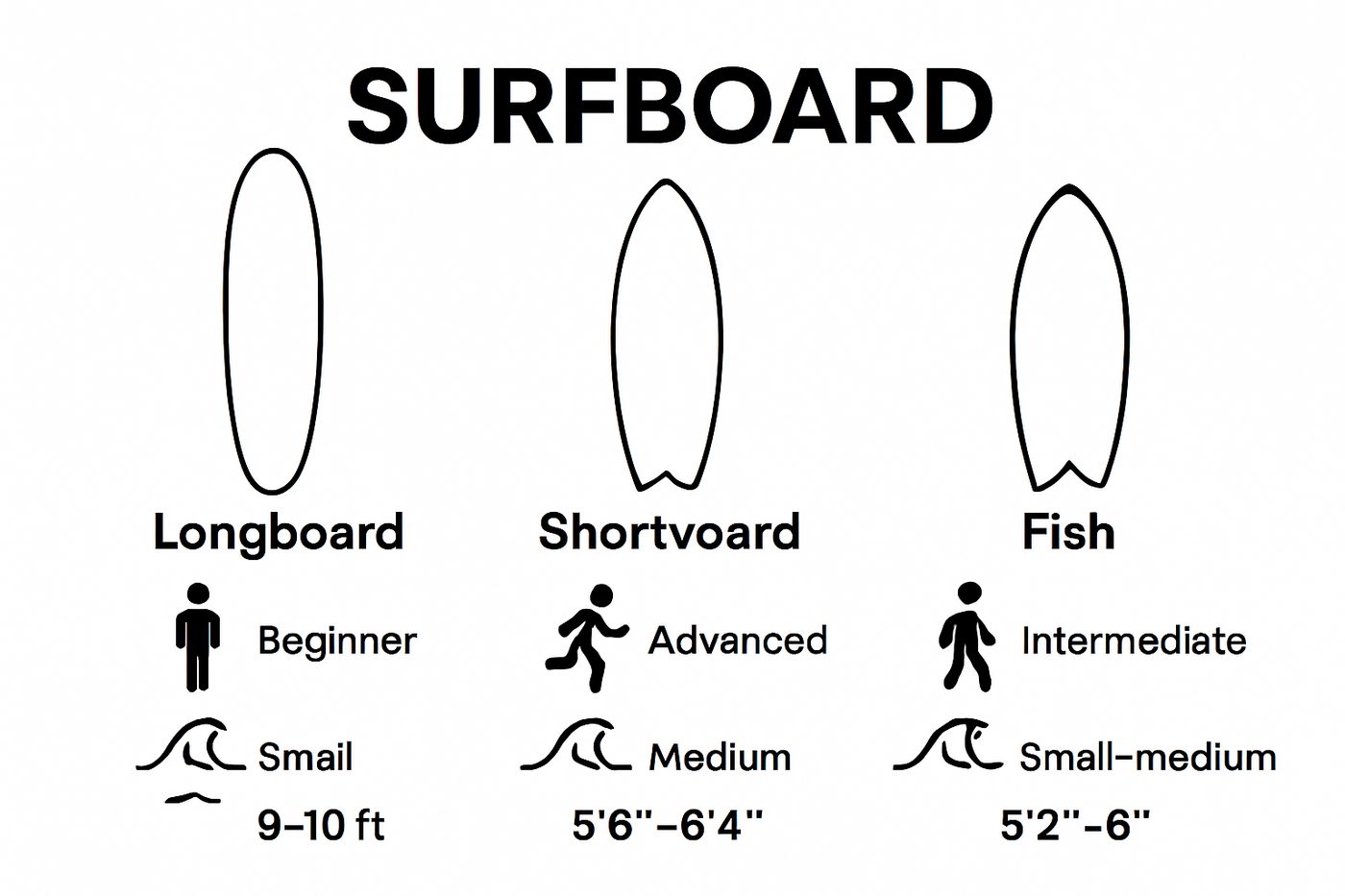
The following table summarizes the main categories of surfboards available for rental, highlighting their ideal users and typical performance features.
| Surfboard Type | Ideal For | Key Characteristics |
|---|---|---|
| Longboard | Beginners, small waves | Stable, easy paddling, good balance |
| Shortboard | Advanced surfers, big waves | Highly maneuverable, responsive |
| Fish Board | Intermediates, choppy water | Wider, faster, handles smaller surf |
| Funboard | All levels, variable conditions | Versatile, blends longboard stability with shortboard agility |
Categories of Surfboards for Rental
Surfboard rentals typically offer several primary board categories designed to accommodate various surfing environments and skill levels. According to California State University’s Outdoor Recreation Program, the main surfboard types include:
- Longboards: Ideal for beginners and small wave conditions
- Shortboards: Preferred by advanced surfers for high performance
- Fish Boards: Excellent for intermediate surfers and choppy waters
- Funboards: Versatile option bridging longboard stability and shortboard maneuverability
Performance and Wave Considerations
Each surfboard type presents unique characteristics that impact performance. Longboards provide greater stability and easier paddling, making them perfect for newcomers learning fundamental techniques. Shortboards, conversely, offer exceptional maneuverability but require more skill to control effectively.
Wave conditions play a significant role in board selection. Smaller, gentler waves suit longer boards with more volume, while steeper, more powerful waves demand shorter, more responsive boards. Learn more about our personalized surfing guidance to understand which board matches your skill level and local wave environment.
Matching Board to Skill Level
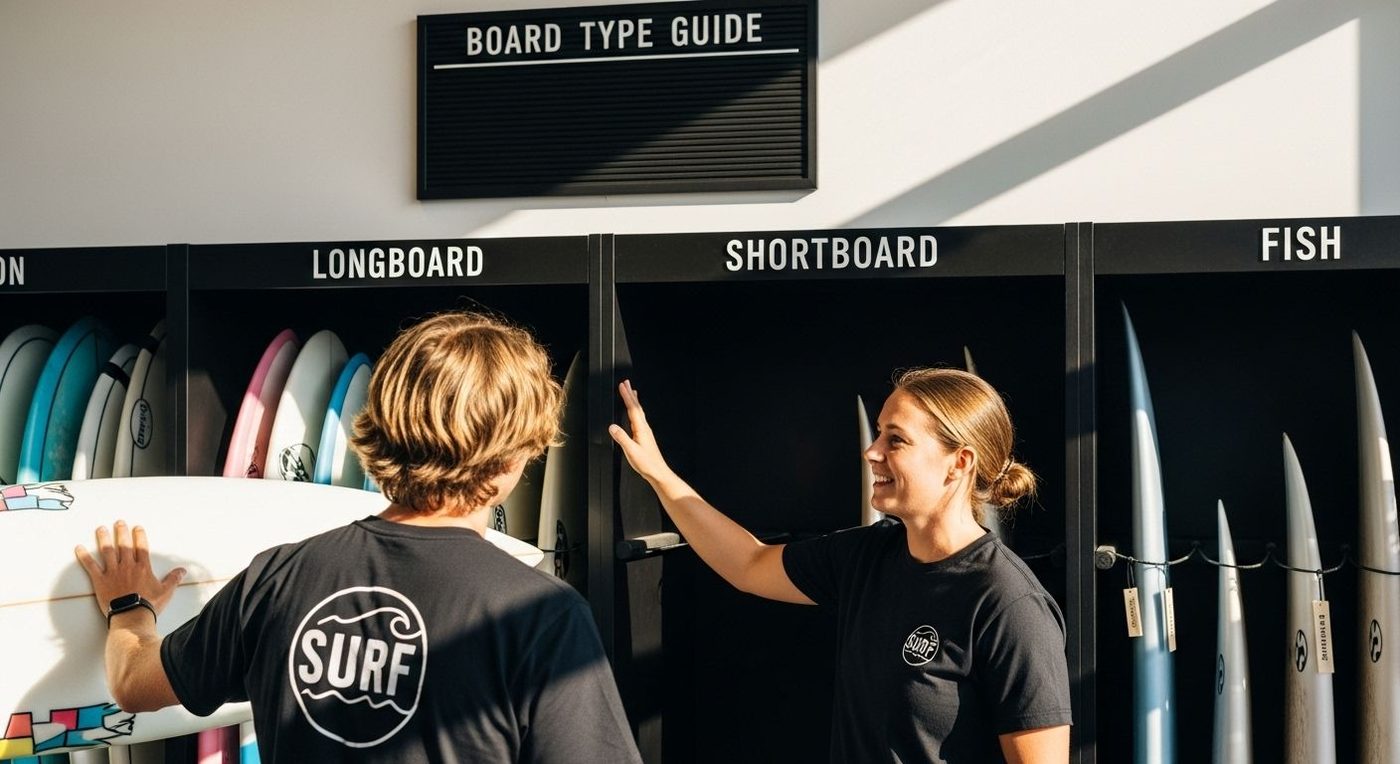
Rental services often recommend boards based on a surfer’s experience. Beginners typically start with wider, more stable longboards that provide better balance and easier wave catching. As skills progress, surfers can transition to more specialized boards that offer increased performance and challenge. Professional rental shops will help match you with the perfect board, ensuring an enjoyable and safe surfing experience.
Factors to Consider When Choosing a Surfboard Rental
Selecting the right surfboard rental involves more than simply picking a board that looks appealing. Multiple critical factors influence your surfing performance, comfort, and overall experience. Understanding these elements helps ensure you choose a board that matches your skill level, physical attributes, and intended surfing environment.
Physical Compatibility and Skill Assessment
Your physical characteristics play a significant role in surfboard selection. According to University of Southern California’s research on surfboard engineering, board dimensions directly impact performance. Key physical considerations include:
- Height: Taller surfers typically require longer boards
- Weight: Heavier individuals need boards with more volume and buoyancy
- Skill Level: Beginners benefit from more stable, wider boards
- Fitness: Physical condition influences board maneuverability
Wave and Location Specific Selection
Wave conditions dramatically influence surfboard choice. Different beaches and surf zones present unique challenges requiring specific board characteristics. Soft, rolling waves demand boards with more volume and stability, while powerful, steep waves require more responsive, shorter boards. Explore our personalized surf guidance to understand local wave dynamics and ideal board selection.
Rental Equipment Quality and Maintenance
Beyond personal requirements, the quality and condition of rental equipment are paramount. Professional rental services should provide well-maintained boards free from significant damage. Critical inspection points include checking for:
- No major structural cracks or delamination
- Intact fin boxes and fin attachments
- Proper wax coating for grip
- Absence of waterlogged areas
Choosing the right surfboard rental transforms your surfing experience from challenging to enjoyable. By carefully considering these factors, you maximize your chances of finding a board that feels like a natural extension of your surfing abilities.
This table outlines the core factors to consider when choosing a surfboard rental, helping you match your equipment to personal attributes and specific surf conditions.
| Factor | Influence on Selection |
|---|---|
| Height | Taller surfers often require longer boards |
| Weight | Heavier individuals need more volume and buoyancy |
| Skill Level | Beginners benefit from stable, wider boards |
| Fitness | Impacts ability to maneuver and control the board |
| Wave Conditions | Determines board type, length, and responsiveness needed |
| Equipment Quality | Well-maintained boards improve safety and performance |
The Role of local Surf Shops in the Rental Process
Local surf shops represent more than simple retail spaces. They serve as critical knowledge centers and community hubs that play a pivotal role in guiding surfers through the equipment rental and selection process. These establishments bridge the gap between equipment and expertise, ensuring surfers make informed decisions tailored to their individual needs.
Expert Guidance and Equipment Matching
According to research on surf shop dynamics, local surf shops provide personalized consultations that go far beyond simple equipment transactions. Professional staff leverage their extensive knowledge to:
- Evaluate individual surfing skill levels
- Recommend appropriate board types
- Provide insights into local wave conditions
- Offer maintenance and usage advice
- Suggest supplementary gear like wetsuits and fins
Safety and Equipment Condition Assessment
Surf shops function as quality control gatekeepers, ensuring rental equipment meets rigorous safety standards. Experienced professionals meticulously inspect boards for potential issues such as structural damage, fin box integrity, and overall board condition. Learn more about our comprehensive equipment checks, which prioritize customer safety and equipment performance.
Community and Cultural Connections
Beyond equipment rentals, local surf shops cultivate a sense of community and cultural exchange. They serve as information centers where novice and experienced surfers can share knowledge, discuss techniques, and connect with the broader surfing ecosystem. These spaces often host workshops, organize local events, and provide a gathering point for surf enthusiasts, transforming a simple rental interaction into a rich, educational experience.
How Surfboard Rentals Enhance Your Surfing Experience
Surfboard rentals are more than a convenient service. They represent a gateway to skill development, exploration, and personal growth within the surfing world. By providing access to diverse equipment and professional guidance, rentals transform the learning process and elevate the overall surfing journey.
Skill Development and Technique Refinement
According to Britannic’s insights on surfing performance, equipment diversity plays a crucial role in skill progression. Rental services enable surfers to experiment with different board types, accelerating learning and technique refinement. Key advantages of this approach include:
- Trying multiple board styles without significant investment
- Understanding how board characteristics impact performance
- Adapting to various wave conditions more effectively
- Identifying personal preferences in surfboard design
Accessibility and Cost Effectiveness
Surfboard rentals democratize the surfing experience, removing financial barriers that might prevent newcomers from entering the sport. Purchasing multiple boards for different conditions can be prohibitively expensive, whereas rentals provide a flexible, budget friendly alternative. Discover our personalized surfing guidance to maximize your rental experience and accelerate your learning curve.
Travel and Exploration Opportunities
For travelers and surf enthusiasts, rentals offer unparalleled flexibility. Instead of transporting heavy, delicate equipment across continents, surfers can access high quality boards tailored to specific local conditions. This approach not only reduces travel complexity but also allows surfers to adapt quickly to new environments, experiencing diverse wave landscapes without logistical complications.
Take Your Surfboard Rental Experience to the Next Level in Tenerife
Understanding the challenges of choosing the right surfboard for every skill level, as discussed in the article, can feel overwhelming. Whether you are a complete beginner unsure about board size, a traveler worried about equipment quality, or someone eager to refine your surfing technique, the need for expert guidance and reliable rental gear is clear. Many surfers face the frustration of outgrowing generic rentals or struggling to match equipment to changing wave conditions.
At Ika Ika Surf School Tenerife, your next session is easier than ever. Enjoy access to premium surfboard rentals, personalized recommendations, and a facility just 50 meters from the best local waves. Our dedicated team helps you choose the right board and offers amenities like secure lockers and hot showers, making your surfing journey stress-free. Ready to make real progress? Book your rental and tap into unmatched local expertise today. Spots fill quickly during high season, so act now and enjoy a smooth, confidence-boosting ride.
Frequently Asked Questions
What should I consider when choosing a surfboard for rental?
When choosing a surfboard for rental, consider your height, weight, skill level, and the specific wave conditions you’ll be surfing in. Matching these factors with the appropriate board type can enhance your surfing experience.
How do different surfboard types affect my surfing performance?
Different surfboard types cater to specific skill levels and wave conditions. Longboards offer stability for beginners, while shortboards deliver agility for advanced surfers. Fish boards provide versatility for choppy conditions, and funboards blend features of both longboards and shortboards.
Can I rent surfboards for various skill levels?
Yes, surfboard rental services typically offer a range of boards suitable for multiple skill levels—from beginners to advanced surfers—allowing you to select a board that matches your expertise.
What maintenance should I check when renting a surfboard?
Before renting a surfboard, inspect it for structural integrity, such as cracks or delamination. Ensure fin boxes and attachments are secure, and check that the board has adequate wax for grip. A well-maintained board enhances your safety and performance.
Recommended
🏄 See you in the water?
Book your lesson →