
How to Catch Your First Wave: A Beginner’s Guide
Published on 6 September 2025 · 13 min read
Learning to surf in Tenerife sounds thrilling. The right start changes everything, especially when you realize that soft foam boards can boost a beginner’s balance way more than the sleeker boards you usually see in pros’ photos. But get this. Most people think it all comes down to wave size and strength. The real secret is in your gear choice and preparation before the water ever touches your toes.
Table of Contents
- Step 1: Assess Your Surf Equipment And Safety Gear
- Step 2: Choose The Right Surf Spot For Beginners
- Step 3: Understand Wave Basics And Timing
- Step 4: Practice Paddling And Pop-Up Techniques
- Step 5: Position Yourself For The Perfect Wave Encounter
- Step 6: Ride The Wave And Experience The Thrill
Quick Summary
| Key Point | Explanation |
|---|---|
| 1. Choose a Soft Foam Board | Soft foam boards provide stability and are forgiving, making them ideal for beginners learning to surf. |
| 2. Inspect Equipment Before Surfing | Ensure your surfboard, wetsuit, and accessories are in good condition to avoid issues during your session. |
| 3. Select Gentle, Beginner-Friendly Waves | Look for surf spots with gentle waves and soft bottoms, enhancing safety and learning for new surfers. |
| 4. Practice Paddling and Pop-Up Techniques | Mastering these skills on land improves muscle memory and helps transition smoothly into riding the wave. |
| 5. Position Yourself Strategically for Waves | Assess the wave patterns and position yourself correctly to catch waves effectively, enhancing your surfing experience. |
Step 1: Assess Your Surf Equipment and Safety Gear
Catching your first wave starts long before you hit the water. Proper equipment and safety preparation are the foundation of a successful surfing experience. Your gear isn’t just about performance it’s about protection and confidence.
Beginning with the surfboard, selecting the right equipment can make or break your initial surfing journey. Soft foam boards are ideal for newcomers, offering stability and forgiveness while learning. These boards are wider, thicker, and more buoyant, which helps beginners maintain balance and build fundamental skills. When choosing your board, consider your body weight, height, and the local wave conditions. Tenerife’s surf spots demand equipment that matches your skill level and the specific environmental characteristics.
Learn more about choosing the perfect surfboard for your first surfing adventure. The right board will provide the confidence and support you need to progress quickly.
Safety gear goes beyond the surfboard. A well-fitted wetsuit is crucial for thermal protection and comfort. Your wetsuit should feel snug but not restrictive, allowing full range of motion while keeping you warm in varying water temperatures. Essential safety accessories include:
- A surfboard leash (prevents board separation)
- Surf wax (provides grip on the board)
- Protective sunscreen
- Waterproof rash guard
Before entering the water, inspect all your equipment carefully. Check the surfboard for any damage, ensure your leash is securely attached, and verify that your wetsuit has no tears or weak points. A thorough equipment check takes only minutes but can prevent potential issues during your surf session.
The following checklist table helps you quickly verify the essential surf equipment and safety gear before you enter the water.
| Equipment/Safety Gear | Purpose | What to Check |
|---|---|---|
| Soft Foam Board | Balance and stability for beginners | No major dings or cracks |
| Wetsuit | Thermal protection and comfort | Fits snugly, no tears or weak spots |
| Leash | Keeps board attached | Securely fastened, no damage |
| Surf Wax | Provides grip | Properly applied, not worn off |
| Sunscreen | Skin protection | Waterproof, covers all exposed skin |
| Rash Guard | Prevents irritation | Comfortable fit, no holes |
Remember that your first step isn’t about having the most expensive gear. It’s about having functional, safe equipment that supports your learning process. Rental facilities and surf schools often provide beginner-friendly equipment, which can be an excellent way to start your surfing journey without significant initial investment.
Step 2: Choose the Right Surf Spot for Beginners
Selecting the perfect surf location is crucial for transforming your first wave experience from intimidating to exhilarating. Not all beaches are created equal, especially for newcomers to surfing. The right spot can dramatically accelerate your learning curve and boost your confidence.
Explore beginner surfing tips for tourists to understand the nuances of selecting an ideal location. Tenerife offers multiple surf zones, but beginners need specific characteristics that support safe and enjoyable learning.
Ideal beginner surf spots feature gentle, consistent waves with a sandy bottom that provides forgiveness during inevitable wipeouts. Look for beaches with mild slope gradients and waves under one meter high. Offshore winds create smoother wave surfaces, allowing more predictable and controlled surfing conditions. Areas with natural protective features like small bays or reef breaks can help reduce wave intensity and provide more stable learning environments.
Before committing to a location, perform a comprehensive site assessment. Observe wave patterns for at least 30 minutes. Watch how experienced surfers interact with the specific break, noting wave shape, frequency, and potential hazards. Pay attention to:
- Water depth and bottom composition
- Presence of rocks or coral
- Typical wave height and direction
- Potential rip currents
- Local crowd and skill levels
Additionally, consider water temperature and local weather conditions. Tenerife’s coastline offers diverse microclimates, so understanding specific beach characteristics is essential. Local surf schools and experienced instructors can provide invaluable insights into the most suitable beginner locations, ensuring you start your surfing journey on the right wave.
Remember that choosing the right surf spot is about balancing challenge with safety. Your goal is to find a location that provides enough excitement to keep you motivated while minimizing risks that could discourage your surfing progress.
Step 3: Understand Wave Basics and Timing
Mastering wave dynamics transforms surfing from a random act into a deliberate skill. Waves are living, breathing entities with predictable patterns that experienced surfers learn to read and interpret. Your ability to catch your first wave depends entirely on understanding these fundamental rhythms and movements.
Explore surfing basics for tourists to deepen your comprehension of wave mechanics. Wave formation starts with wind energy transferring motion across water surfaces, creating complex interactions between wind, water depth, and coastal geography.
Observing wave behavior requires patience and keen observation. Breaking waves follow specific patterns: they start as smooth swells offshore, gradually building height as they approach shallower waters. The wave’s shape transforms dramatically based on underwater terrain. Sandy bottoms create gentler, more forgiving breaks, while rocky or reef bottoms produce steeper, more challenging wave structures.
Timing is everything in surfing. Watch wave sets carefully before entering the water. Waves typically arrive in groups of three to five, with the second or third wave often being the most suitable for beginners. Pay attention to:
- Wave height and frequency
- Interval between wave sets
- Direction of wave approach
- Speed of wave movement
Position yourself where waves are breaking consistently but gently. This typically means staying in waist to chest-deep water, where waves are developing but not yet at full power. Experienced surfers recommend watching the ocean for at least 15-20 minutes before entering, allowing you to understand the specific rhythm of that day’s wave conditions.
Understanding wave timing requires developing a intuitive sense of ocean movement. Start by practicing wave reading from the shore, visualizing your potential path and imagining how you would position your board. This mental preparation is as crucial as physical technique. Waves are dynamic and unpredictable, so flexibility and adaptability are key to successful surfing.
Step 4: Practice Paddling and Pop-Up Techniques
Mastering paddling and pop-up techniques transforms you from a beach observer to an active surfer. Muscle memory is your greatest ally in developing these fundamental skills, which require consistent practice and precise body mechanics. Your success depends on building confidence through deliberate, structured training.
Learn about selecting the right surfboard to support your technique development. Paddling efficiency begins with proper board positioning and body alignment. Position yourself in the board’s center, keeping your body balanced and streamlined. Your chest should rest slightly forward of the board’s midpoint, with feet together and toes pointed behind you.
Paddling technique demands smooth, powerful arm movements. Reach forward with extended arms, entering the water with cupped hands to maximize stroke efficiency. Pull water toward your hips in a controlled, rhythmic motion, alternating arms to maintain forward momentum. Practice maintaining a straight line while paddling, which requires core strength and consistent technique.
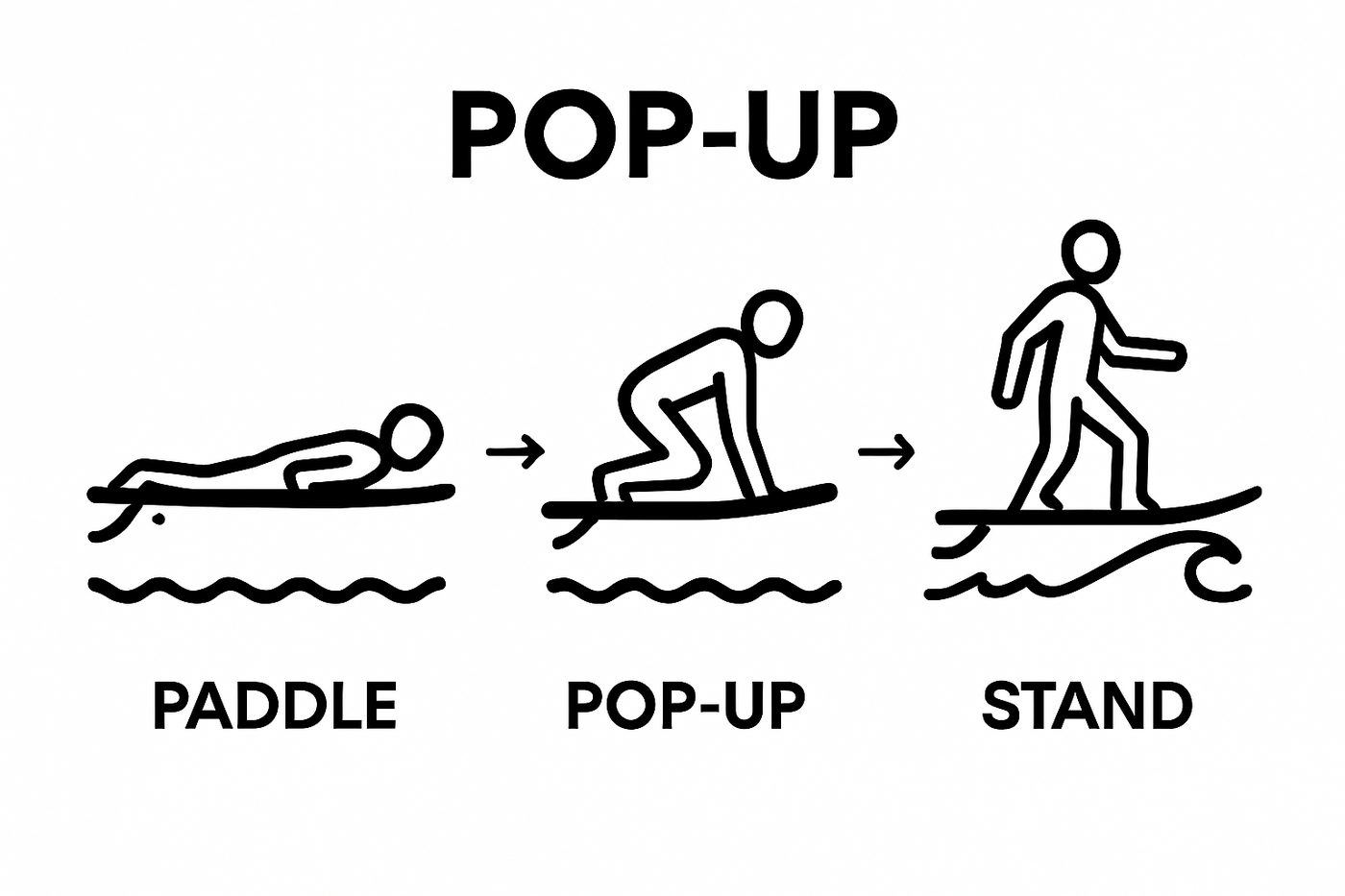
The pop-up is perhaps the most critical skill for new surfers. This explosive movement transforms you from a paddling position to standing on the board in one fluid motion. Begin by practicing on solid ground, creating muscle memory before entering water. Key pop-up steps include:
- Start in a modified push-up position
- Quickly bring your front foot between your hands
- Rotate your back foot perpendicular to the board
- Stand with knees slightly bent for balance
Practice this movement repeatedly on land, focusing on speed and smoothness. Your goal is to transition from lying to standing in less than a second. Visualization and repetition are crucial. Many beginners struggle with the pop-up, so patience and consistent practice are essential. Expect multiple attempts and small improvements with each session.
Remember that perfect technique comes from dedicated practice. Start slowly, prioritize form over speed, and gradually build your confidence and skill level.
Step 5: Position Yourself for the Perfect Wave Encounter
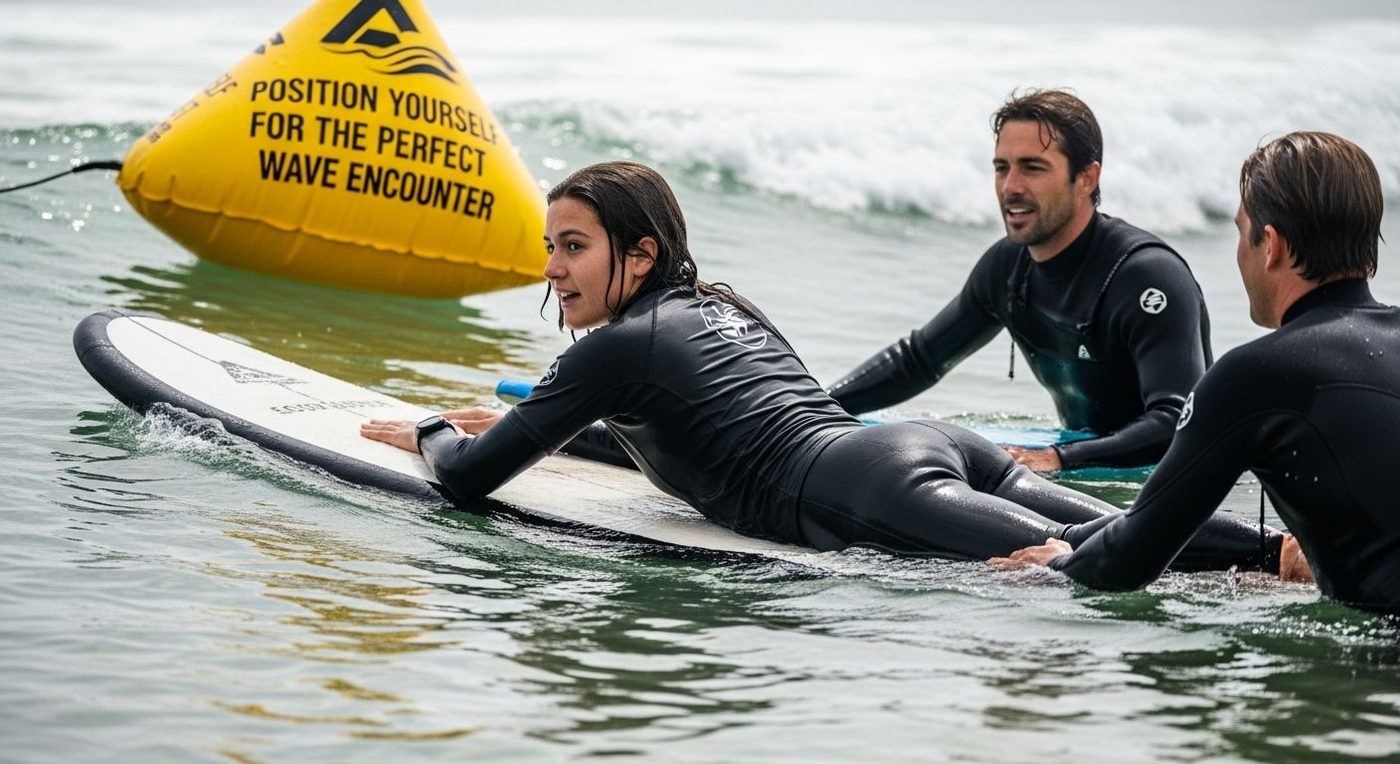
Positioning is the silent art of surfing that separates novices from emerging athletes. Wave selection is more science than luck, requiring strategic placement, keen observation, and intuitive understanding of ocean dynamics. Your success hinges on reading the water and aligning yourself precisely where waves begin to form.
Discover essential surfing tips for beginners to refine your positioning skills. Start by identifying the surfing zone, typically where waves first start breaking. This zone usually exists between waist and chest depth, where water transitions from flat to rolling. Position yourself slightly to the side of the primary breaking point, allowing easier wave catching and reducing collision risks with other surfers.
Observe wave patterns meticulously before committing. Experienced surfers recommend watching wave sets for 15-20 minutes, understanding their rhythm, direction, and intensity. Angle your board slightly diagonal to the incoming wave, which provides better momentum and control during the initial paddle. Your body should be centered on the board, with shoulders squared and head facing forward, creating a streamlined profile that maximizes paddling efficiency.
Mastering positioning requires understanding these critical elements:
- Wave direction and angle of approach
- Wind conditions affecting wave formation
- Underwater terrain influences
- Local current movements
- Other surfers’ positioning
Practice reading the ocean like a topographical map. Look for subtle changes in water surface tension, areas where waves begin to lift and curl. Your goal is anticipation, not reaction. Learn to predict where a wave will break before it actually happens. This skill comes from patient observation and repeated experience.
Remember that perfect positioning is a dynamic process. Stay flexible, maintain situational awareness, and be prepared to adjust your location quickly. The ocean is constantly changing, and your ability to read and respond to these changes will define your surfing journey.
Step 6: Ride the Wave and Experience the Thrill
The moment of truth arrives when wave meets board and surfer transforms from spectator to participant. Riding your first wave is a symphony of balance, timing, and pure excitement, blending physical technique with an almost spiritual connection to the ocean’s rhythm. This step is about translating all your previous practice into one exhilarating moment of triumph.
Discover essential surfing tips for beginners to prepare for this transformative experience. As the wave approaches, paddle with increasing intensity, matching the wave’s speed and momentum. The critical transition happens in split seconds – you must generate enough speed to match the wave’s forward motion, allowing the water’s energy to lift and propel your board.
Once you feel the wave’s push, execute your pop-up technique with decisive, fluid movement. Your body positioning is crucial: keep your feet shoulder-width apart, knees slightly bent, and center of gravity low. Distribute your weight evenly, with slightly more pressure on your front foot to maintain board stability. Look forward in the direction you want to travel, using your shoulders and hips to subtly guide the board’s trajectory.
Navigating your first wave involves understanding these fundamental riding principles:
- Maintain a low, stable stance
- Keep your gaze forward
- Use subtle body shifts for steering
- Stay relaxed but alert
- Expect and embrace small corrections
Expect imperfection during your initial attempts. Falling is not failure it’s part of learning. Each wipeout provides valuable feedback about your technique, board control, and wave reading skills. The ocean is an unpredictable teacher, offering lessons in humility and persistence. Some surfers spend months mastering their first consistent ride, so patience becomes your most important skill.
Remember that surfing is a conversation between you, your board, and the wave. Listen to the ocean’s rhythms, respect its power, and approach each wave with a blend of technical precision and childlike wonder. Your first successful ride will be a moment of pure, unfiltered joy that connects you to generations of wave riders before you.
Ready to Catch Your First Wave? Start With Confidence at Ika Ika Surf School
Beginning your surfing journey can feel overwhelming. Picking the right gear, understanding wave timing, and learning paddling techniques all add up to big challenges for beginners. This guide stressed how the right support and equipment are the keys to turning hesitation into excitement. You do not have to face these first steps alone. At Ika Ika Surf School Tenerife, we help new surfers overcome doubts by providing top beginner boards, expert instruction on wave reading and paddling, and a safe environment just 50 meters from the ocean. Our lessons are shaped around the exact needs you read about here.
Join others who turned their first lesson into a lasting passion. Book your surf lesson or gear rental today through Ika Ika Surf School Tenerife and get hands-on support from our passionate team. Explore more about choosing the perfect surfboard or find beginner-friendly tips. Your first wave is waiting. Secure your spot now and see why newcomers trust us to make their surfing dreams real.
Frequently Asked Questions
What type of surfboard is best for beginners?
Soft foam boards are ideal for newcomers, as they provide stability, forgiveness, and balance while you learn. Look for boards that match your body weight, height, and local wave conditions.
How do I know if a surf spot is suitable for beginners?
Beginner-friendly surf spots feature gentle, consistent waves with a sandy bottom, mild slope gradients, and wave heights under one meter. Look for areas with fewer hazards and observe wave patterns before entering the water.
What safety gear should I use when learning to surf?
Essential safety gear includes a well-fitted wetsuit for thermal protection, a surfboard leash to prevent your board from getting lost, surf wax for grip, protective sunscreen, and a waterproof rash guard to avoid irritation.
How can I improve my paddling and pop-up techniques?
Practice paddling by positioning your body in the center of the board and using efficient, controlled arm movements. For pop-ups, rehearse the movement on land to build muscle memory, focusing on speed and smoothness to transition from lying down to standing quickly.
Recommended
🏄 See you in the water?
Book your lesson →