
How to Learn Surfing: Master the Waves Like a Pro
Published on 24 September 2025 · 14 min read
Learning how to surf is way more than just picking up a board and hitting the beach. Most people are surprised to find out that surfing can push your heart rate up to 131 beats per minute during an average session, making it a real workout for both your body and mind. Yet it turns out the real secret to getting good at surfing has nothing to do with strength or equipment. It all starts with choosing the right spot, the right approach, and a healthy respect for the ocean before you even step into the waves.
Table of Contents
- Step 1: Assess Your Current Fitness Level
- Step 2: Choose The Right Surfboard And Gear
- Step 3: Find A Suitable Surfing Spot With Lessons
- Step 4: Practice Safety Guidelines And Techniques
- Step 5: Take Your First Lesson With An Instructor
- Step 6: Review Your Progress And Set Future Goals
Quick Summary
| Key Point | Explanation |
|---|---|
| 1. Assess your fitness level before surfing | Understand your physical readiness by evaluating core strength, endurance, and flexibility to prepare adequately for surfing challenges. |
| 2. Choose the right surfboard and gear | Opt for beginner-friendly equipment like longboards and wetsuits that enhance comfort and safety during initial learning stages. |
| 3. Select suitable surfing locations for lessons | Identify beaches with gentle waves and minimal hazards to foster a safe and effective learning environment for beginners. |
| 4. Prioritize safety guidelines and techniques | Develop a strong understanding of surf safety practices, including awareness of conditions and proper falling techniques to enhance protection during surfing. |
| 5. Set specific goals and track progress | Establish clear, measurable surfing objectives, and regularly review your development to maintain motivation and structured learning. |
Step 1: Assess Your Current Fitness Level
Learning how to surf requires more than just enthusiasm – it demands a strategic approach to physical preparation. Before you hit the waves, understanding your current fitness level is crucial for a safe and successful surfing journey. Physical readiness determines not just your performance, but also your injury prevention and overall enjoyment of the sport.
Surfing is a full body workout that engages multiple muscle groups simultaneously. Core strength, cardiovascular endurance, and flexibility are fundamental components you’ll need to evaluate. Start by conducting an honest self assessment of your current physical condition. Can you swim confidently in open water? Do you have sufficient upper body strength to paddle? Are your legs strong enough to balance on a moving board?
According to research from the Journal of Strength and Conditioning Research, surfing maintains an average heart rate of 131 beats per minute, indicating a moderate intensity workout. This means you’ll want to focus on cardiovascular training that mimics surfing movements. Consider incorporating exercises like:
- Swimming laps to build paddling endurance
- Planks and core stability workouts
- Bodyweight exercises targeting shoulders, back, and legs
- Balance training using stability boards or yoga
If you’re starting from a lower fitness baseline, don’t get discouraged. Progressive training can quickly improve your surf readiness. Aim to develop a consistent workout routine 4-6 weeks before your first lesson, focusing on building functional strength and cardiovascular capacity. Pay special attention to exercises that simulate surfing motions – rotational movements, paddling simulations, and explosive leg strength will serve you best.
Remember, the goal isn’t to become an Olympic athlete overnight, but to prepare your body for the unique physical demands of surfing. By systematically assessing and improving your fitness, you’ll set yourself up for a more enjoyable and successful surfing experience.
Step 2: Choose the Right Surfboard and Gear
Selecting the appropriate surfboard and gear is a critical step that can make or break your surfing experience. The right equipment acts as an extension of your body, transforming your learning journey from frustrating to phenomenal. Beginners often underestimate the importance of choosing gear that matches their skill level and physical characteristics, but this decision is fundamental to your success on the waves.
For newcomers to surfing, longboards are the ultimate starting point. These boards provide exceptional stability, buoyancy, and forgiveness – essential qualities when you’re learning to balance and catch your first waves. Aim for a board that is approximately 2-3 feet taller than your own height, which offers maximum stability and helps compensate for your developing skills. Soft-top boards are particularly recommended for beginners, as their foam construction provides a more forgiving surface and reduces the risk of injury during those inevitable early wipeouts.
Beyond the board, your gear selection is equally crucial. Check out our comprehensive guide on surf equipment to ensure you’re fully prepared. A well-fitted wetsuit is non-negotiable – it protects you from cold water, prevents chafing, and provides an additional layer of buoyancy. When trying on wetsuits, ensure a snug fit that allows free movement without excess water circulation. Neoprene thickness typically ranges from 3/2mm for warmer waters to 5/4mm for cooler conditions.
Additional essential gear includes:
- Surf wax for board traction
- Leash to keep your board close after falling
- Rash guard for sun protection
- Waterproof sunscreen
Remember that your first set of equipment doesn’t need to be top-of-the-line professional gear. Many surf schools and rental shops offer beginner packages that include boards and accessories perfectly suited for learning. Take advantage of these options to test different equipment without making a significant financial investment. Your goal at this stage is comfort, safety, and gradual skill development – the high-performance gear can wait until you’ve mastered the basics.
Below is a checklist table summarizing essential surf equipment for beginners, highlighting the purpose of each item to help you prepare effectively for your first lesson.
| Equipment | Purpose |
|---|---|
| Longboard | Provides stability and buoyancy for easier learning |
| Wetsuit | Keeps body warm, prevents chafing, adds buoyancy |
| Surf Wax | Increases board traction and grip |
| Leash | Prevents board from drifting after a fall |
| Rash Guard | Offers sun protection and reduces skin irritation |
| Waterproof Sunscreen | Protects skin from harmful UV rays |
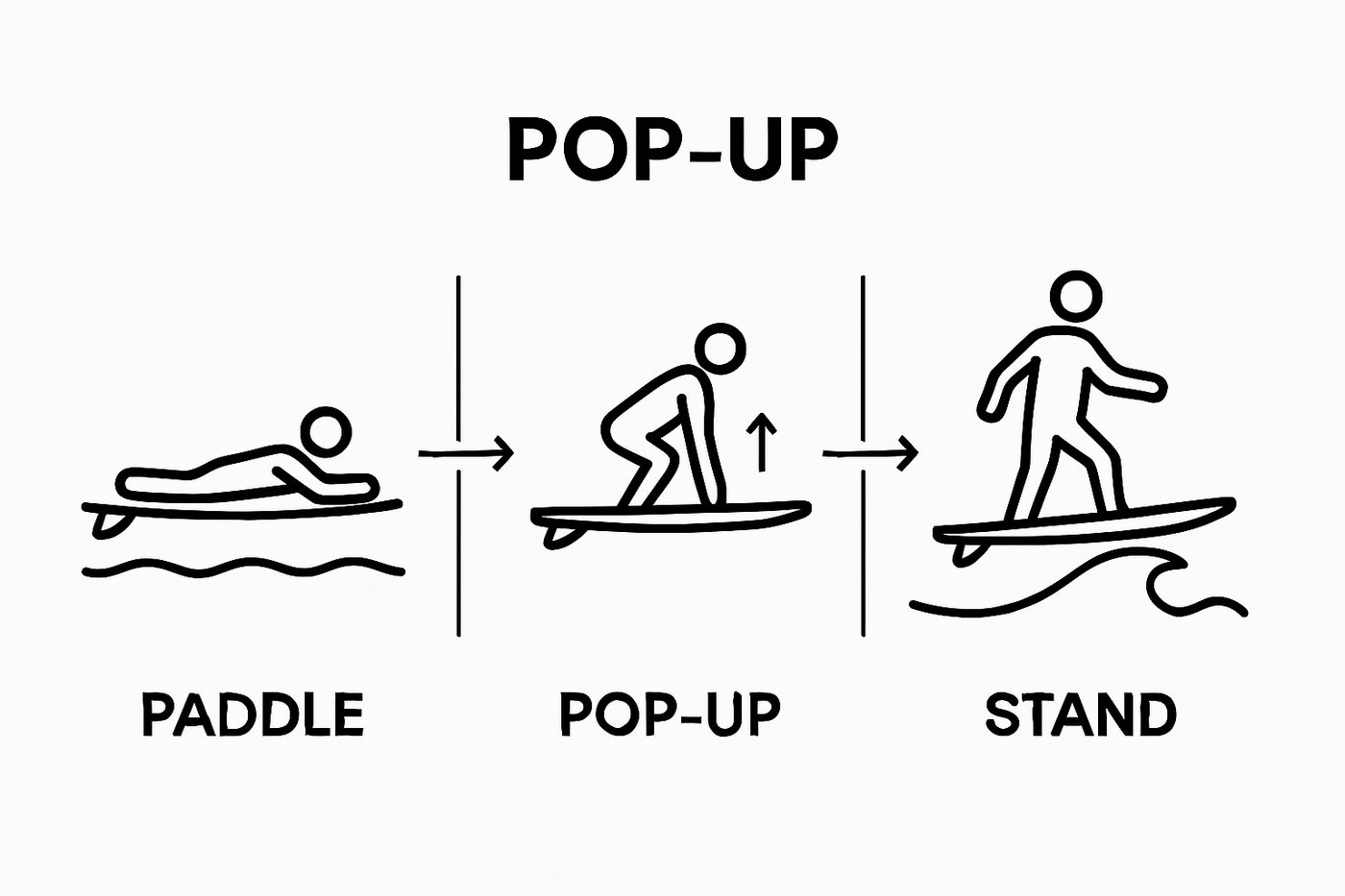
Step 3: Find a Suitable Surfing Spot with Lessons
Choosing the right location for your surfing lessons is as crucial as selecting the appropriate gear. The perfect learning environment can dramatically accelerate your skill development and boost your confidence. Not all surf spots are created equal, and beginners need specific conditions that support safe, progressive learning.
Professional surf schools strategically select locations with consistent, gentle waves and minimal hazards. Look for beaches with sandy bottoms, gradual slopes, and waves that break predictably – characteristics that provide a forgiving learning environment. Learn more about our specialized beginner surf classes designed to match your skill level with the ideal surf conditions.
According to research from the National Surf Schools and Instructors Association, instructors should conduct lessons in areas that minimize conflicts with other surfers and ensure maximum safety. This means avoiding crowded breaks and selecting spots with ample space for learning. Ideal beginner locations typically feature:
- Waves under 3 feet high
- Minimal rip currents
- Soft, sandy ocean floor
- Clear visibility
- Protected areas with fewer advanced surfers
Before committing to lessons, visit potential surf schools in person. Observe their teaching methods, student interactions, and the overall safety protocols. A reputable school will prioritize student comfort, provide comprehensive safety briefings, and match you with an instructor who understands your specific learning needs. They should offer equipment suitable for beginners and demonstrate a patient, encouraging approach to instruction.
Location matters immensely in your surfing journey. A well-chosen surf spot can transform a potentially intimidating experience into an exhilarating adventure. Ask potential instructors about their specific teaching locations, wave conditions, and how they adapt lessons to individual student abilities. Your goal is to find a learning environment that feels challenging yet supportive – a place where you can build skills, confidence, and a genuine love for surfing.
Step 4: Practice Safety Guidelines and Techniques
Surfing is an exhilarating sport, but it demands respect for the ocean and a comprehensive understanding of safety protocols. Safety isn’t just a set of rules – it’s a mindset that separates experienced surfers from reckless beginners. Your journey into surfing must prioritize personal protection and environmental awareness above all else.
Before entering the water, develop a thorough pre-surf safety routine. According to research from the Hoag Health System, critical safety practices include always surfing with a partner, understanding your personal skill limitations, and maintaining complete situational awareness. This means carefully observing wave patterns, understanding local surf conditions, and recognizing potential hazards before you paddle out.
Mastering fundamental safety techniques requires dedicated practice and mental preparation. Learn and consistently practice the proper falling techniques – protecting your head, avoiding your board, and using controlled movements to minimize injury risk. Underwater survival skills are equally crucial. Practice holding your breath, understanding wave dynamics, and maintaining calm during unexpected submersion. Your board is both your transportation and your primary safety device, so learning to control it effectively is non-negotiable.
Essential safety guidelines include:
- Always wear a leash connected to your board
- Check weather and tide conditions before surfing
- Understand and respect surf etiquette
- Never surf under the influence of alcohol
- Communicate with other surfers about your intentions
Emergency preparedness distinguishes confident surfers from novices. Know basic first aid, understand how to signal for help, and always inform someone on shore about your surfing location and expected return time. Invest time in learning ocean reading skills – identifying rip currents, understanding wave sets, and recognizing potential dangerous conditions. Remember that true surfing mastery combines technical skill with profound respect for the ocean’s unpredictable nature. Your safety depends not just on physical technique, but on developing a humble, attentive approach to this magnificent natural environment.
The following table provides an overview of key safety guidelines and techniques every beginner surfer should follow to ensure a safer and more enjoyable experience.
| Safety Guideline | Description |
|---|---|
| Wear a leash | Keeps your board within reach after falling |
| Check weather and tide conditions | Ensures you surf in safe and predictable ocean environments |
| Respect surf etiquette | Promotes cooperation and safety among surfers |
| Never surf under the influence | Reduces risk of accidents, improves judgment and reaction times |
| Communicate with others | Allows for awareness and coordination in the water |
| Know basic first aid | Prepares you for handling minor injuries or emergencies |
| Inform someone on shore | Ensures someone knows your location and expected return time |
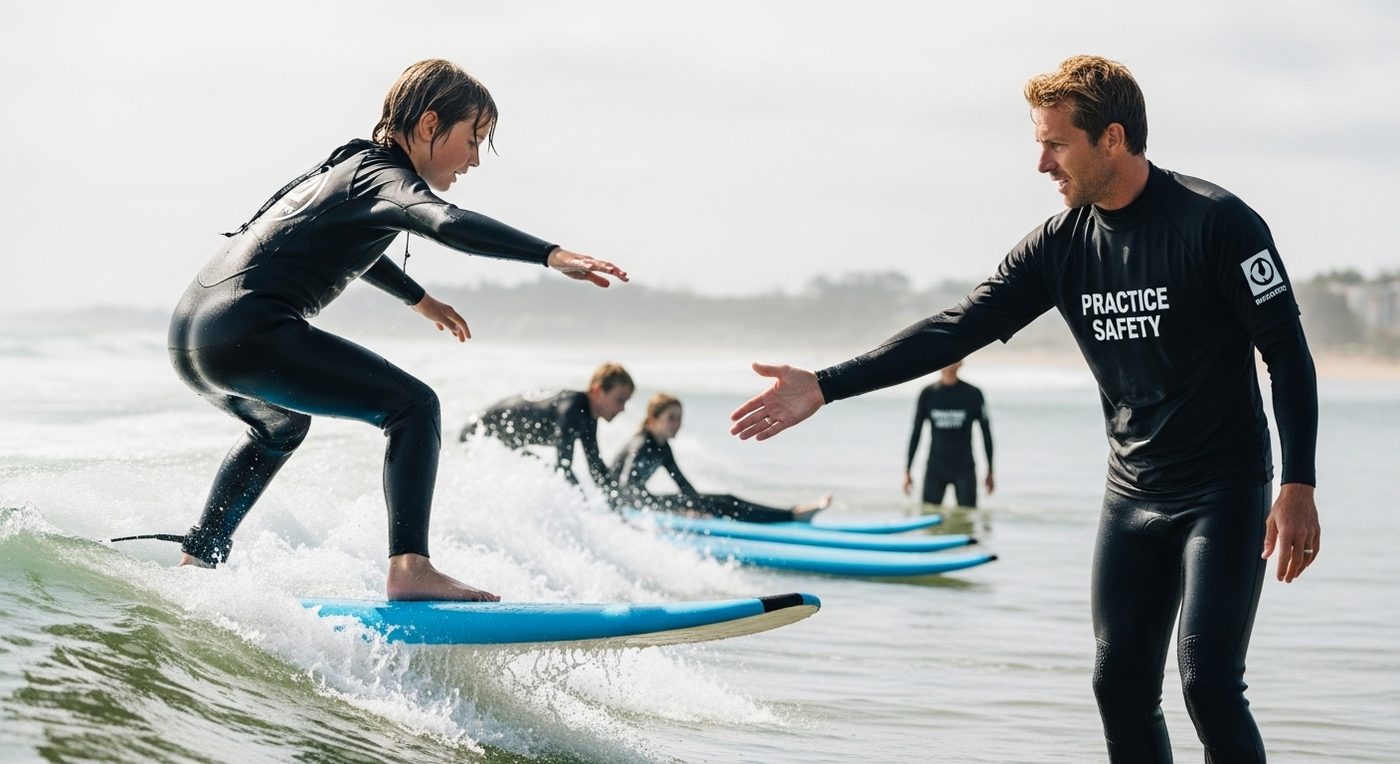
Step 5: Take Your First Lesson with an Instructor
Your first surfing lesson is a pivotal moment that will shape your entire surfing journey. This isn’t just about learning techniques – it’s about building a foundation of confidence, understanding, and respect for the ocean. Professional instruction transforms the potentially overwhelming experience of learning to surf into a structured, enjoyable progression of skills.
Explore our range of surf lesson options designed to match your individual learning style and comfort level. When you arrive for your first lesson, come prepared with an open mind and a willingness to embrace both challenges and potential moments of awkwardness. Professional instructors understand that everyone learns differently and will create a supportive environment that makes you feel comfortable from the moment you step onto the beach.
The initial lesson typically begins with comprehensive land training. Your instructor will walk you through fundamental techniques, including:
- Proper board positioning
- Paddling mechanics
- Pop-up techniques
- Balance and stance fundamentals
- Ocean safety and awareness
Expect your first lesson to be a mix of technical instruction and practical application. Your instructor will guide you through each movement, providing real-time feedback and correction. Don’t be discouraged by initial struggles – every professional surfer started exactly where you are now. Pay close attention to your instructor’s guidance on reading wave patterns, understanding ocean currents, and maintaining proper body positioning.
Successful first lessons are marked by incremental progress and a growing sense of comfort in the water. You’ll know you’re making genuine progress when you can consistently paddle out, attempt to catch waves, and maintain a basic level of balance on the board. Remember that surfing is a skill that develops through patient practice, and your first lesson is just the beginning of an exciting journey. Approach each moment with curiosity, humility, and a sense of adventure, and you’ll set yourself up for a lifetime of wave-riding enjoyment.
Step 6: Review Your Progress and Set Future Goals
Progress in surfing isn’t measured by a single spectacular moment, but by consistent, intentional growth. Your surfing journey is a continuous learning experience that requires honest self-reflection and strategic goal setting. This step transforms your initial lessons from a temporary adventure into a lifelong passion.
According to research from the U.S. Department of Education, learners who establish specific goals and regularly monitor their progress are significantly more likely to achieve long-term success. Begin by documenting your initial surfing experiences – record the techniques you’ve learned, challenges you’ve encountered, and moments of breakthrough. Video recordings can be an exceptional tool for self-assessment, allowing you to analyze your form, technique, and areas requiring improvement.
Effective goal setting in surfing requires a balanced approach that challenges you while remaining realistic. Your objectives should be specific, measurable, and progressively challenging. For instance, instead of a vague goal like “get better at surfing,” develop concrete milestones such as:
- Successfully stand up on a wave without assistance
- Maintain balance for a full wave ride
- Learn three different paddling techniques
- Understand and execute basic wave reading skills
- Demonstrate consistent safety practices
Review our surf workflow recommendations to help structure your progression. Consult with your instructor to create a personalized development plan that aligns with your skill level and aspirations. They can provide expert insights into your strengths, potential areas of improvement, and realistic timelines for skill acquisition.
Remember that surfing is as much a mental journey as a physical one. Celebrate small victories, remain patient with yourself, and maintain a growth mindset. Your goals should evolve as you develop, becoming more complex and nuanced with experience. The most successful surfers view each wave as an opportunity to learn, adapt, and ultimately, enjoy the incredible connection between human and ocean.
Take Your First Step to Confident Surfing in Tenerife
Ready to move from learning about surf fitness and safety to actually catching your first wave? If you have felt the frustration of not knowing where to start, struggled with finding the right gear, or wondered which beach is truly safe for beginners, you are not alone. The journey to mastering the waves is easier when you do not have to figure it out alone. At Ika Ika Surf School Tenerife, we turn your curiosity about technique, equipment, and safety into real-life progress right on the shores of Playa de las Américas.
Let us help you skip the uncertainty and experience real surf transformation in a supportive setting. Book your first lesson today with our certified instructors at Ika Ika Surf School Tenerife, just 50 meters from the waves, and enjoy full access to beginner-friendly gear rentals, modern facilities, and a welcoming surf community. If you want to compare lesson types or check which equipment rentals are available, visit our detailed course and rental pages on surf lesson options and equipment checklist. Spots fill up quickly, so claim your space now and start your transformation with the peace of mind that comes from structured lessons and expert guidance.
Frequently Asked Questions
What is the best way to assess my current fitness level for surfing?
It’s essential to evaluate your core strength, cardiovascular endurance, and flexibility. You can perform exercises like swimming, planks, and bodyweight workouts to gauge your fitness.
How do I choose the right surfboard as a beginner?
Select a longboard that is about 2-3 feet taller than you for stability. Soft-top boards are particularly recommended as they are safer and offer more forgiveness while learning.
What should I focus on during my first surfing lesson?
Your first lesson will cover essential techniques like proper board positioning, paddling mechanics, and safety awareness. It’s crucial to listen to your instructor and practice the techniques introduced.
How can I set realistic goals for my surfing progress?
Create specific, measurable goals, such as standing up on a wave or learning different paddling techniques. Regularly review your progress and adjust your goals as you improve.
Recommended
- Master Your Surfing Workflow for Beginners Easily | Ika Ika Surf School Tenerife
- How to Stand Up on a Surfboard: A Beginner’s Guide | Ika Ika Surf School Tenerife
- Understanding Advanced Surfing Techniques: Dive Deeper | Ika Ika Surf School Tenerife
- How to Catch Your First Wave: A Beginner’s Guide | Ika Ika Surf School Tenerife
🏄 See you in the water?
Book your lesson →